A walk should be something both ends of the lead enjoy. But for plenty of owners it becomes a daily tug of war, with the dog straining towards every tree, smell and interesting thing while the human hangs on behind.
Usually, dogs aren’t being stubborn. They pull because pulling works. Loose-lead walking can be learned too, and it doesn’t mean competition heelwork or having your dog glued to your leg. The aim is a dog that can sniff, explore and enjoy the world while still staying connected to the person on the other end of the lead.
Here are seven approaches we’ve found useful with our own dogs and the dogs we work with.
1. Start early, start small, make it fun
We see plenty of puppies that are just about to finish their vaccinations and head out into the wider world — and they’ve hardly had a lead on. It’s worth starting weeks before you expect to go on proper walks rather than waiting for the big day, whacking on a lead and hoping everything will miraculously be okay.
Begin at home with few distractions. Grab 10 treats, put the lead on and practise for a couple of minutes around the house or yard: Wait. Let’s Go. This Way. Then try a 100-metre loop of your street using the same familiar cues. Ten treats, 100 metres, then home. You’re teaching your puppy how walking together works.
We also take games from home out on walks. One favourite is Freebie, a fun recall and relationship game. Get your dog interested in a treat, say “Freebie!” and throw it for them to chase. Familiar games help your dog discover that when the front door opens, paying attention to you is still worthwhile.
2. Sometimes, just sit
Taking your dog out doesn’t always mean you have to walk. With puppies, excitable adolescents or easily overwhelmed dogs, sometimes a useful training session is simply going somewhere, finding a distance where the dog can cope and sitting there together.
Have a coffee and let your dog watch people, dogs, bikes and the world going past. If they calmly notice something, you might occasionally give them a treat. There’s no need to keep asking for behaviours. Sometimes the lesson is simply that you can be out in the world and nothing much has to happen.
Distance can make an enormous difference. If your dog goes into what we call space-cadet mode — too excited, worried or overwhelmed to think clearly or respond normally — get out of Dodge. Circle away, create distance and reset. If the environment is simply too difficult at this stage of training, go somewhere quieter. When your dog can cope, play a Freebie, do a few easy turns or practise a short stretch of loose-lead walking. The busier environment can come later.
3. Relax your end
Sometimes the dog isn’t the only one pulling. One of the most common things we see is an owner walking with constant tension on the lead. As we often say during lessons, you can’t reward loose-lead walking if you’re pulling on the lead yourself.
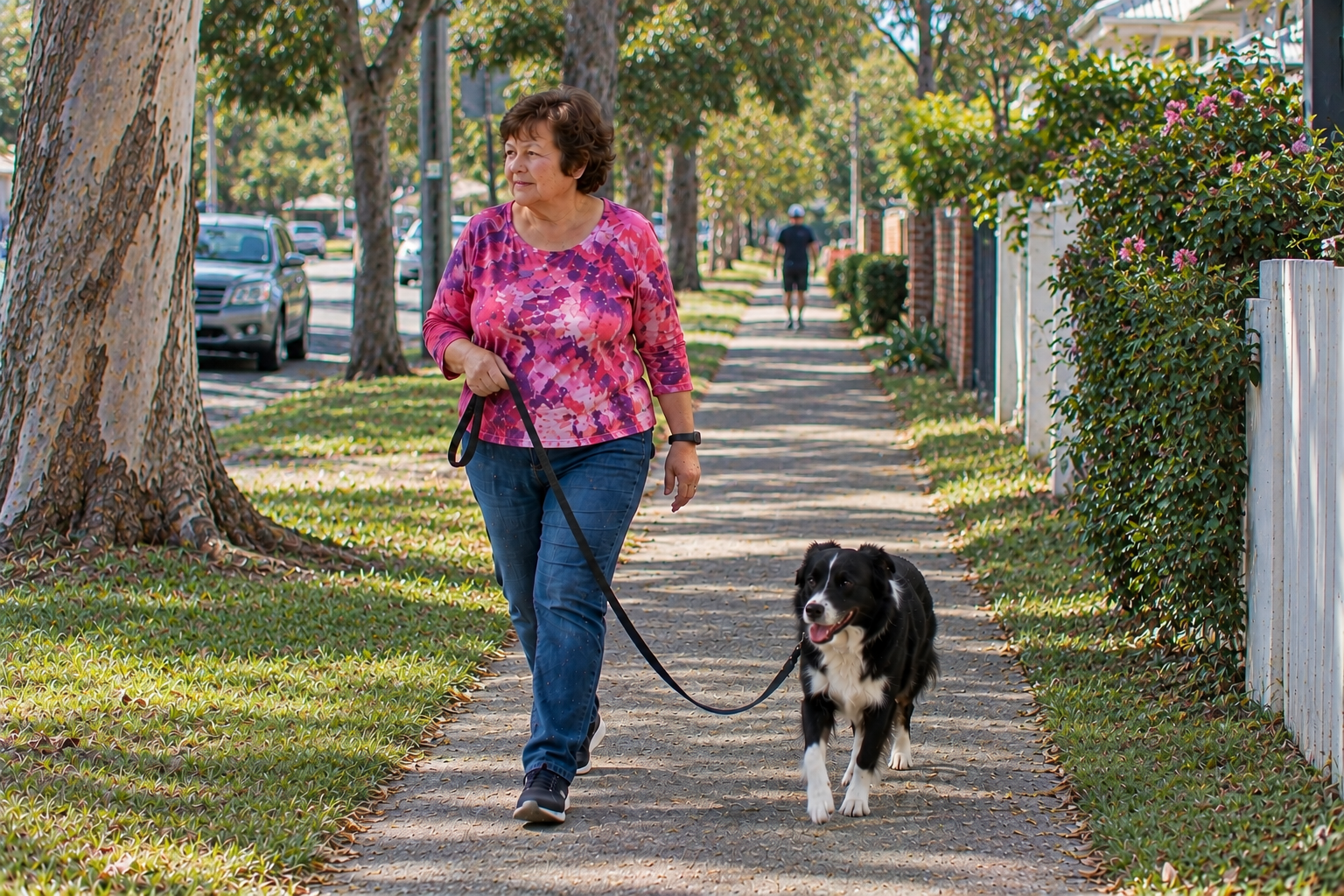
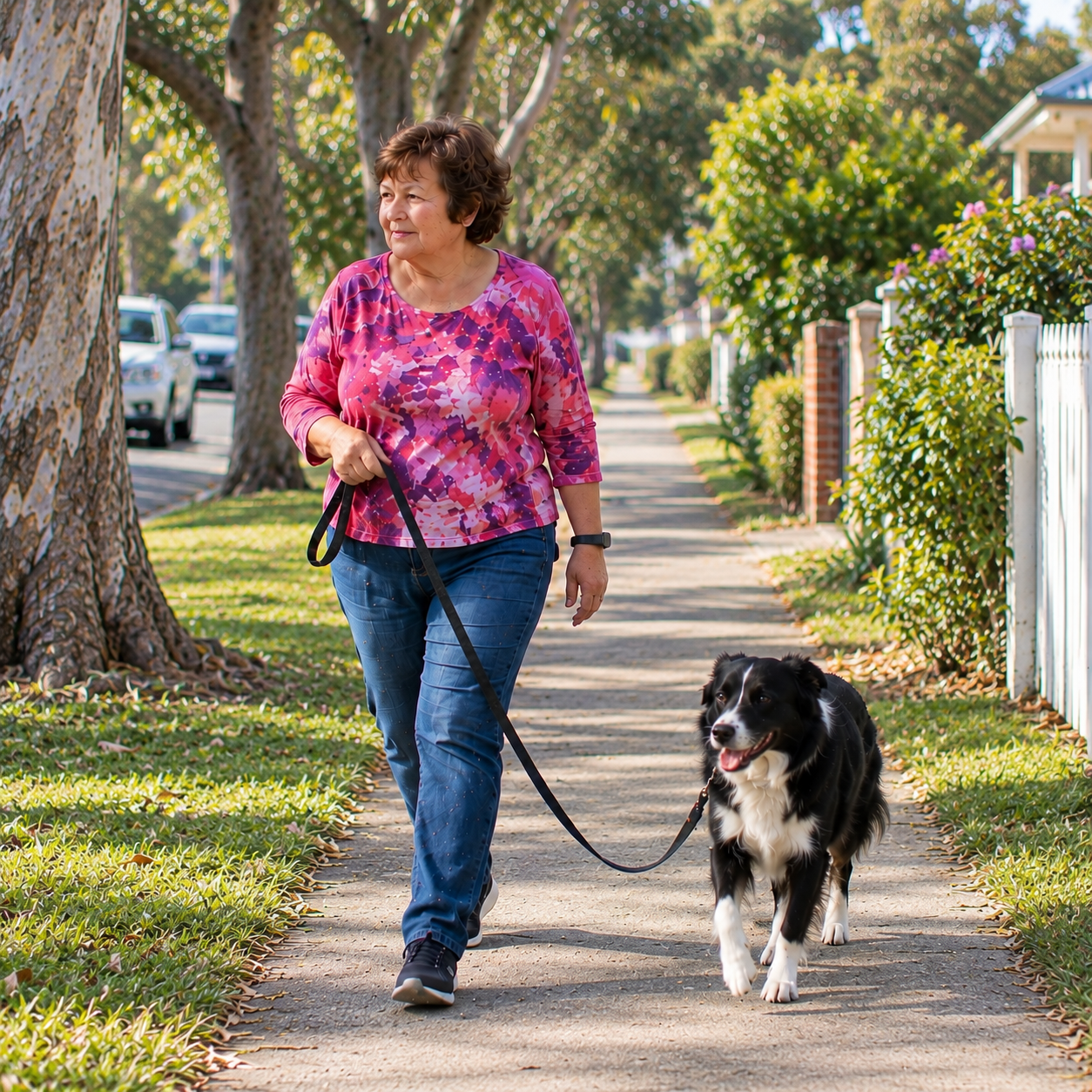
Relax your hand and bring it down closer to your side. Avoid what we jokingly call the mad woman with the knitting — hands going everywhere, shortening, tightening and fiddling with the lead. Ideally, you’ll see a little U in the lead between you and your dog. Constant tension encourages some dogs to lean into it; relaxing your end gives them the opportunity to create the loose lead you can reward.
4. It’s not all hard work
Your dog doesn’t need to spend an entire walk marching beside your knee. We’re quite happy for dogs to flop along in front on a longer, loose lead, sniffing and investigating when the situation allows. For many dogs, sniffing is one of the great pleasures of a walk.
That freedom can still include some communication. Occasionally ask for Wait, change direction with This Way, call your dog towards you or play a quick game. When you need more control — perhaps passing another dog or negotiating a narrow path — Close can be useful for a short stretch before giving your dog more freedom again. A good walk can include both: short periods when you’re working together and plenty of time when your dog can simply be a dog.
5. Pay the good stuff
We humans are very good at spotting mistakes. It’s worth becoming equally good at spotting success. Those little glimmers are gold to pay.
Four or five lovely strides with a U in the lead? Reward them. Your dog checks where you are without being asked or follows your turn rather than continuing towards a smell? Worth rewarding too. A treat pouch makes this much easier because the reward is ready while the good behaviour is happening.
Food isn’t your only option. Moving forward, reaching an interesting tree or hearing “OK, go sniff” can all be rewards. The more often you notice the walking you like, the more opportunities your dog has to learn what works.
6. Mix up the journey
Some dogs quickly decide a walk has one purpose: get there as fast as possible. With those dogs, we often find it helps to make the walk less predictable.
At a park, we might loop around a tree, Wait, change direction, throw a Freebie, do a short recall, wander down a path and circle back. When the dog is beside you, you might do a short burst of Let’s Go, This Way, Wait, reward some good walking and then release them to sniff again.
There’s no need to turn every walk into an obedience session. Mixing short periods of training with ordinary dog time can help break the habit of putting the head down and towing towards a destination.
7. Make pulling less successful
Be realistic. If you’re walking 50 metres from the car to the dog park and you’re not going to train properly during that stretch, sometimes it simply won’t be beautiful. But when you are training, it helps if pulling isn’t consistently the fastest way of getting where your dog wants to go.
If your dog pulls, one option is to stop forward progress. With a front-attachment harness, you can gently redirect the dog sideways and stop. Another option is a 180-degree turn and heading the other way. Suddenly B is behind them, and towing towards a destination becomes a much less successful strategy.
After a stop or turn, pause and give your dog another opportunity. Rather than rewarding immediately and risking a pull-turn-treat chain, wait for several good strides on a loose lead and reward those. Different dogs and handlers may need different approaches; the important principle is that pulling shouldn’t repeatedly get the dog exactly where it wants to go.
A quick word about gear
Gear matters too. At CLEAR, we prefer a well-fitting Y-front harness designed to allow good freedom of movement through the shoulders, and we like a front attachment point because it gives another option for gently redirecting the dog. Many clients successfully use a harness and collar with a double-ended lead.
Fit matters. A loose, sloppy harness that makes pulling comfortable and gives you little ability to redirect your dog isn’t ideal for teaching loose-lead walking. No single setup suits every dog and handler, and we’ll look at equipment in more detail in a future article. Good gear can make training easier, but it doesn’t teach the skill for you.
Loose-lead walking takes practice, and some dogs will find it harder than others. Start before you need the skill, make yourself part of the fun, give your dog time to sniff and notice those little glimmers of good walking. If your dog is struggling, sometimes making the situation easier will achieve far more than simply trying harder.
You’re not trying to produce a robot. The aim is a dog that can explore and enjoy the world while still staying connected with you — making for a much nicer walk at both ends of the lead.