Mention the words “dog training plan” and you can almost see people’s eyes glaze over. A written programme? Daily targets? Keeping records of every sit, stay and recall? No thanks!
But don’t switch off just yet. CLEAR Dog Training owner Caroline Strainig believes that having a training plan doesn’t mean writing War and Peace or turning dog training into another chore. For most family dogs, a simple plan you can keep in your head is all you need. And it can make a surprising difference to your results.
The secret is to plan, practise and persevere — without making life unnecessarily complicated.
1. Plan: keep it simple
Competitive dog trainers often use detailed written programmes to prepare for trials, but there’s no need to go to those lengths when teaching your family dog good manners.
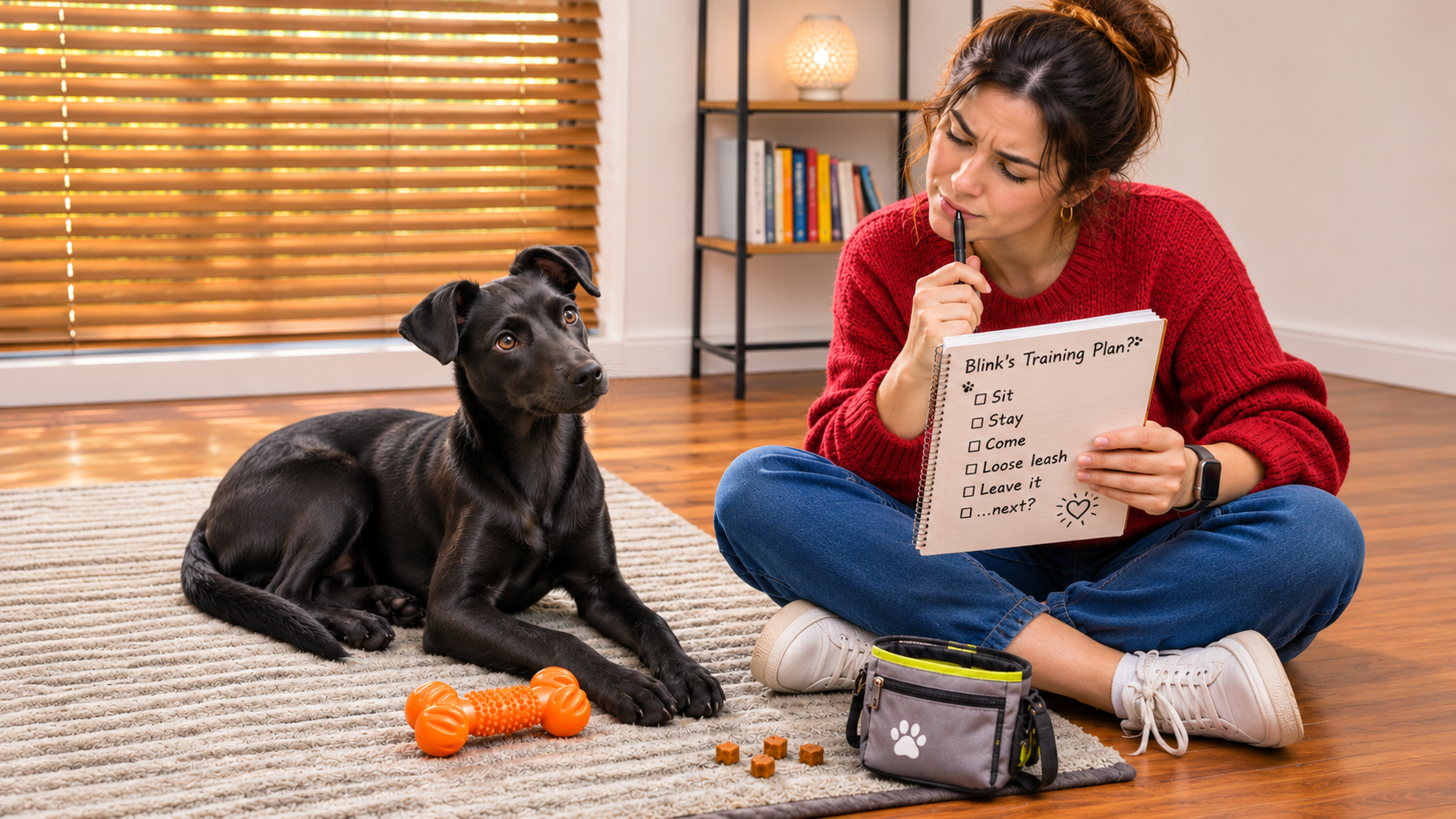
Start by choosing one or two things you’d particularly like to improve. Perhaps it’s recall, loose-lead walking or teaching your puppy to settle when visitors arrive. Then ask yourself three simple questions: What do I want to achieve? When and where can I practise? And how will I know we’re making progress?
Set yourself up for success. Choose times when your dog is alert but reasonably calm, rather than tired or overexcited. Start somewhere quiet, away from distractions, and have some tasty, high-value treats ready.
It’s also worth keeping little stashes of treats in convenient places around the house, safely out of your dog’s reach. That way, you can reward good behaviour or practise an unexpected recall without always having food visibly in your hand.
And don’t be too rigid. Your plan should be a guide, not a timetable carved in stone.
2. Practise: make it fit your life
The best training plan is one you’ll actually use. Rather than setting aside half an hour every day, look for little opportunities to practise as you go about your normal routine.
You might work on recall a few times while moving around the house, practise loose-lead walking on the way to the letterbox or ask your puppy to settle while you enjoy your morning coffee. A couple of minutes here and there can add up to a surprising amount of training over a week.
Another useful idea borrowed from dog sports is the training sandwich. Start with something easy your dog already knows, spend a little time working on a new or developing skill, then finish with another easy success.
Teaching a couple of simple tricks can help, too. They’re fun, give you opportunities to practise your timing, marker word and rewards, and teach your dog that learning new things is enjoyable. Before long, you’ll see that eager expression that seems to say, “Great! What are we doing now?”
Break new skills into small, achievable steps, rewarding little improvements rather than expecting the finished behaviour straight away. Aim for a high success rate and remember that three good repetitions are worth far more than twenty increasingly messy ones.
Finish while your dog is still enjoying themselves. Leave them wanting more!
3. Persevere: but be flexible
Even the best training plans don’t always run smoothly. Your dog might perform beautifully one day and seem to have forgotten everything the next. Don’t be discouraged. Progress rarely happens in a straight line, particularly with young dogs going through adolescence.
But perseverance doesn’t mean endlessly repeating something that isn’t working. If your dog is struggling, ask yourself why. Are there too many distractions? Is the exercise too difficult? Are your rewards sufficiently motivating? Or is your dog simply tired?
Go back a step, make success easier and build up again. Sometimes a quick spin, hand touch or another favourite trick can restore enthusiasm before you finish on a positive note. There’s no point sticking stubbornly to a plan if it’s not getting results.
You don’t need a spreadsheet to measure progress, either. Just notice the little improvements. Perhaps your dog comes a little faster when called, walks a few more steps without pulling or settles more quickly when visitors arrive. Those small victories are signs that your plan is working.
Small plans, big results
Good dog training doesn’t require a complicated schedule or hours of daily practice. It does benefit from a little thought, consistency and a willingness to adjust along the way.
Choose a goal, look for everyday opportunities to practise and celebrate your progress. Your training plan is there to make life easier, not give you another job to do.
Plan, practise, persevere. Keep it simple, keep it fun and celebrate the little victories.
Want a little more help?
For more practical advice, see Yes, you do have time to train! and Why we use treats in training.