“How long do I have to keep using treats?”
It’s one of the questions CLEAR Dog Training hears most often, usually from owners worried they’ll still be carrying chicken around in their pockets when their dog is ten. Closely followed by: “I don’t want to bribe my dog.” Or: “My dog should do it just because it loves me. It shouldn’t need bribes.”
All fair questions. And the good news is, you don’t have to spend the rest of your dog’s life walking around with treats in your pockets. The goal isn’t to stop rewarding your dog. It’s to teach them that rewards come in many forms, and that doing the things you ask of them is worthwhile. Food is simply one of the best places to start.
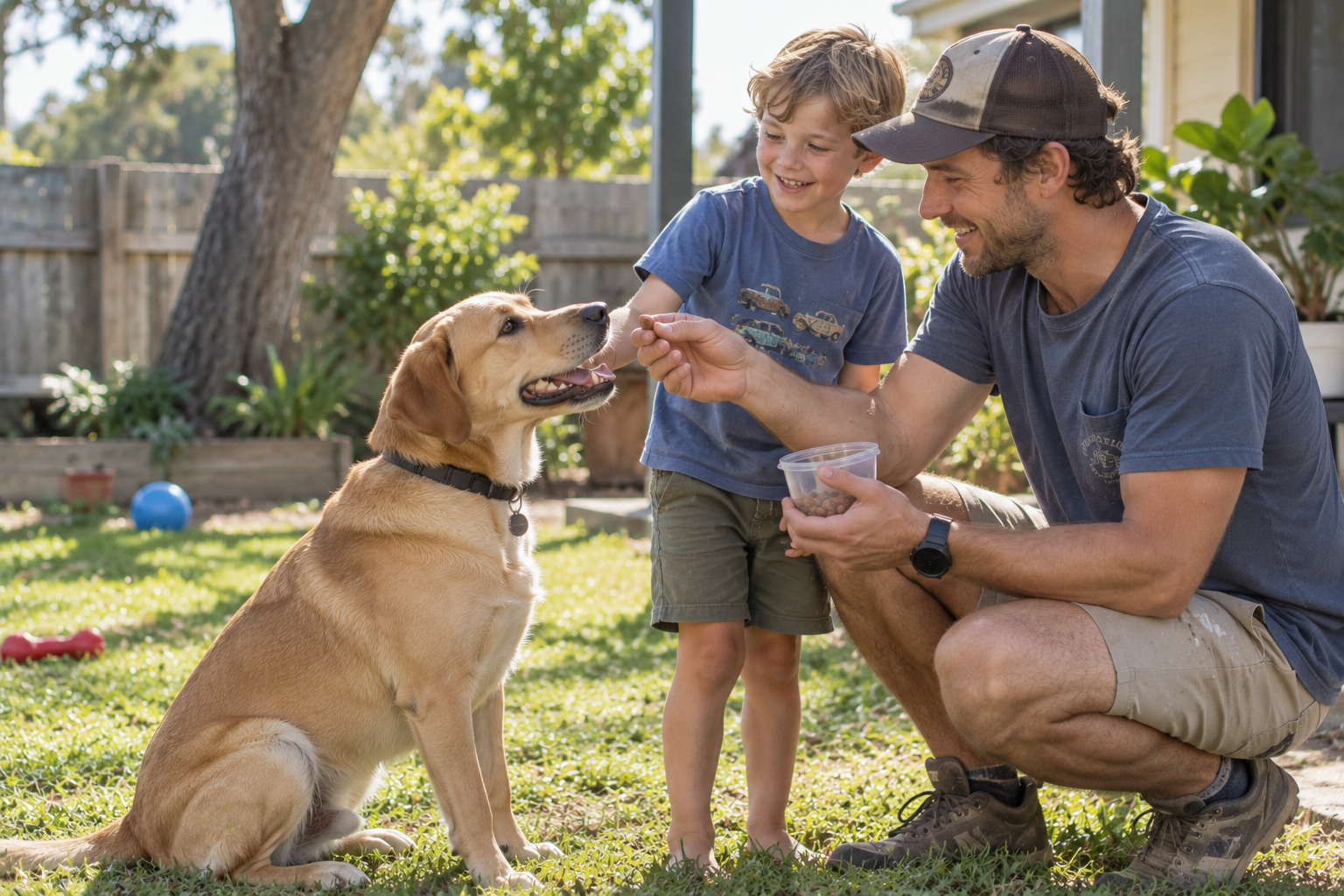
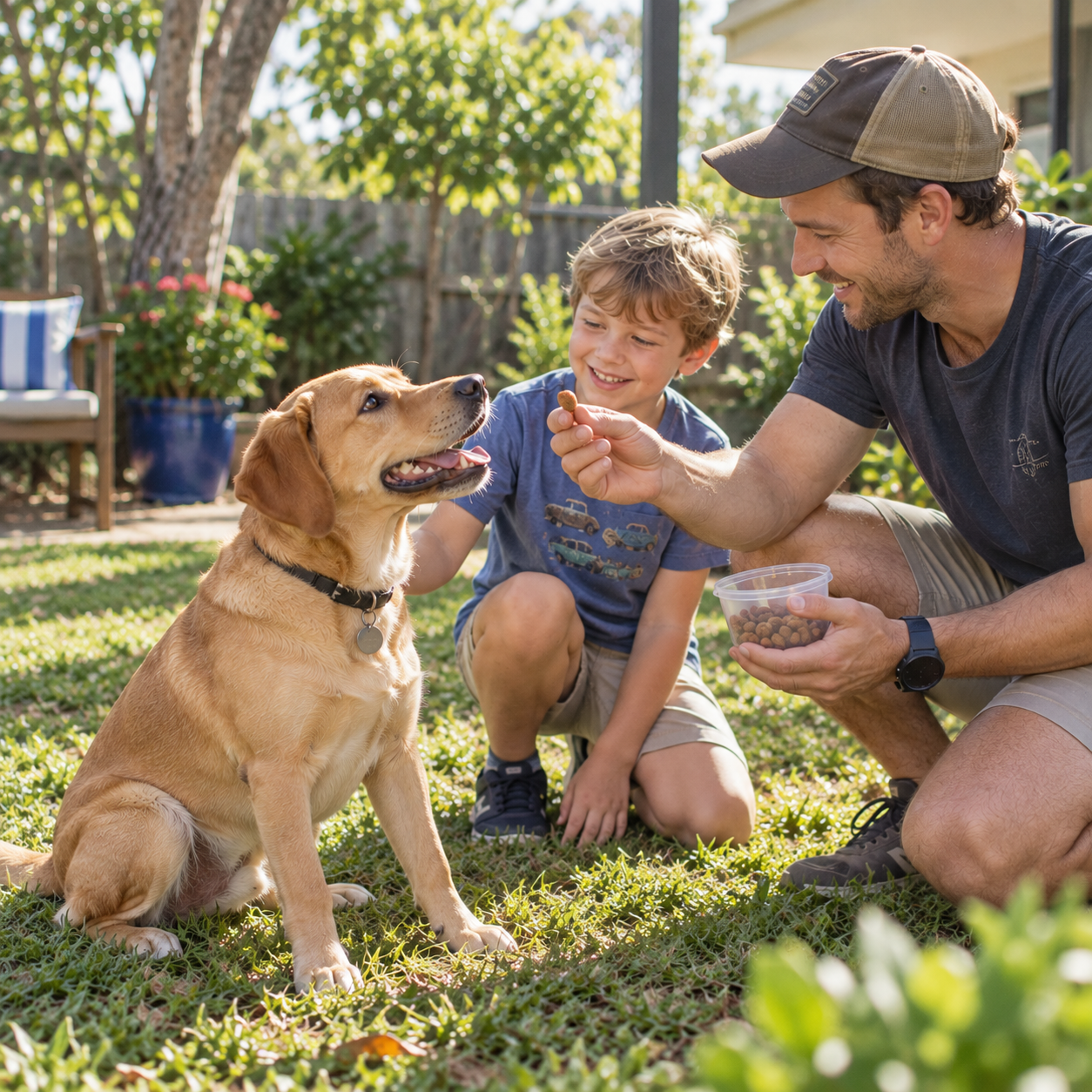
When teaching a new behaviour, a small piece of food is quick, easy and precise. Your dog does something you like, the reward arrives immediately, and the message is beautifully clear: yes, that’s exactly what you want them to do again.
Rewards aren’t bribes
A bribe and a reward aren’t the same thing. A bribe is offered beforehand to persuade someone to do something. A reward comes afterwards, in response to something they’ve already done.
When your dog comes when called, walks beautifully on a loose lead or settles quietly on their mat, rewarding them afterwards tells them that behaviour was worth repeating. Dogs repeat behaviours that lead to good outcomes. That’s how animals learn.
If you want to build a behaviour, reward it. If your dog has developed a habit you’d rather they didn’t have, manage things so they don’t get endless opportunities to practise it while you teach a better alternative. Rather than spending all your time telling your dog what not to do, show them what you’d like them to do instead and make that choice worthwhile.
Use the food you’re already feeding
“But won’t my dog get fat?” Not if you do it sensibly.
Much of the food used in training can come from your dog’s normal daily allowance. Instead of all that food simply arriving in a bowl, use some of it during the day to reinforce the behaviours you want.
Two favourites at CLEAR are Chunkers and Prime100 rolls. Chunkers are small meaty balls found in the fresh dog-food section of many supermarkets and are easy to break into tiny pieces while training. Prime100 rolls take a little more preparation, but can be chopped up in advance, lightly dried and portioned into small bags for the fridge or freezer.
For a dry option, Love ’em Puppy Rewards are tiny heart-shaped treats that come in a resealable packet and are handy for training bags or a household treat stash.
Don’t forget your treat stash
Keep a small stash of treats somewhere central and convenient, where the dog can’t reach them but you can. That way you can reward good behaviour when it happens naturally without spending the whole day with food in your pockets.
Suppose your dog is in the backyard and you decide to practise recall. Pick a sensible moment rather than calling when they’re completely absorbed in something else. Call them, praise enthusiastically as they head towards you, then go to the treat stash and reward them when they arrive.
The food wasn’t in your hand or even in your pocket. With repetition, the dog learns that good things can appear even when no treat is visible. Listening to you remains worthwhile rather than becoming something they only do when they can see the payment.
Rewards come in many forms
Food is only one type of reward. Depending on the dog, a reward might be a toy, a tug game, chasing a ball, praise, scratches, permission to sniff or jumping into the car.
Food is especially useful when teaching because it’s efficient. You can reward a behaviour and practise again within seconds. In the time it takes to throw a ball, have your dog chase it, retrieve it and come back, you could have rewarded several repetitions with food.
Food can also help many dogs stay calm enough to think. A ball may send excitement levels soaring, which can be wonderful fun but not always ideal when learning something that requires concentration.
As training progresses, everyday rewards can take on a bigger role. If your dog has walked beautifully beside you for a couple of minutes, you might say, “Okay, go sniff,” instead of reaching for food. For a dog who loves exploring the world with their nose, that may be every bit as valuable as a treat.
Love and learning are two different things
Another common comment is: “My dog should do it just because it loves me.” Of course your dog can love you. But people don’t expect those they love to spend their lives doing everything asked of them simply because of that relationship.
Using rewards doesn’t diminish the bond between you and your dog. Training can become part of building it. Every time you notice a good choice, communicate clearly and follow it with something your dog values, you’re adding another positive interaction.
That reward may be food, a game, a scratch, permission to sniff or simply genuine delight in your voice.
So, how long do you need treats?
When teaching a brand-new behaviour, reward most correct responses at first so the dog has a very clear idea of what worked. As the behaviour becomes more familiar and reliable, food can gradually become less frequent.
Sometimes there’ll be food, sometimes praise, sometimes a toy, a game or permission to do something the dog enjoys. Even highly trained dogs continue to be rewarded throughout their lives; they just don’t need food every single time.
There’s another useful effect when food and praise are regularly paired. If “Good dog!” is repeatedly followed by something the dog enjoys, the words and tone themselves begin to acquire value. Eventually, a warm, enthusiastic “Good dog!” can mean quite a lot.
The treats may become less frequent, but the rewards don’t disappear. They simply become more varied.