
But dogs have shared our working lives for generations, and many adapt remarkably well to household routines. That doesn’t mean bringing home a puppy on Sunday and leaving it alone all day on Monday. Young puppies need time, attention and a gradual introduction to spending time apart.
With forward planning, sensible arrangements and a few weeks at home to get things started, working owners can give a puppy a very good start in life.
Make time for the beginning
Before committing to a puppy, think about how you’ll manage those first few weeks. Ideally, CLEAR recommends arranging around three weeks at home when your puppy arrives, giving you time to help it settle, establish routines, begin toilet training and gradually introduce short periods apart.
Not everyone can manage three weeks, but taking leave, working from home for part of the week or gradually returning to the workplace can all help. Even after several weeks, a young puppy may not be ready for an entire working day alone, so dependable daytime support is an important part of the plan.
Create a safe place to stay
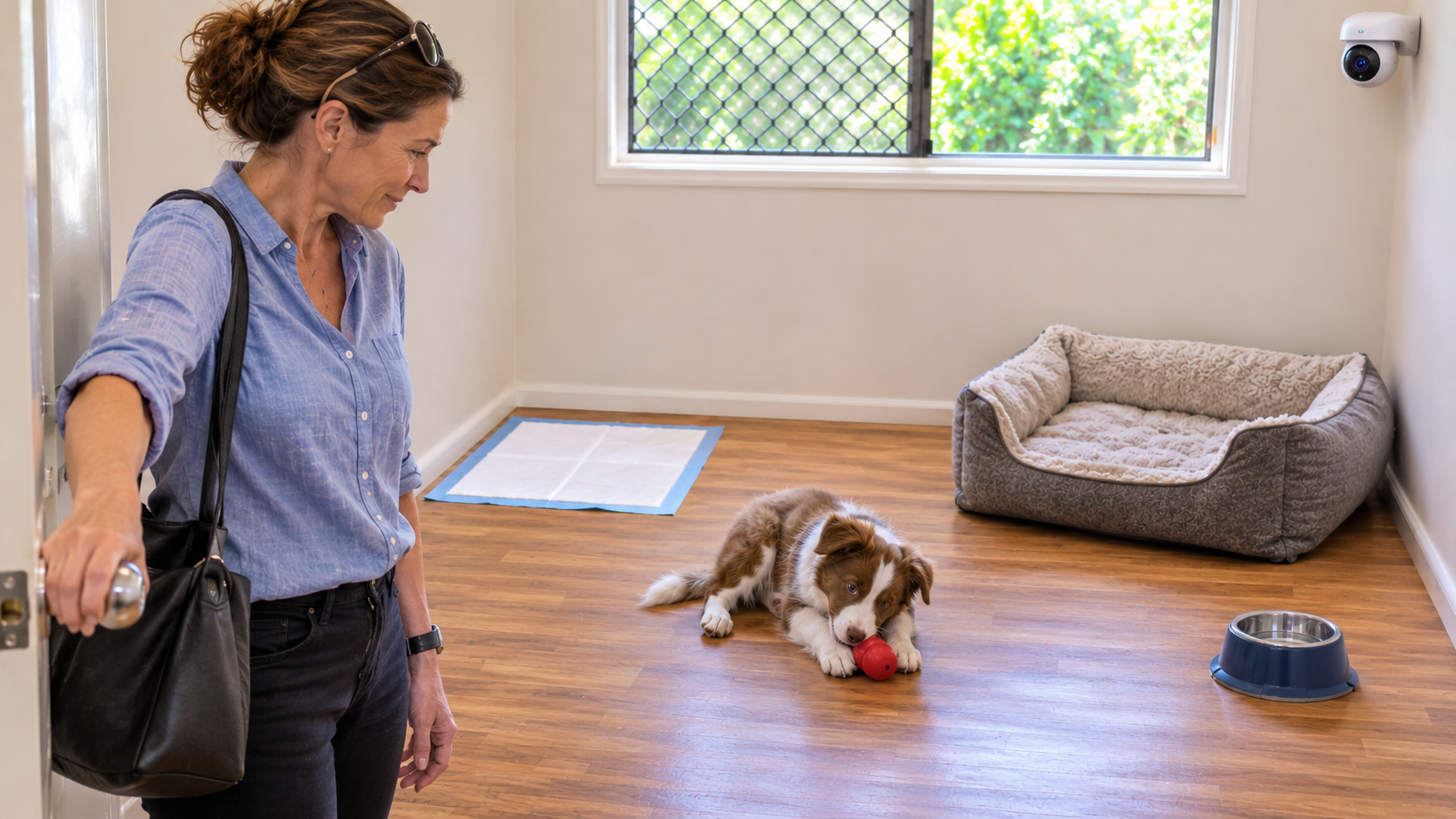
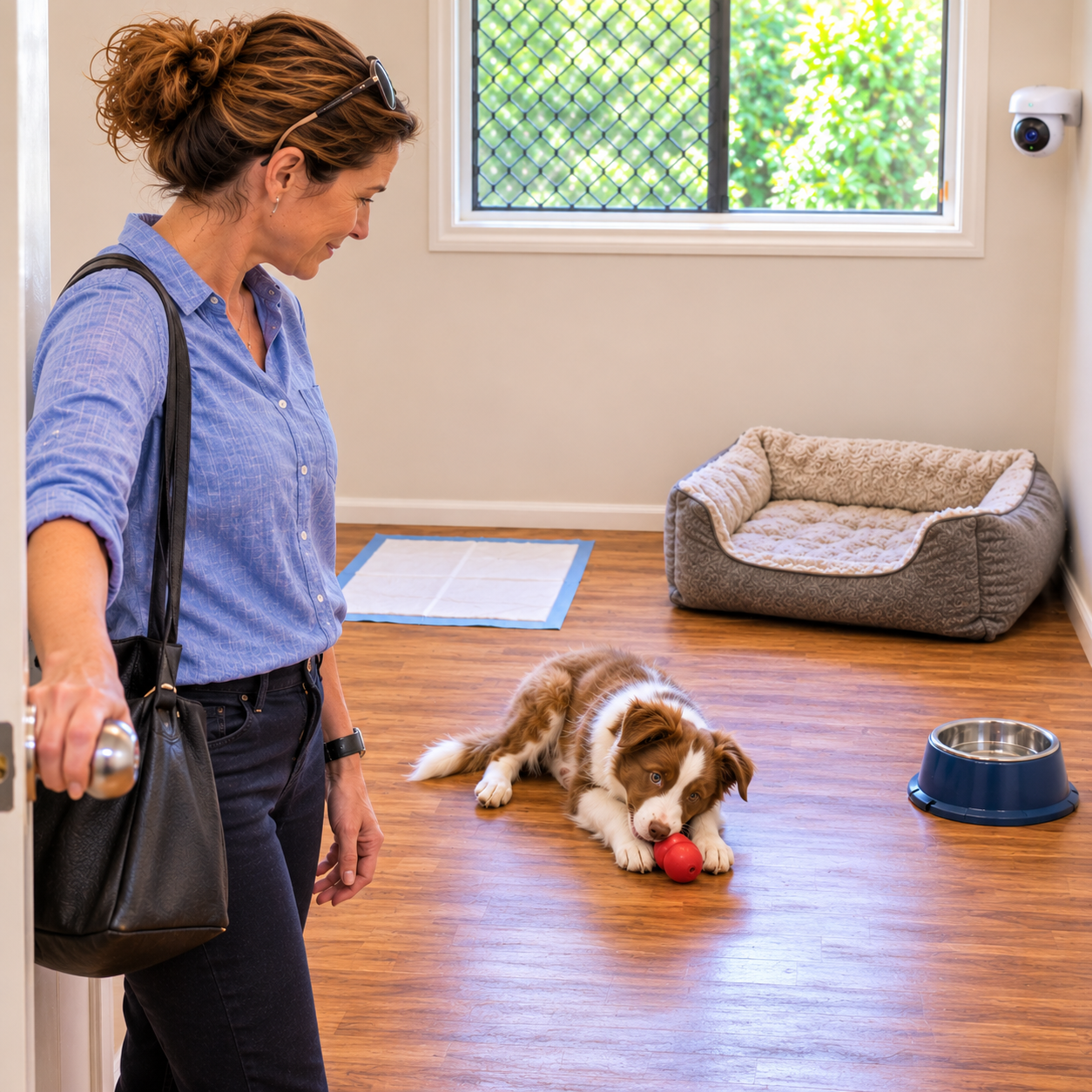
Think about where your puppy will spend time when you cannot supervise. It needs water, somewhere comfortable to sleep, room to move, suitable shelter and a separate toilet area if necessary.
CLEAR owner Caroline Strainig raised several puppies while working full-time, before becoming a professional trainer. Secure, puppy-proofed yards and sensible resident dogs helped make those arrangements successful.
An enclosed yard can work well, provided you’ve checked for escape routes, poisonous plants, chemicals, water hazards and anything dangerous to chew. Adequate shade and protection from the weather are essential.
An indoor puppy-proofed room or secure pen is another option. Lightweight pens can tip or be climbed, so check they’re sturdy and free of trapping hazards. An open crate attached to a secure pen can provide a comfortable sleeping area, but a closed crate isn’t suitable for an entire working day.
Help your puppy enjoy time alone
One of the most useful things you can do is make your puppy’s safe area part of everyday life, even when you’re home.
Encourage it to rest or play there while you cook, answer emails or do household jobs. Start with brief separations, perhaps moving into another room for a few moments, and gradually build up according to how comfortably your puppy copes.
Once it’s happy with you elsewhere in the house, try very short departures. A trip to the letterbox may be enough initially.
Food-filled toys and suitable chews can help keep a puppy happily occupied, but don’t reserve them exclusively for departures. Offer them regularly while you’re home too, so they don’t become a signal that you’re about to leave. Always check they’re safe for your puppy to use without supervision.
Enjoy your time together, while also giving your puppy opportunities to relax without constant attention.
Organise some daytime company
A trusted person visiting during the day can provide company, play, toilet opportunities and a check that everything is going well. Very young puppies may need several visits or someone staying longer.
Pet sitters are one option, but don’t overlook local Facebook groups, neighbourhood noticeboards and word of mouth. A retiree might enjoy some puppy company, perhaps in return for a modest payment or reciprocal arrangement.
Another possibility is inviting a trusted friend or relative to stay for a while. Someone visiting from interstate might welcome free accommodation in Brisbane in exchange for helping with your puppy.
A sensible, friendly resident dog can also make a real difference. Caroline found this particularly helpful when raising puppies while working, although it’s important that the older dog genuinely enjoys the puppy’s company and isn’t constantly being pestered. Spend time observing how they interact before considering leaving them together unsupervised. If there’s any doubt, safely separate them while you’re away.
Another dog won’t necessarily prevent separation distress, but compatible canine company can make time at home much more enjoyable.
If considering daycare or care in someone else’s home, look for a quiet, well-supervised environment rather than somewhere unfamiliar dogs constantly come and go. Check vaccination arrangements with your vet.
See what happens when you’re away
A webcam is one of the most useful tools for checking how your puppy is coping. It lets you see whether your puppy settles, sleeps and plays, or spends its time crying, pacing or trying to escape.
You don’t need expensive equipment. Apps such as Barkio and AlfredCamera can turn an old phone, tablet or laptop into a monitor. A simple camera can provide valuable information about how well your arrangements are working and whether anything needs adjusting.
Make mornings count
Allow enough time before work for toileting, breakfast, a little training and some suitable play or exercise. Give your puppy another toilet opportunity and time to settle before you leave.
Keep departures relaxed and matter-of-fact. The aim is for coming and going to become an ordinary part of your puppy’s day, rather than a major event.
Don’t forget the neighbours
Some puppies bark, howl or protest when left alone, and neighbours may have limited patience, particularly in apartments and townhouse complexes. Think about where your puppy spends time. A room as far from your neighbours as possible, with windows closed, air conditioning to keep it comfortable and quiet music or white noise playing, may help reduce disturbance. One CLEAR client received a council complaint just three days after bringing her puppy home. A camera can help you monitor noise, while friendly communication with neighbours may help prevent misunderstandings.
When things aren’t going to plan
Some puppies take longer than others to feel comfortable on their own. Persistent screaming, frantic escape attempts or an inability to settle suggest your puppy needs more support. Shorter separations, changes to its environment or additional daytime care may help. For significant separation distress, seek professional advice and involve your vet where appropriate.
And if you return to a toilet accident or something chewed, there’s little point in scolding. It’s more useful to look at whether the setup, supervision or toilet arrangements need adjusting.
Think carefully before taking the plunge
Having a puppy while you’re working can work very well, but there’s no sugarcoating it. The first few weeks, or even months, can be hard yakka, with disrupted routines, toilet accidents, chewing mishaps and perhaps some barking that won’t endear you to the neighbours. And that’s one thing the keyboard warriors have right!
So think it through carefully and make sure it’s the right decision for you, taking into account your working hours, living arrangements and the support you’ll have available.
If you decide a puppy might be too much of a stretch, why not consider a golden oldie? An older dog that’s already lived happily in circumstances similar to yours may be a wonderful alternative. Ideally, look for one with a proven history of coping comfortably with time alone, particularly if you live in an apartment or townhouse.
The aim, after all, is to find a dog that’s a good fit for your life — and a home that’s a good fit for the dog.