You’ve just toileted your puppy and five minutes later there’s another puddle on the floor. You’re wondering how such a small body can possibly contain so much pee — and whether you’ll ever stop cleaning it up.
Take heart. Your puppy probably isn’t being stubborn or difficult. In fact, there’s a good chance it’s doing exactly what it thinks you want.
How the problem starts
Most puppies go to their new homes at around eight weeks, before their vaccination course is complete. Pee pads can seem like an easy solution, particularly when a puppy doesn’t yet have access to a safe outdoor toilet area.
The puppy wees on the pad. Success. You praise it and replace the pad. It does it again. And again. For the next several weeks, your puppy becomes very good at toileting inside.
Then one day the pads disappear and the puppy is taken outside. “Right. From now on, you wee out here.”
Unfortunately, nobody has explained the change of rules. From the puppy’s point of view, it hasn’t failed toilet training at all. It may actually have learned the original lesson extremely well.
Pee pads can create another problem
Dogs can develop preferences not only for where they toilet, but for the surface — or substrate — underneath their feet.
A puppy that spends weeks toileting on something soft and absorbent may start looking for similar surfaces. Unfortunately, the average house contains plenty of them: carpet, rugs, bathmats and towels left on the floor.
The puppy isn’t being naughty. It has simply learned that a soft, absorbent surface is an appropriate place to toilet. That’s why, wherever practical, CLEAR prefers to start puppies on a surface closer to the one they will eventually be expected to use.
Start outside if you safely can
If your puppy’s eventual toilet is going to be outside on grass, establish that habit from the beginning if possible.
If you have a private yard your veterinarian considers safe, take your puppy out frequently, particularly after waking, eating, drinking and playing. Every successful outdoor wee is another rehearsal of the habit you want.
If you don’t have a safe private yard, don’t risk heavily dog-trafficked communal ground simply for the sake of toilet training. Parvovirus can be extremely serious, so talk to your veterinarian about local disease risk and safe alternatives.
Bring the outside toilet home
If grass isn’t safely available yet, bring something similar to the puppy.
Real turf is CLEAR’s preferred option if practical, but a roughly one-square-metre piece of artificial turf can also work well. It gives the puppy room to sniff and choose a spot, feels very different from a soft pee pad and, importantly, is portable.
When your veterinarian says your puppy can begin toileting outside, take the familiar turf with you and place it where you eventually want the puppy to toilet.
Artificial turf at home → artificial turf outside → grass.
That’s a much smaller behavioural leap than pee pad inside → suddenly expected to wee on grass outside.
Borrow a backyard — and perhaps a dog
No safe yard of your own? Perhaps you can borrow one.
If friends or family have a private garden that isn’t frequented by unknown dogs, ask your veterinarian whether it’s suitable for your puppy.
A calm, housetrained adult dog may help too. Apart from demonstrating that grass is a perfectly sensible place to wee, the scents it leaves behind provide another useful clue. It won’t work magic with every puppy, but sometimes another dog helps make the message clearer.
Already have the problem? Go back to puppy rules
If your puppy is old enough to go outside but steadfastly refuses to toilet there, forget about its age and treat it like an eight-week-old puppy again.
That means no wandering freely around the house waiting for an accident. Watch for sniffing, circling, wandering away or suddenly becoming restless.
A puppy playpen can be invaluable. CLEAR owner and head trainer Caroline Strainig often puts inexpensive lino underneath the pen so accidents can be cleaned thoroughly without ruining carpets.
A correctly introduced crate is another useful management tool. If the puppy goes outside and nothing happens, bring it back in, settle it in the crate for a short period — perhaps half an hour — then take it straight outside and try again.
The crate isn’t punishment or a way of making a puppy hold on for unreasonable periods. It simply helps stop the puppy rehearsing the behaviour you’re trying to change. Every indoor wee reinforces the old habit, so the aim is to have as many of the puppy’s next wees as possible happen in the right place.
Stack the odds in your favour
Learn when your puppy is most likely to need to go. Take it out after waking, eating, drinking or energetic play. During an intensive reset, you may initially need to offer opportunities every half-hour, particularly at high-risk times.
Keep the first few minutes outside quiet. Let the puppy sniff and give it time to get down to business. If it toilets, let it finish, then reward immediately with something it really values and allow some sniffing, walking or play.
That last part matters. You don’t want a clever puppy learning another unfortunate rule: “If I wee, I immediately get taken back inside.”
If nothing happens, go back inside, supervise closely or use the crate or pen, then try again shortly.
Use the old toilet as a bridge
If your puppy already has a strong preference for pee pads, use that preference temporarily.
Take a previously used pad outside and put it where you want the puppy to toilet. The familiar surface and scent provide a useful clue: “This is where the toilet is now.”
Once the puppy is toileting on the pad outside, position it on grass and gradually reduce its size, encouraging the puppy to toilet partly or completely beside it. Eventually, remove it.
The pad isn’t the destination. It’s the bridge.
Accidents are information
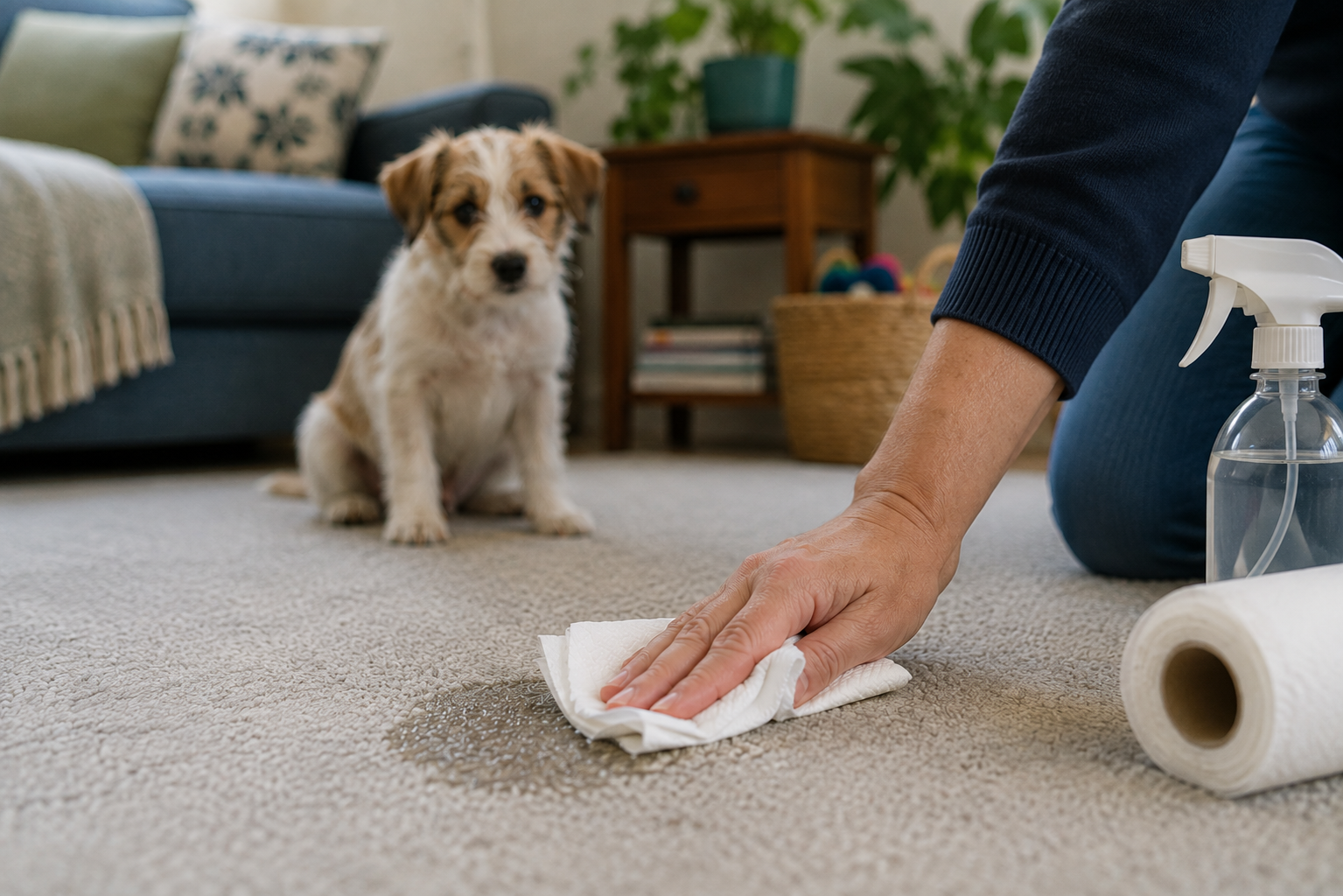
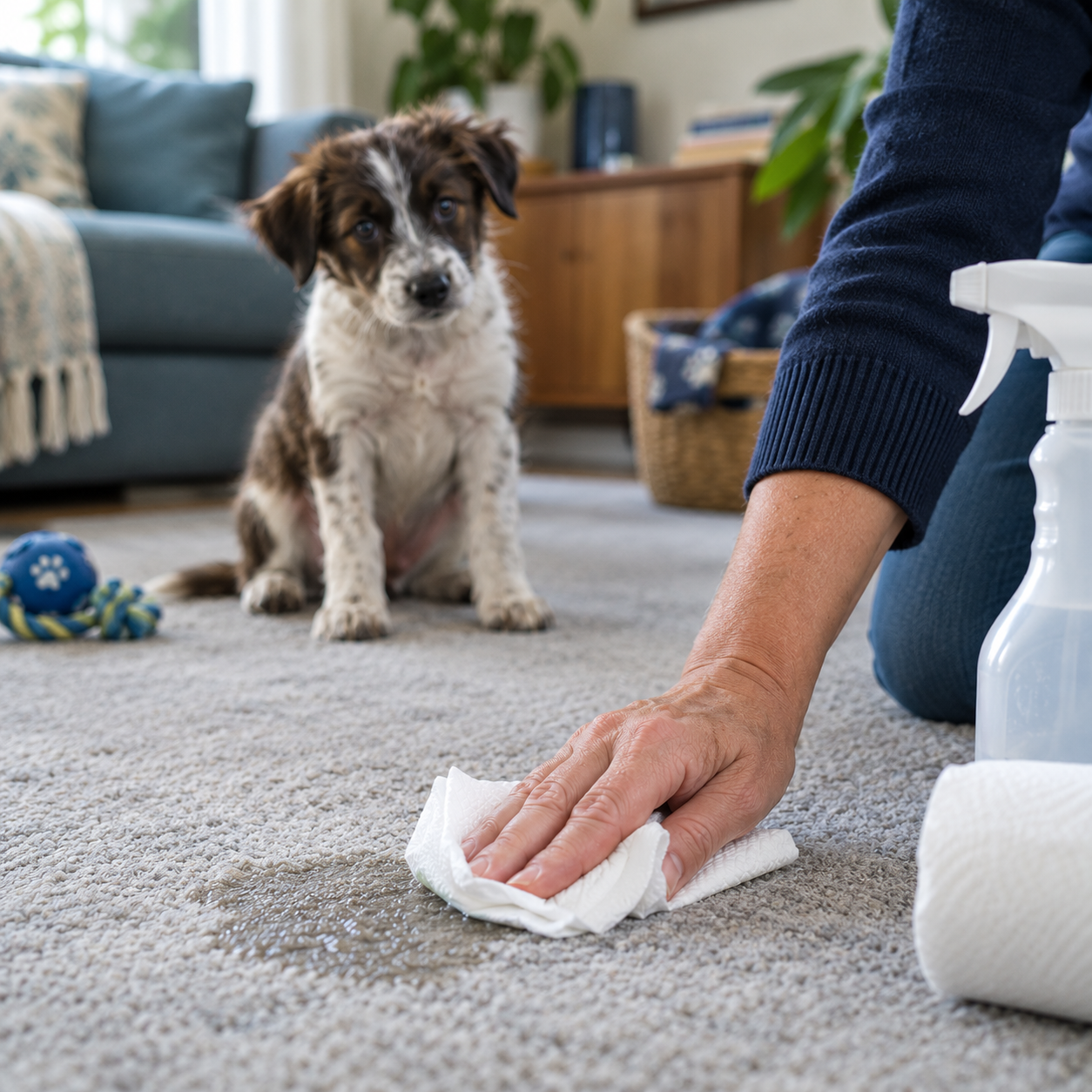
Getting cross over an indoor puddle achieves nothing. Clean accidents thoroughly with an enzymatic cleaner so lingering odour doesn’t continue advertising that spot as a toilet.
More importantly, ask what went wrong. Had the puppy just woken up? Had it eaten or drunk? Did it have too much freedom after an unsuccessful trip outside?
An accident is useful information. Adjust the setup and try to prevent the next one.
If your puppy is toileting unusually frequently, straining, drinking much more than usual or suddenly having accidents after previously being reliable, talk to your veterinarian to rule out a medical cause.
Prevention is much easier than cure
If you have a private yard your veterinarian considers safe, use it from the start. If you don’t, talk to your vet about disease risk and consider real grass, artificial turf or a suitable friend’s private yard.
If you’ve already relied heavily on pee pads and now have a puppy that refuses to wee outside, don’t despair. The puppy isn’t being stubborn or naughty. It has simply learned one set of rules and now needs help understanding the new ones.
Sometimes good toilet training isn’t about teaching a puppy where to wee for the first time. It’s about helping them adjust when the rules have changed.