“I’d love to do more training with my dog, but I just don’t have time.” We hear it a lot.
And if training means finding a spare 20 minutes, getting organised and setting out to have a proper training session, it’s easy to see why. Some days, finding those 20 minutes — let alone having the energy to use them — simply isn’t going to happen.
But training doesn’t always have to work that way. In an ideal world, perhaps we’d all have more time to devote to it. In the real world, sometimes the best answer is to train smarter and make the most of the time and energy you do have.
Grab the little moments — they add up
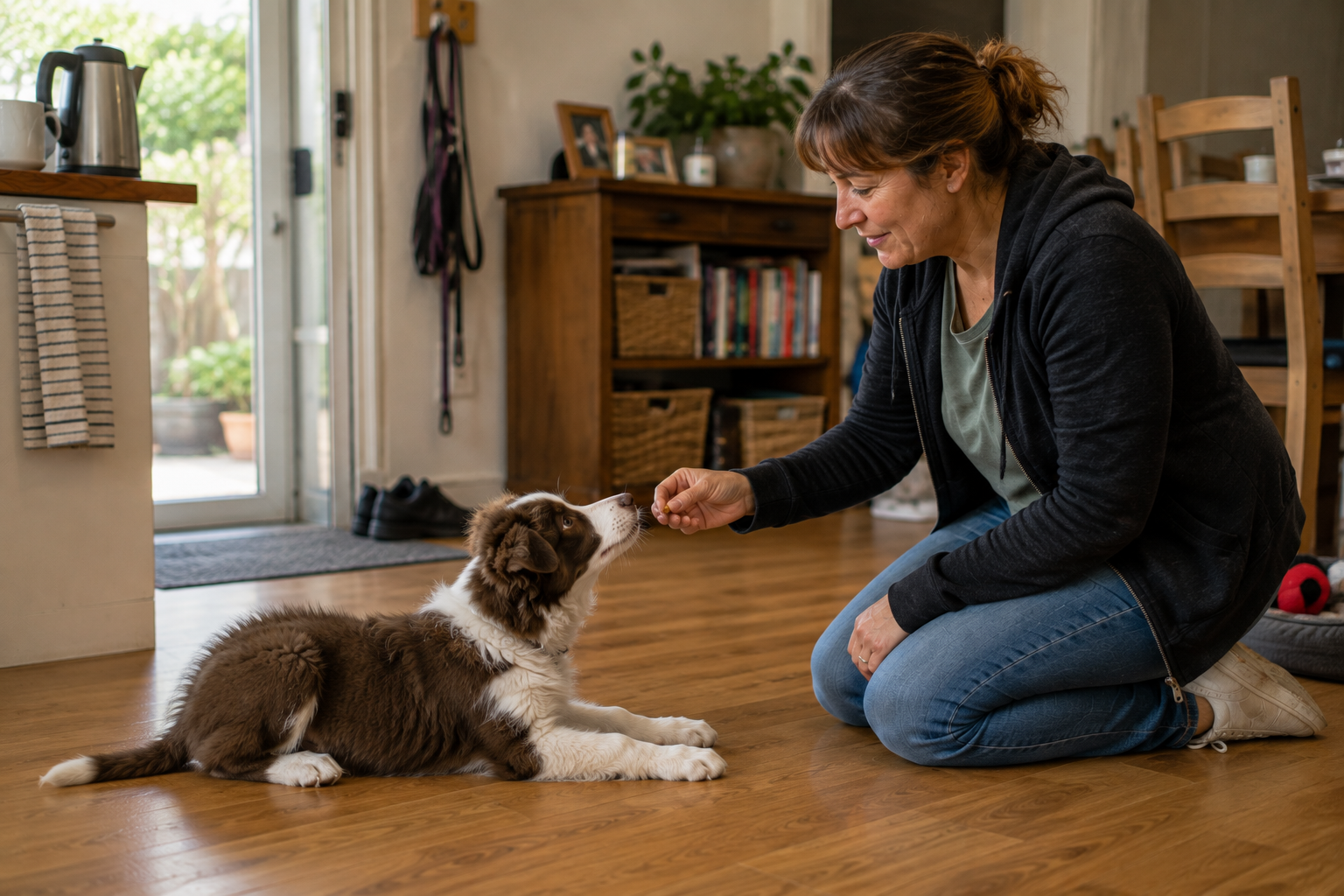
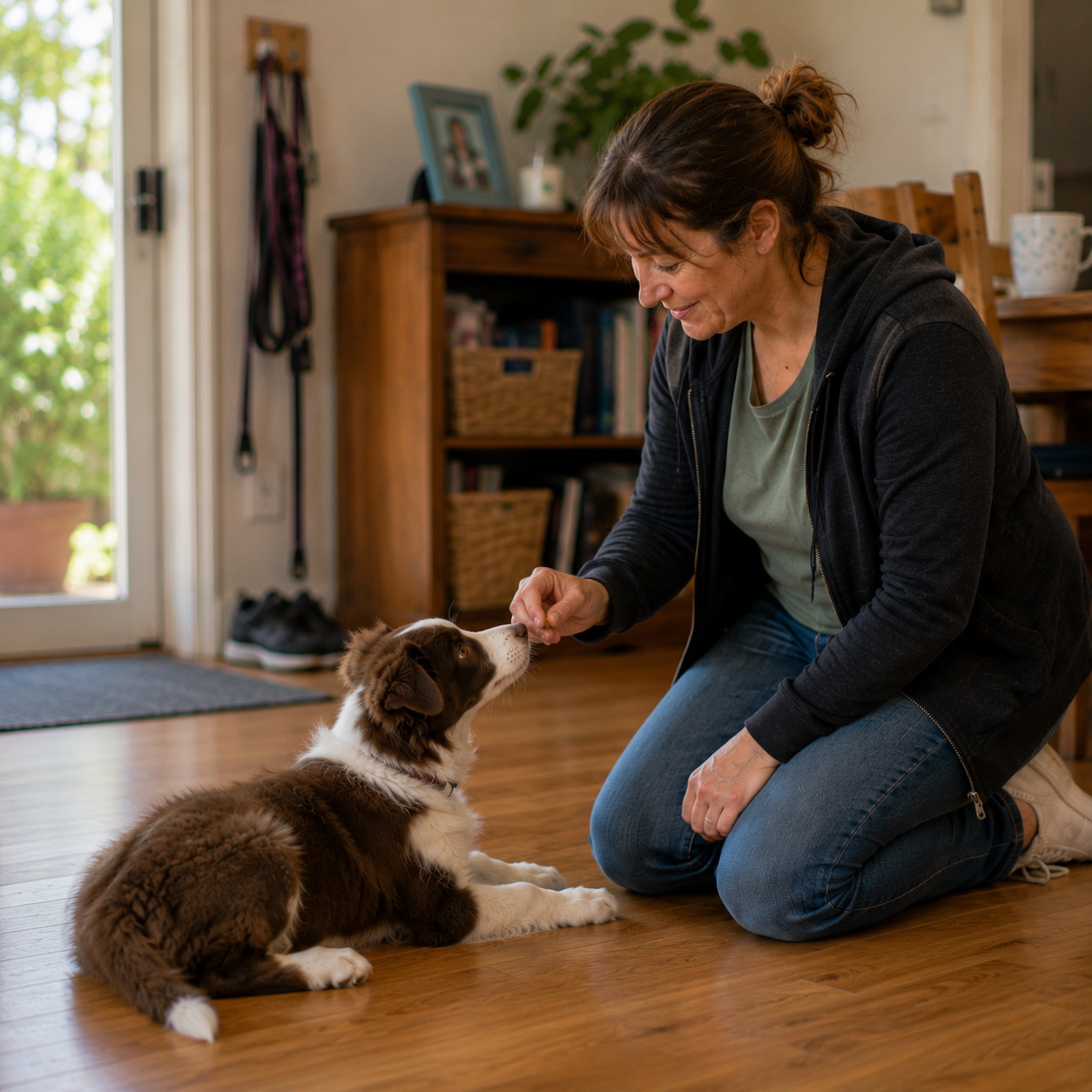
Some of the best training can be short, spontaneous and woven into everyday life. Grab a few treats while the kettle boils, practise a recall while you’re in the garden or reward your dog simply because you caught them doing something you liked.
Thirty seconds here and two minutes there may not feel like much, but those little moments can add up surprisingly quickly.
Look at the things you already do with your dog every day. They have to eat, go through doors, have the lead put on, go into the garden and get into the car. Each can become a tiny training opportunity without adding another job to your day. About to feed your dog? Occasionally ditch the bowl and use some of dinner for training. Heading outside? Grab ten treats and spend a couple of minutes practising Let’s Go, This Way or Wait. In the backyard? Add a couple of recalls.
You don’t need to fit everything in. Pick one or two things and have some fun with them.
A favourite for really busy days
Here’s one we particularly like for those days when you get home tired and your dog is looking at you beseechingly because you haven’t done anything together. Put some treats in your dog’s bowl — or use part of their dinner if they like their kibble enough to work for it — and sit down next to a bench with the bowl on your lap. Make yourself a cuppa, pour a glass of wine or grab a beer if you like. You don’t even have to get up.
Take a piece of food, enthusiastically call “Freebie!” and toss it a few feet away. Let your dog chase it and, when they’ve eaten it and come back to re-engage with you, throw another.
If your dog jumps on you, climbs over you, dives into the bowl or starts pestering for the food, calmly put the bowl back on the bench out of reach. Once they approach again with four paws on the floor and without trying to mug you for the contents, the bowl comes back and the game starts again. There’s no need for a lecture. Your dog simply discovers that barging makes the goodies disappear, while a little self-control keeps the fun going.
In a few minutes you’re building your relationship, adding value to your voice, developing some basic impulse control and, hopefully, convincing your dog that interacting with you is the best thing since sliced bread.
Most importantly, you’ve done something worthwhile together on a day when it would have been very easy to do nothing.
Make spontaneous training easy
Make it easy to take advantage of those little pockets of time. Keep a stash of treats somewhere handy, carry a few dry ones in your pocket or leave some rewards near the back door if that’s where you often practise.
Then start noticing what your dog does right. Perhaps they come when called, wait instead of barging through a doorway, walk nicely beside you or settle quietly while you’re having coffee. When you spot something you like, mark it with your usual “Yes”, if you use a marker word, or simply tell them they’re a good dog, then reward them.
You haven’t had to set up a training exercise at all. Your dog offered you something you liked and you took the opportunity to tell them. Better still, they begin to discover that rewards can happen at any time — not just when you’ve walked to the pantry and produced the treat pouch.
And don’t feel you have to keep going because you’ve started. Three or four lovely repetitions may be plenty. If your dog is engaged and you’ve achieved what you wanted, stop.
Short and successful can be much more useful than carrying on until one of you gets bored.
Training is part of life
This isn’t just for puppies. Older dogs can enjoy these little interruptions to the day too: they get to use their brains, interact with you and discover that something interesting might happen at any moment.
You could even make yourself a little checklist of things you’d like to practise during the day — a recall, a Wait, a few steps of loose-lead walking, a settle, a trick or simply rewarding some lovely calm behaviour — and grab the opportunities as they arise.
Will this replace every longer training session, walk or outing? Of course not. Sometimes we need more time to work properly on a particular skill, and when you have the time and energy, make the most of that too. But life gets busy, and on those days don’t write training off because you haven’t got 20 spare minutes.
Use the minute you do have.
By the end of the day, those little games and bits of practice may have quietly added up to 15 or 20 meaningful minutes with your dog.