
Dog ownership does strange things to otherwise intelligent people. We make decisions we’d question in almost any other part of life, then look surprised when they don’t work out.
Dog trainers aren’t exempt. CLEAR Dog Training owner Caroline Strainig freely admits she’s had her fair share of spectacularly silly moments, usually with a dog standing nearby wondering why the human is making life so complicated.
So, with Caroline firmly among the guilty, here are seven dumb things perfectly sensible dog owners do — and how to avoid them.
1. Hoping that magic is real
At CLEAR Dog Training, this is known as the magic method: asking your dog to do something when you know there’s a good chance they won’t — and hoping that somehow, this time, magic happens.
Your puppy has ignored the last three recalls. There are dogs playing 50 metres away and you know you have approximately zero chance of getting him back. So naturally, you unclip the lead. Off he goes. “Come!” Nothing. “COME!” Still nothing. By attempt number nine, you’re running after him while he’s having the most entertaining afternoon of his life.
If the odds are stacked against success, change them. Use a long line, reduce the distraction, get closer and make the exercise easier. Good training sets your dog up to succeed. The magic method is considerably less reliable.
2. Giving the puppy the keys to the house
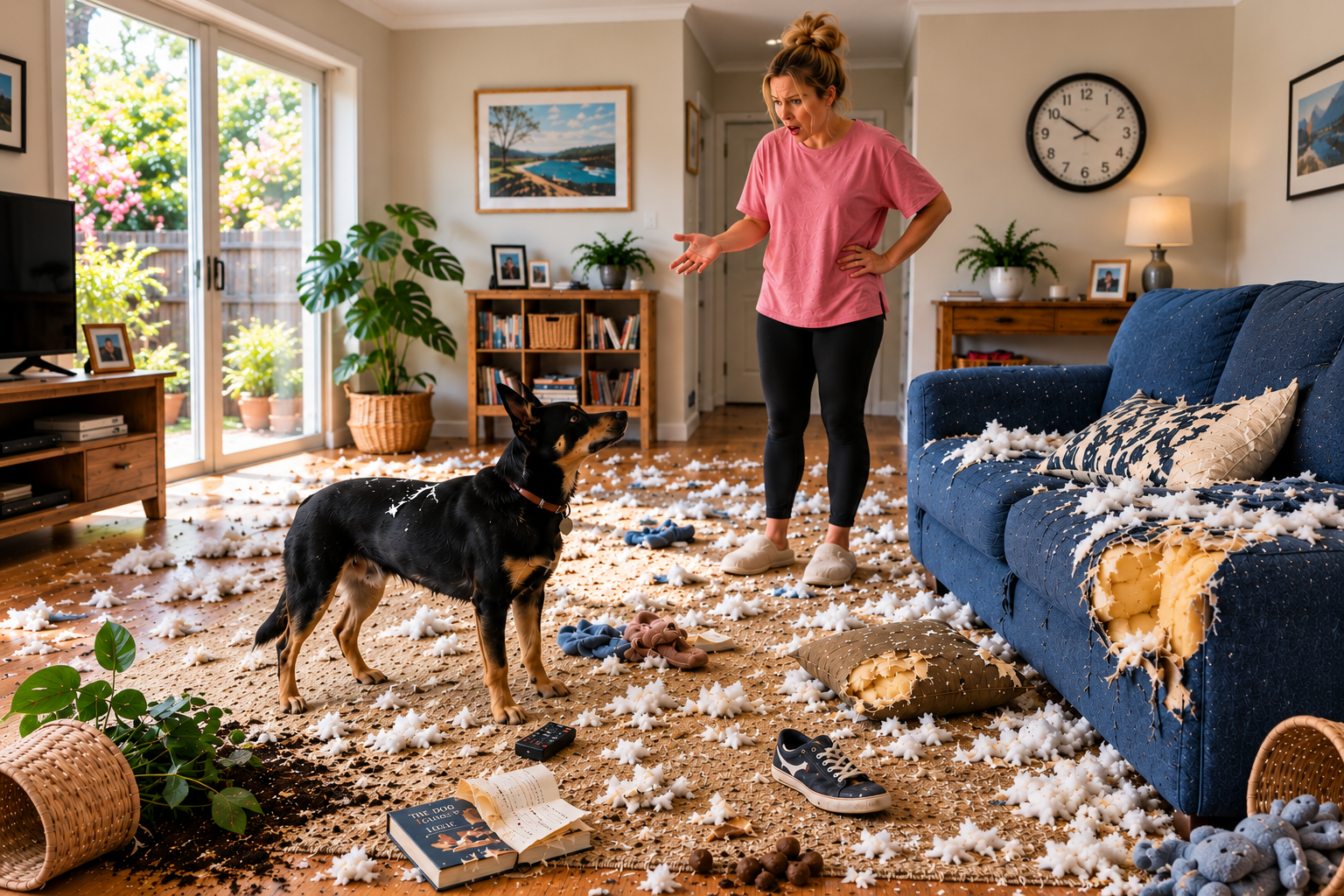
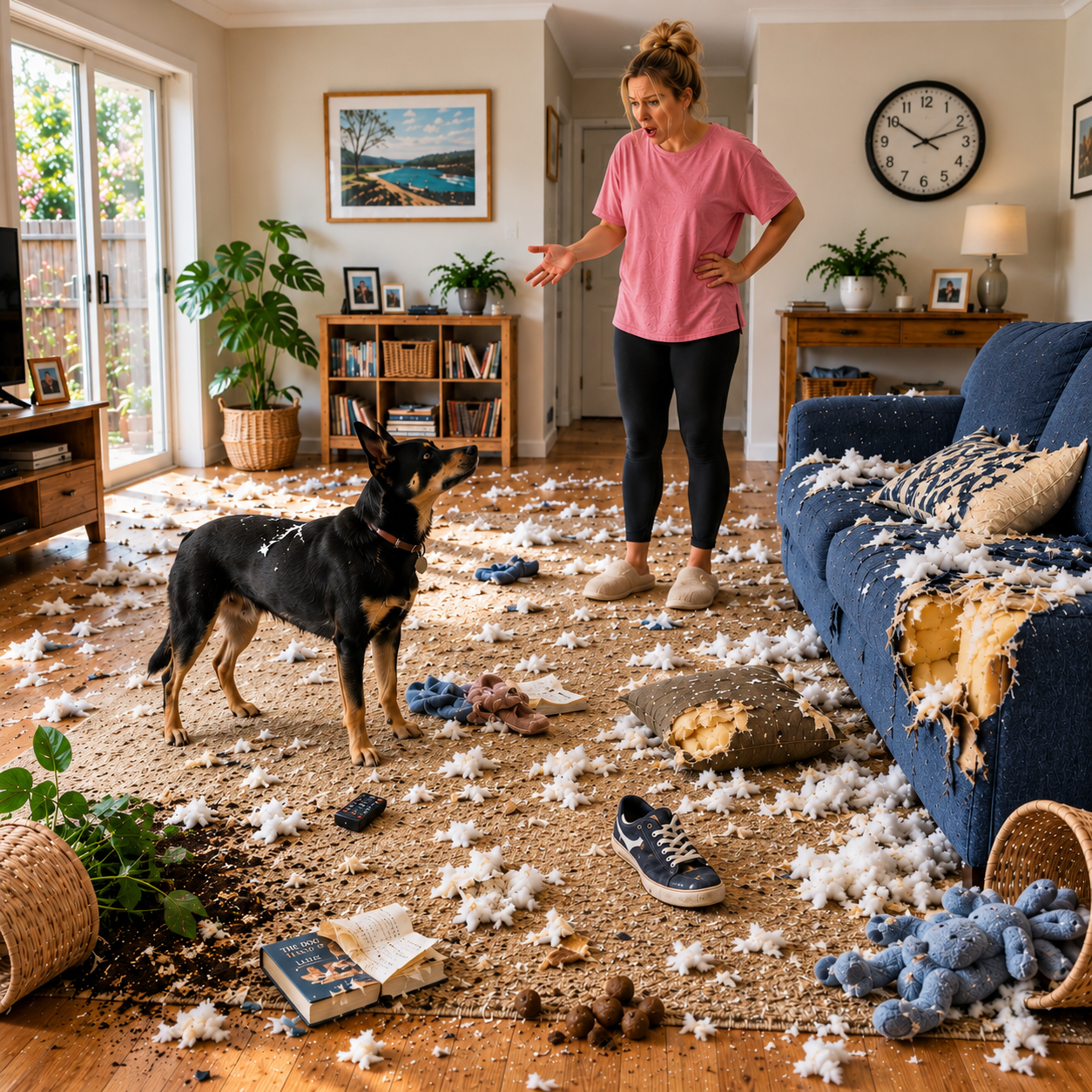
Your puppy has been home for three days. He doesn’t know where the toilet is, which objects cost $300, whether electrical cords are edible or why shoes aren’t chew toys. So naturally, he gets the run of the house while you go and make coffee.
Five minutes later: “HE’S PEED ON THE RUG!” Well, yes.
Puppies need supervision and sensible management while they learn the rules. If you can’t watch them, use a puppy pen, crate, baby gate or puppy-proofed area, and gradually increase their freedom as they become reliable. Don’t hand the car keys to a toddler and then complain about the parking.
3. Letting your dog train you
Dogs can be master manipulators, although usually not in quite the calculating way that sounds. Your dog jumps all over you. You ask for a sit. He sits beautifully, so you give him a treat. Excellent training, you think.
Except your dog may have learnt a slightly different lesson: jump on human → human asks for sit → sit → biscuit. Next time he wants a biscuit, guess where the sequence may begin?
Trainers call these behaviour chains. Without realising it, owners can end up rewarding the very behaviour they were trying to stop. Look for opportunities to reward the good behaviour before the nonsense starts: your dog sitting politely before he jumps, being quiet before he barks, or keeping four paws on the floor before he launches himself at you. Sometimes the cleverest dog trainer in the house has four legs.
4. Ruining your recall by making “come” bad news
“Come!” The dog comes, then it gets put in the bath. “Come!” The dog comes, then the nail clippers appear. “Come!” The dog finally returns after doing something dreadful — and gets told off.
Then one day “come” produces a dog who looks at you as though he’d like a little more information before committing himself.
Your recall word should predict good things. Even if your dog has just spent five minutes making you look like an idiot, if he responds to “come”, reward the fact that he came. If you need to stop him doing something, go and get him, use a collar grab or another cue such as “Let’s go”. Don’t poison the word you may one day really need.
That’s also why CLEAR uses a specific recall cue rather than relying on the dog’s name. Dog names inevitably get used for all sorts of things: “Fido. Fido! FIDO! Fido, will you PLEASE…” Before long, Fido is just background noise. Keep “come” special.
5. Forgetting that little puppies turn into big dogs
There’s nothing quite as lovely as having your tiny new puppy curled up beside you on the bed. Unfortunately, puppies grow.
Six months later, that adorable little bundle may have become the size of a very large, snoring person who sleeps diagonally, kicks you in the kidneys and somehow occupies three-quarters of the mattress. The same principle applies to your favourite lounge, which you may eventually discover is no longer yours.
There’s nothing wrong with dogs on furniture if that’s what you want. But teaching an adult dog that a long-standing privilege has suddenly disappeared can be harder than setting boundaries while they’re young. Teach that furniture is by invitation, and that getting off when asked is rewarding too. Or buy a bigger bed and another lounge.
6. Turning training into boot camp
“No. Stop. Down. Wait. Come here. What have you got? Give me that. NO!”
Before long, having a dog can feel like running a small military academy, and dog trainers can be just as guilty as everyone else. It’s easy to become so focused on preventing mistakes that the poor dog hears a running commentary on everything they’re doing wrong.
Catch your dog getting things right. Reward the quiet settle, the loose lead, the four paws on the floor and the moment your dog chooses you over something interesting. Manage the things that don’t need to become a training battle. And occasionally stop training altogether. Go for a sniffy wander. Play something ridiculous. Enjoy your dog.
7. Thinking the dog park will fix everything
If your dog is anxious or reactive around other dogs, taking them into a busy dog park to “socialise” can be a bit like dropping them into the middle of a very rowdy party and expecting them to relax and make friends. They may not.
Dog parks can be highly arousing. Dogs run, chase, bark, wrestle and rush up to each other. For an anxious or reactive dog, those pressures can pile up quickly — what trainers call trigger stacking. Adrenaline is already high, and one relatively small thing can tip the dog over the edge.
Socialisation isn’t about throwing a dog into the deep end and hoping they learn to swim. If your dog is reactive or anxious, choose situations where you can control distance, keep arousal manageable and help your dog succeed. A busy dog park may not be the place to work on it.
There’s hope for us yet
So, how did you score? How many of these have you done? Did any make you wince with recognition, or were you sitting there thinking, “Ha! I’ve never done any of those”?
If you recognised yourself in a few, you’re in very good company. Dog ownership has a way of making perfectly sensible people do some remarkably silly things. Professional dog trainers included.