
Many new puppy owners are told, “Don’t let your puppy go anywhere until they’re fully vaccinated.” It’s well-intentioned advice, but it can easily be interpreted to mean puppies should stay at home for weeks or even months. That can mean missing one of the most important learning periods of a puppy’s life.
The answer isn’t throwing caution to the wind, nor is it keeping a puppy isolated. It’s about finding a sensible balance between disease prevention and positive early experiences.
The critical window
A puppy’s prime socialisation period occurs during the first 12 to 16 weeks of life. During this short window, they’re learning what is normal, what is safe and what deserves to be worried about. Those early experiences can help shape the adult dog they become.
That’s why sensible disease prevention shouldn’t automatically mean complete isolation. Strategic socialisation means carefully choosing safe, positive experiences during this important learning period rather than simply keeping a puppy at home.
Socialisation isn’t about saying hello
One of the biggest misunderstandings is that socialisation means puppies have to meet lots of dogs and people. It doesn’t.
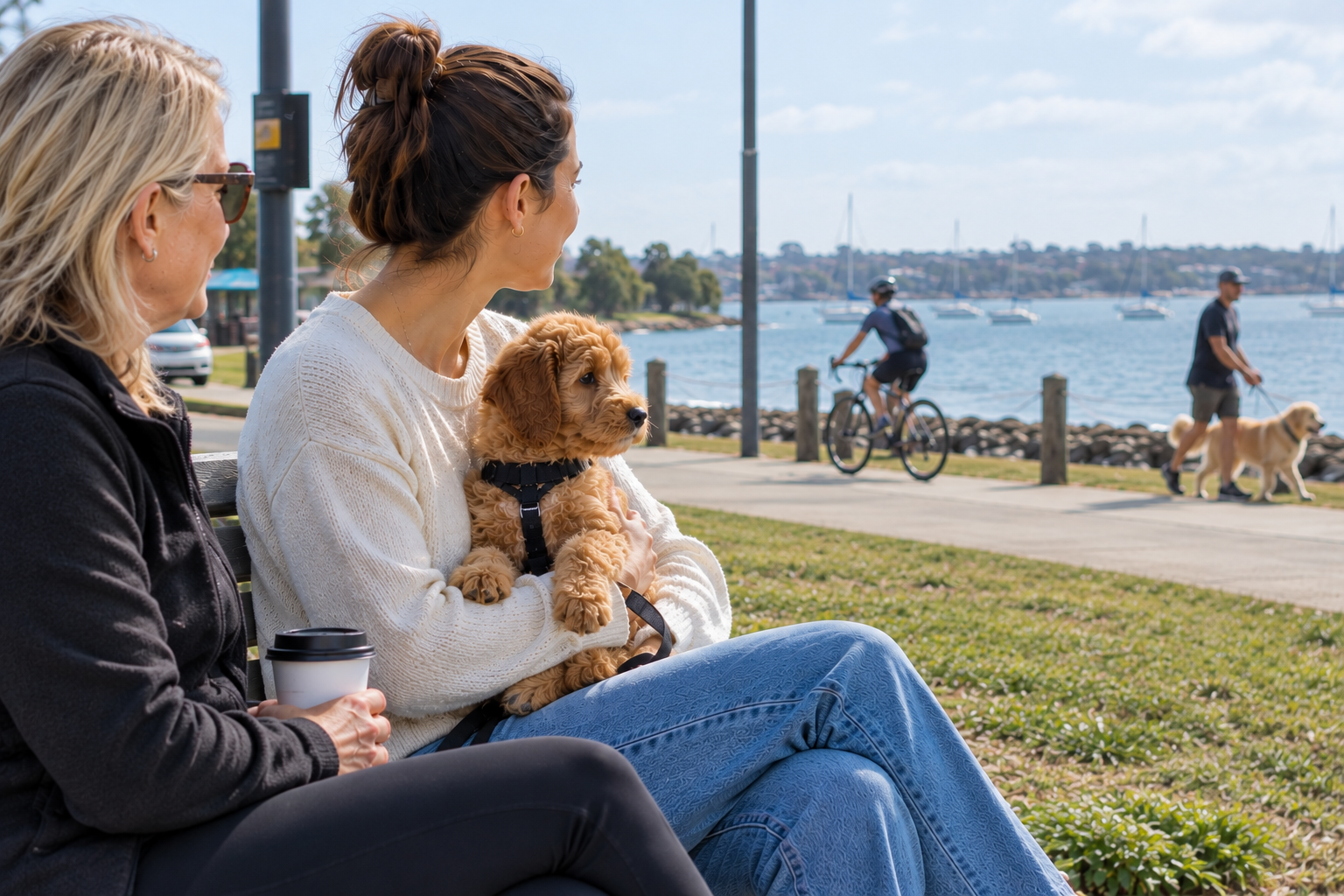
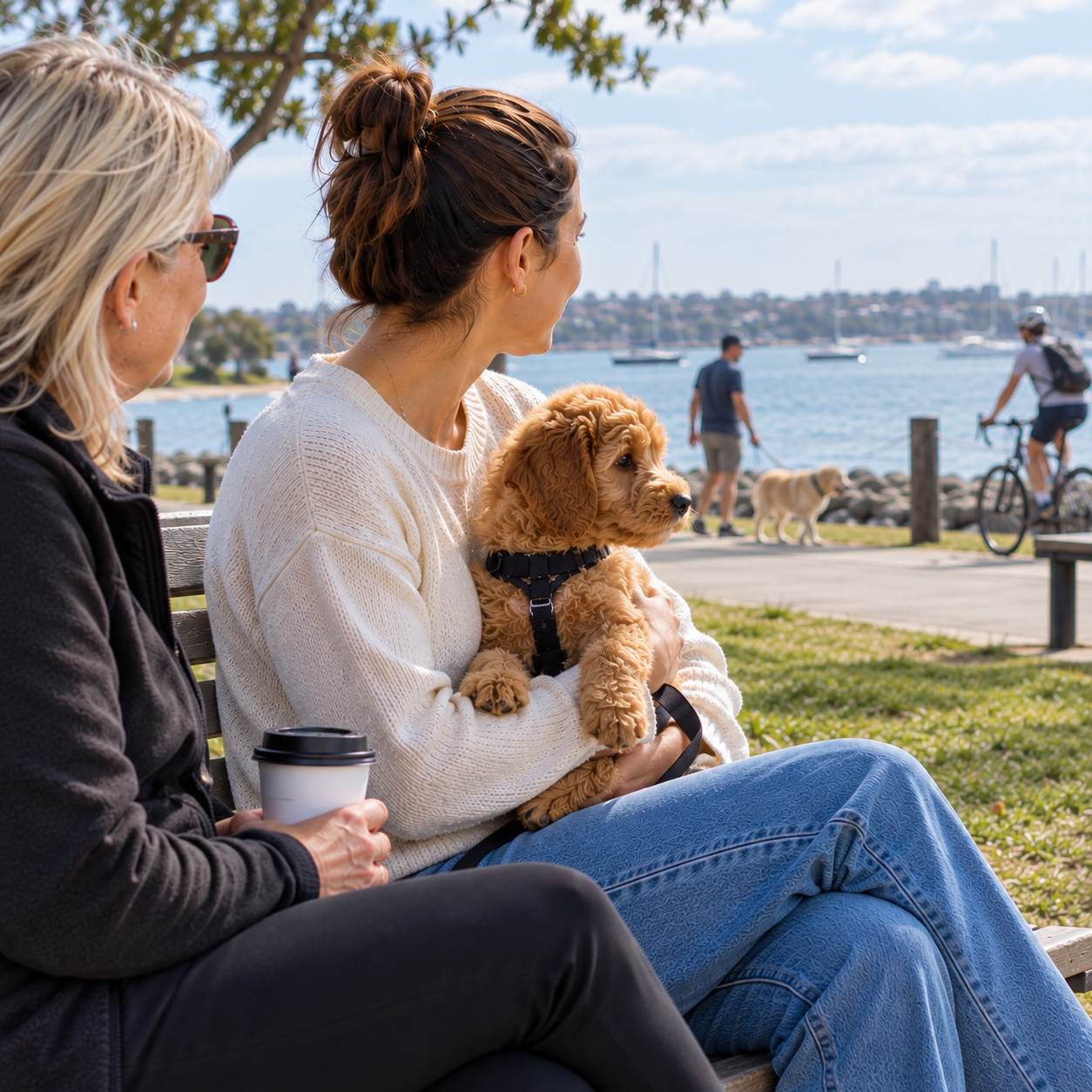
Some of the best socialisation simply involves quietly watching the world go by. Sitting on a picnic rug, watching children play, listening to traffic, seeing bicycles, prams and joggers, or calmly observing another friendly dog from a distance can all help teach a puppy that the world is a safe and predictable place.
The aim isn’t to expose a puppy to everything. It’s to introduce the right things positively and without overwhelming them.
Vaccination advice can vary
Vaccination protocols vary between veterinary practices and according to the vaccines being used. Some puppies may complete an accelerated schedule earlier, while many vets recommend a schedule extending to 16 weeks or beyond.
When CLEAR owner Caroline Strainig’s puppy Hope arrived from New South Wales six years ago, she had been on an accelerated vaccination schedule and was fully vaccinated and ready to explore the world by 12 weeks.
That doesn’t mean the same schedule will suit every puppy. Owners should follow their veterinarian’s advice about vaccination and disease prevention and ask about any particular risks in their local area.
There is another useful question to ask as well: “How can I safely socialise my puppy during this critical period?”
It’s about balance
There can seem to be a curious contradiction here. Some owners come away from a veterinary clinic believing their puppy should barely leave home until vaccinations are complete, yet veterinary practices have long run puppy preschools where incompletely vaccinated puppies can begin learning and socialising from a young age.
The principle behind those classes is sensible: disease risk can be managed without sacrificing an important developmental period.
Puppy preschool isn’t the only option. Depending on veterinary advice and local disease risk, carefully chosen experiences might include watching the world from a picnic rug, being carried through busy places, going for car trips, visiting friends’ homes or meeting a known, healthy, appropriately vaccinated and puppy-friendly dog in a controlled environment.
Parvovirus is a serious disease, and extra precautions may be essential if there are cases in the area. Kennel cough, gastrointestinal infections and other illnesses are also worth avoiding in a young puppy. Behavioural development matters too, however, and keeping a puppy physically safe shouldn’t automatically mean depriving them of positive experiences during such an important stage.
A conversation with the vet can help establish what is appropriate for that individual puppy, taking into account the vaccination protocol being used, local disease risk and the kinds of outings that can be managed safely.
Choose experiences, don’t collect them
Good socialisation isn’t a race to expose a puppy to as many things as possible before an imaginary deadline. More isn’t necessarily better.
Watch your puppy. Give them time to look, listen and investigate. If they’re worried, create more distance rather than pushing them closer. If they’re relaxed and curious, let them explore at their own pace.
A five-minute outing that leaves a puppy feeling confident can be far more useful than an hour of overwhelming experiences. They don’t need to greet every person or dog they see, either. Watching, listening and taking things in from a comfortable distance can be valuable in its own right.
Over those early weeks, all those small experiences begin to add up: a car ride, a pram rolling past, children playing in the distance, a friendly dog across the path, a new surface underfoot. Nothing dramatic, just a puppy gradually discovering what everyday life looks and sounds like.