Bringing home a new puppy is one of life’s great joys. It also comes with puddles on the floor, the occasional poo in completely the wrong place and far more attention to bodily functions than most people ever expected.
Toilet training is one of the most common issues new puppy owners bring to CLEAR Dog Training. Fortunately, most puppies aren’t being naughty. They simply haven’t learnt the rules yet.
The key is good management: make the right choice easy, prevent as many mistakes as possible and give your puppy plenty of opportunities to get it right.
Rule number one: manage, manage, manage
Don’t allow a puppy to wander around the house unsupervised when it might need to pee. Until your puppy is reliable, somebody is watching it, it’s safely confined in an appropriate area, or you know it has just toileted.
That may mean crates, playpens, baby gates, tethers or simply keeping the puppy in the same room as you. If your puppy keeps toileting on a particular rug and it’s practical to remove it, roll it up for a few weeks.
It also helps to look closely at your outside setup. A recent CLEAR visit was to a lovely home where the easiest outdoor access led into a forecourt packed with beautiful potted plants. There was nowhere obvious for the puppy to wander around and toilet without also being presented with umpteen opportunities to dig, chew and investigate.
Sometimes a little fencing, a gate or barrier, or easier access to a suitable part of the garden can make an enormous difference. Set things up so your puppy can succeed without requiring you to be an Olympic sprinter every time it wakes from a nap.
Make outside a good place to be
Your puppy needs to be comfortable in the area where you want it to toilet. Don’t make the garden somewhere it is hurried into for two minutes to perform and then immediately brought back inside.
Spend relaxed time out there together. Play games, do a little training, give your puppy a favourite chew, snuffle mat or LickiMat, or simply potter around. The garden should feel familiar and enjoyable.
There is one important distinction, though. When you take your puppy outside specifically to toilet, don’t immediately launch into a game. Give it a few quiet, boring minutes to sniff and wander first. An excited puppy can become so interested in leaves, birds and everything else going on that it completely forgets why it came outside. Let the puppy toilet first, reward it, and then the fun can begin.
Learn your puppy’s rhythm
There are predictable times when puppies are more likely to need to go: after waking, eating or drinking, after play and excitement, and after being active following a period of rest.
Take your puppy outside at those times rather than waiting for it to tell you. A very young puppy may give almost no warning, and by the time you notice the circling and sniffing, you may have only seconds to act. But puppies aren’t machines. Each one develops its own rhythm, so get to know yours rather than relying entirely on the clock.
And don’t assume that because your puppy has been outside, it must have toileted. This is one of the biggest traps in toilet training. You let your puppy outside for 20 minutes, assume the job must have been done, bring it back inside — and 30 seconds later there’s a puddle on the floor.
The puppy may have spent those 20 minutes asleep on the grass, chasing a leaf or watching the neighbours. Going outside and actually emptying its bladder are two very different things.
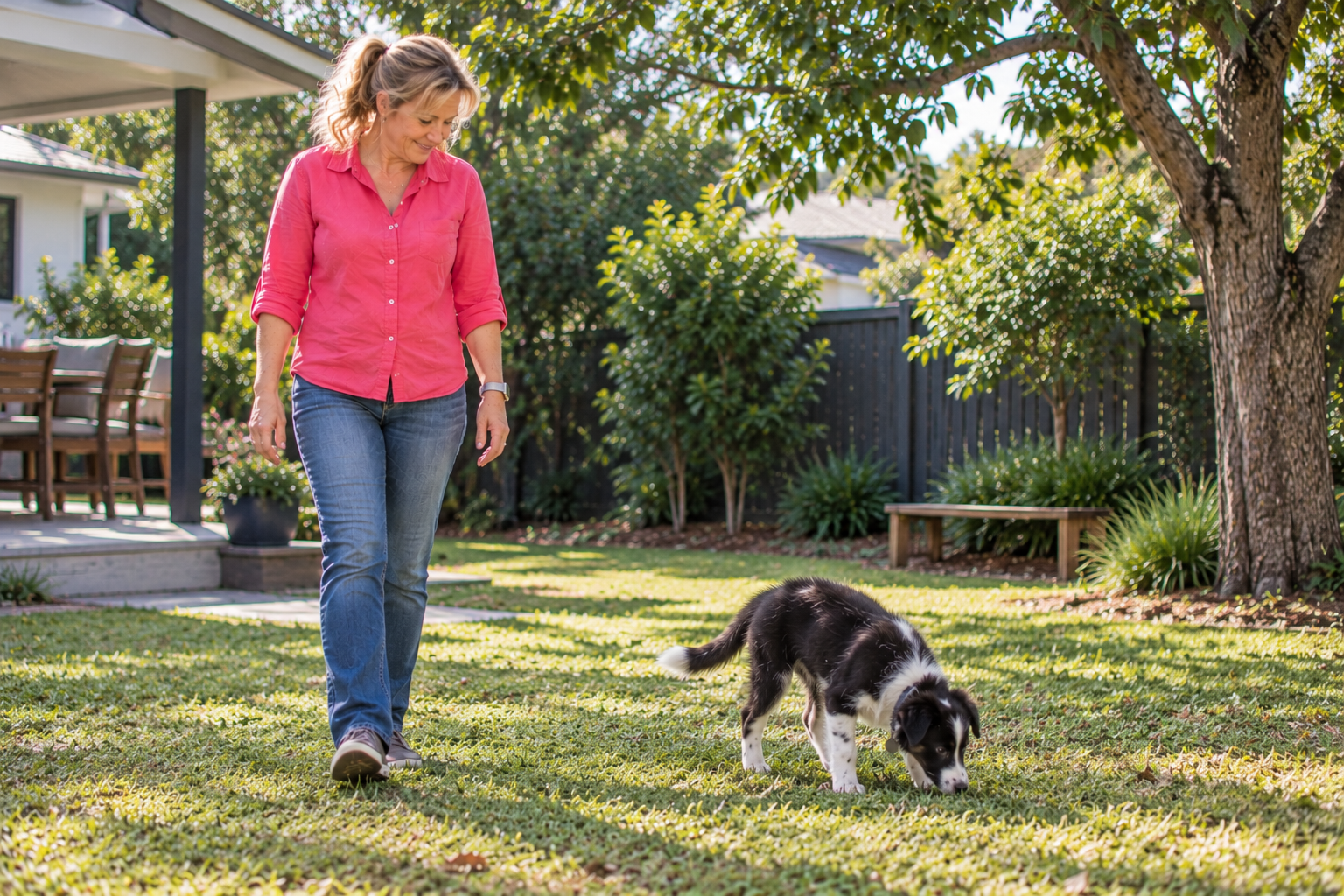
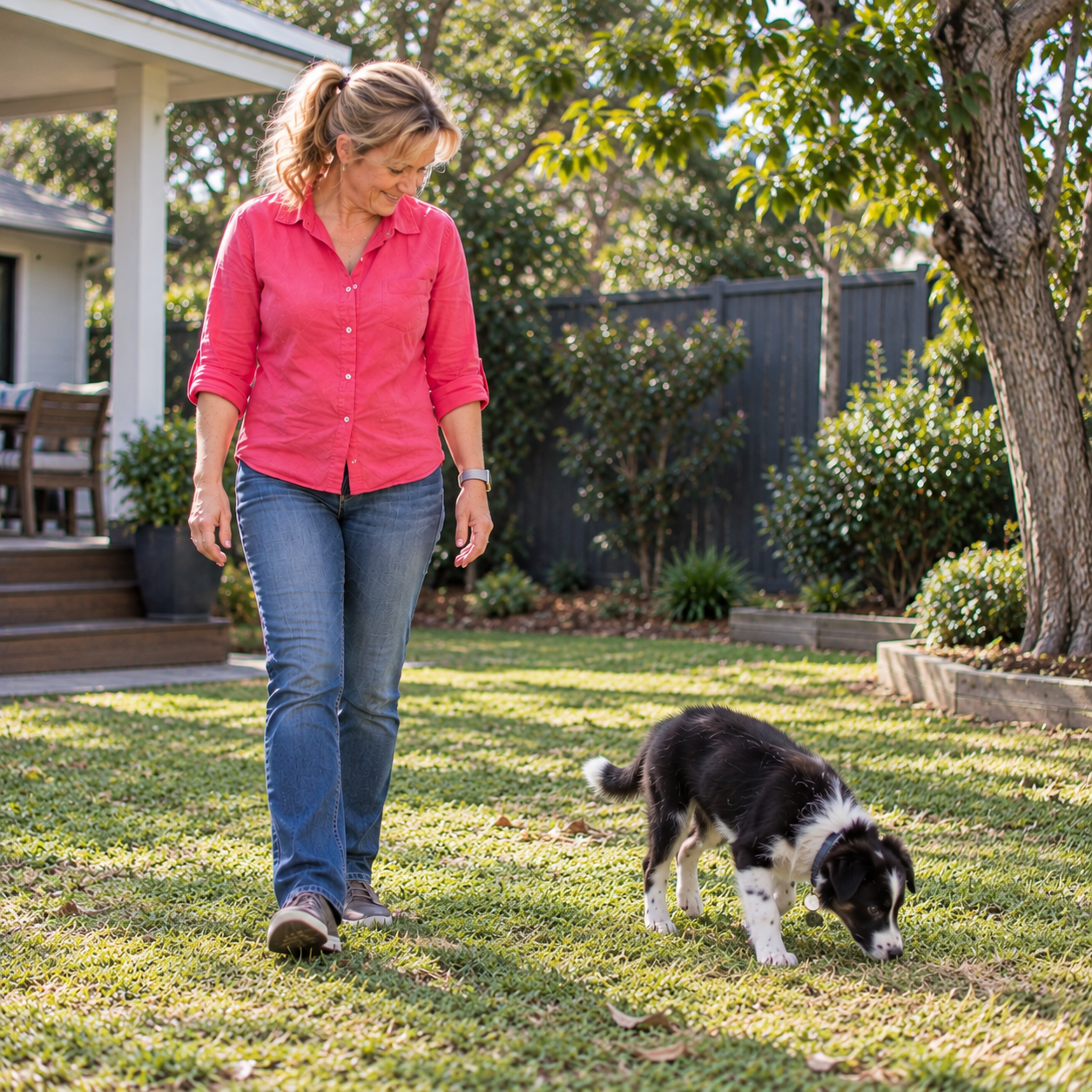
CLEAR owner Caroline Strainig uses this approach with her Koolie puppy, Blink. Before bringing Blink back inside, Caroline spends a couple of quiet minutes wandering around the garden while softly saying, “Toilet.” Moving around helps get things moving, and the cue makes the purpose of the trip clearer. Those extra couple of minutes have prevented plenty of accidents.
Put toileting on cue
Teaching a toilet cue is enormously useful, particularly when you’re travelling, competing with dogs or standing outside in the rain at 5 am wishing everyone would hurry up.
As your puppy begins to toilet, quietly say your chosen cue — “Toilet”, “Quick”, “Busy” or whatever you’re happy to say in public for the next 15 years. When the puppy finishes, mark it with “Yes”, give a small treat and quietly praise.
Timing matters. Don’t produce the treat halfway through and distract the puppy from the job. Let it finish, then pay. With repetition, your puppy begins to associate the word with the behaviour and eventually you can ask for it when you need it.
When accidents happen
If you catch your puppy midstream, don’t yell, frighten or punish it. Calmly interrupt, pick it up if practical and take it outside to finish. Reward if it continues outside.
Punishment can teach the wrong lesson. Instead of learning where to toilet, the puppy may simply learn that toileting in front of humans is a bad idea and start disappearing behind the lounge or into another room.
If you discover the puddle five minutes later, the moment has gone. Clean it thoroughly and move on. It is still worth asking what happened. Had the puppy just woken up? Had it been playing? Had it been too long since the last trip outside? Did it have a little too much freedom too soon? Sometimes puppies simply catch you out.
When you can’t get home
Young puppies have small bladders, and sometimes life means you simply can’t get home before they need to go. Don’t expect a puppy to do the physically impossible.
If your puppy genuinely needs access to a toilet while you’re away, provide a separate toilet area rather than putting a pee pad in its sleeping crate. A crate attached to an exercise pen can work well, with the sleeping area at one end and a pee pad, artificial turf or tray of real grass well away from it. As your puppy matures and develops better bladder control, the arrangement can gradually change.
And what about overnight?
Some puppies sleep through surprisingly early. Others genuinely need one or two overnight toilet trips for several weeks. There is no prize for forcing a puppy to hold on longer than it physically can.
Keep overnight trips boring and businesslike: outside, toilet, quiet praise and back to bed. You don’t want 2 am to become the most exciting play session of the day.
Blink had a few crate accidents during her first nights with Caroline, but she soon began sleeping through until around 6 am. These days she tears downstairs first thing in the morning before producing what seems like a five-minute wee. That came from routine, good timing and plenty of opportunities to get it right.