
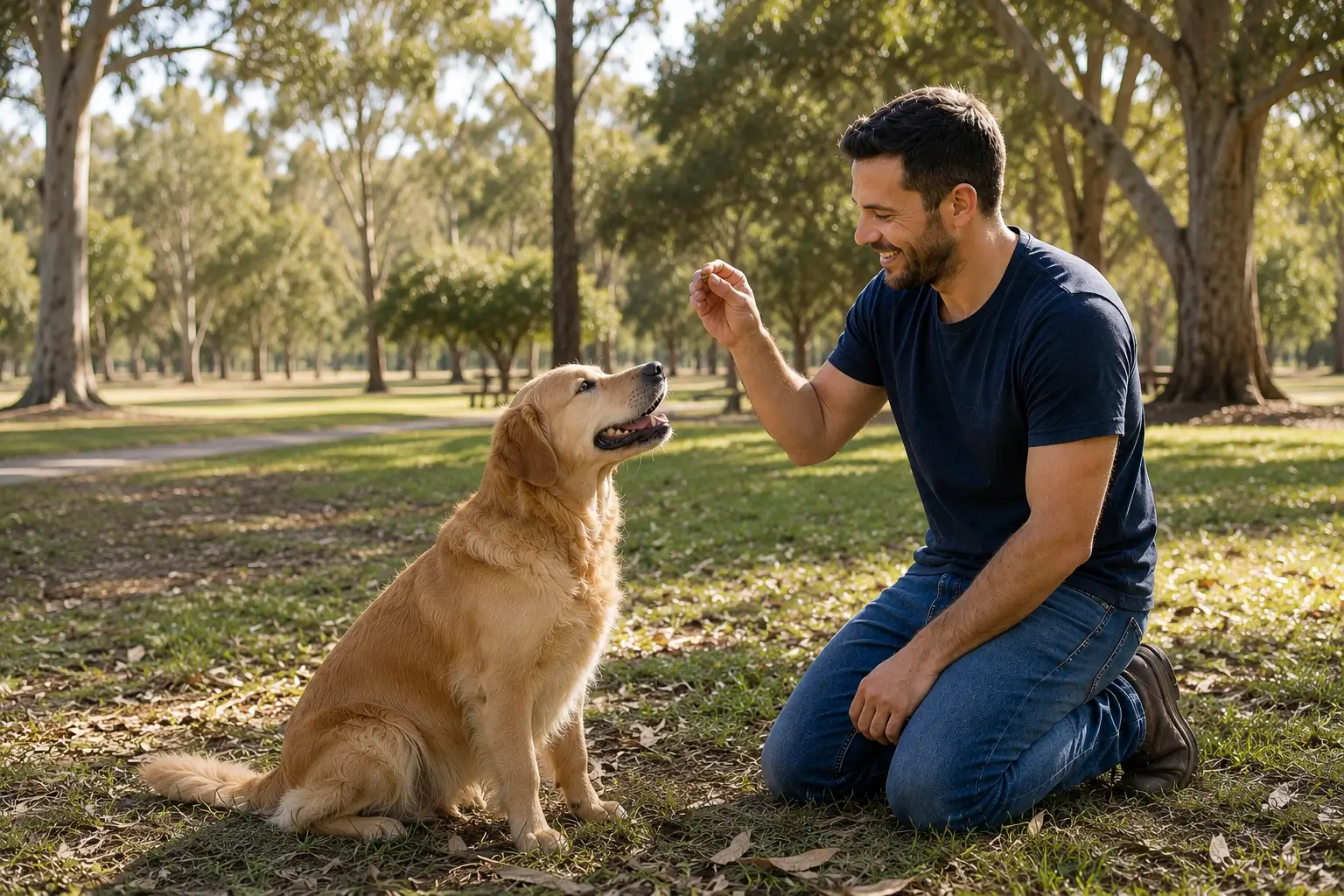
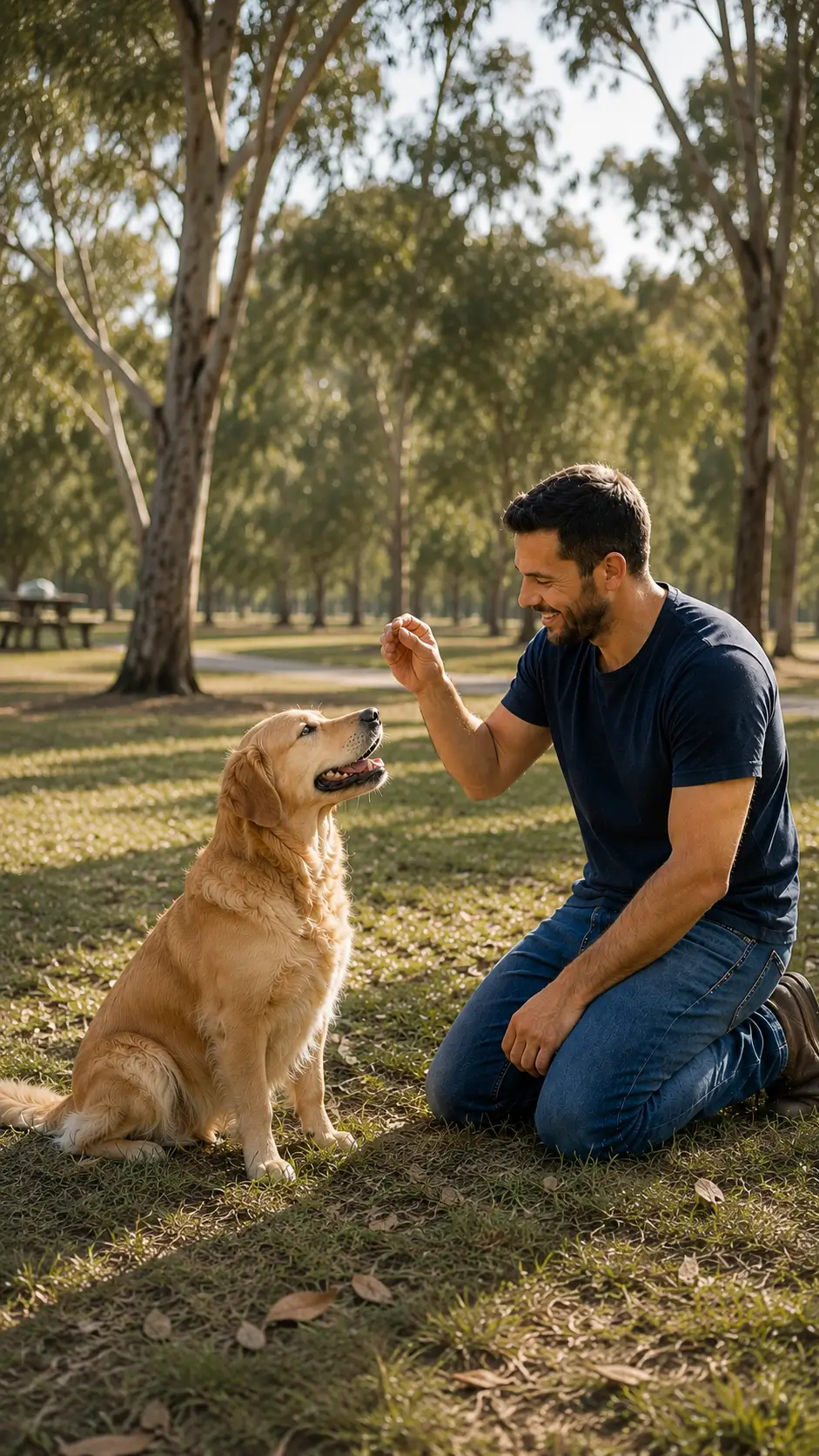
“Do you train husbands too?” It’s a question CLEAR Dog Training hears surprisingly often during a dog-training session. Sometimes it’s husbands, sometimes wives or partners, and occasionally someone suggests the children could do with a session as well.
The standard answer is: “Yes — but it costs extra.”
It usually gets a laugh, but there’s actually a decent training lesson hiding behind the joke.
It’s not such a crazy idea
CLEAR is hardly the first to spot the possibilities. In 2005, Britain had an entire television series called Bring Your Husband to Heel, in which dog trainer Annie Clayton taught women to apply dog-training techniques to their husbands. Years later, Train Your Baby Like a Dog took the idea considerably further, using positive training techniques, including clickers and rewards, with children — and creating considerably more controversy.
Nobody is suggesting that partners or children should be clicker-trained and handed roast chicken when they get things right. Apart from anything else, they’ll probably work out what’s going on. But underneath the joke is a sensible idea: some of the principles that make people better dog trainers can also make them better communicators.
Catch them being good
Good trainers don’t wait for a formal training session to notice behaviour they like. Your dog is pottering around the garden, you call and they race back? Tell them they’re brilliant. If there’s a treat stash handy, grab a reward. Your dog comes bounding up and manages to keep four paws on the ground? Notice it.
If you want more of a behaviour, don’t let the good ones pass unnoticed.
Humans aren’t so different. People can be remarkably quick to notice the one thing somebody forgot while overlooking the ten thoughtful things they quietly did. Nobody needs a piece of roast chicken for emptying the dishwasher, but a genuine “Thanks, I really appreciate that” can go a surprisingly long way.
Manage rather than nag
Management is a huge part of good dog training. If something repeatedly goes wrong, look at the setup instead of repeating the same instruction louder and hoping for a miraculous personality transplant.
Humans might occasionally benefit from the same approach. Your partner keeps leaving the knives and forks in the sink. You’ve asked three times. You could ask a fourth, fifth and sixth time — increasingly loudly — or perhaps it’s time to change the arrangement. Swap jobs. They clear the plates, you do the cutlery, and they take over something you hate doing. Sometimes solving the problem is more useful than winning the argument.
The same applies to dogs. If your puppy repeatedly fails at something, ask whether the expectation is too high or whether the situation could be changed to make success easier.
One common example is someone asking a puppy to “Stay… stay… stay… STAY!” long after the puppy has reached the limit of what it can currently manage. Eventually the puppy moves, the human gets frustrated and nobody learns very much. Ask for less, reward the success and gradually build from there.
Don’t sweat the small stuff
Not everything has to be perfect, and not every imperfection needs correcting. That applies to dogs and perhaps even more to the people sharing the house.
Pick the things that genuinely matter. Notice the good stuff. Change the setup when something continually causes trouble. Adjust expectations when they’re unrealistic. And occasionally decide that the towel hanging crooked, the teaspoon in the sink or the puppy sitting slightly wonky really isn’t worth turning into a major event.
The crossover between dog training and human relationships is probably simpler than it sounds: communicate clearly, notice success, make it worthwhile to get things right and manage predictable problems before they become arguments.
Just be a little careful about applying the actual techniques.
If your partner comes home from Bunnings and you throw your arms open, call “Come!” and produce a piece of roast chicken when they reach you, the game may be up.
And if they woof, things have probably gone a little too far.