
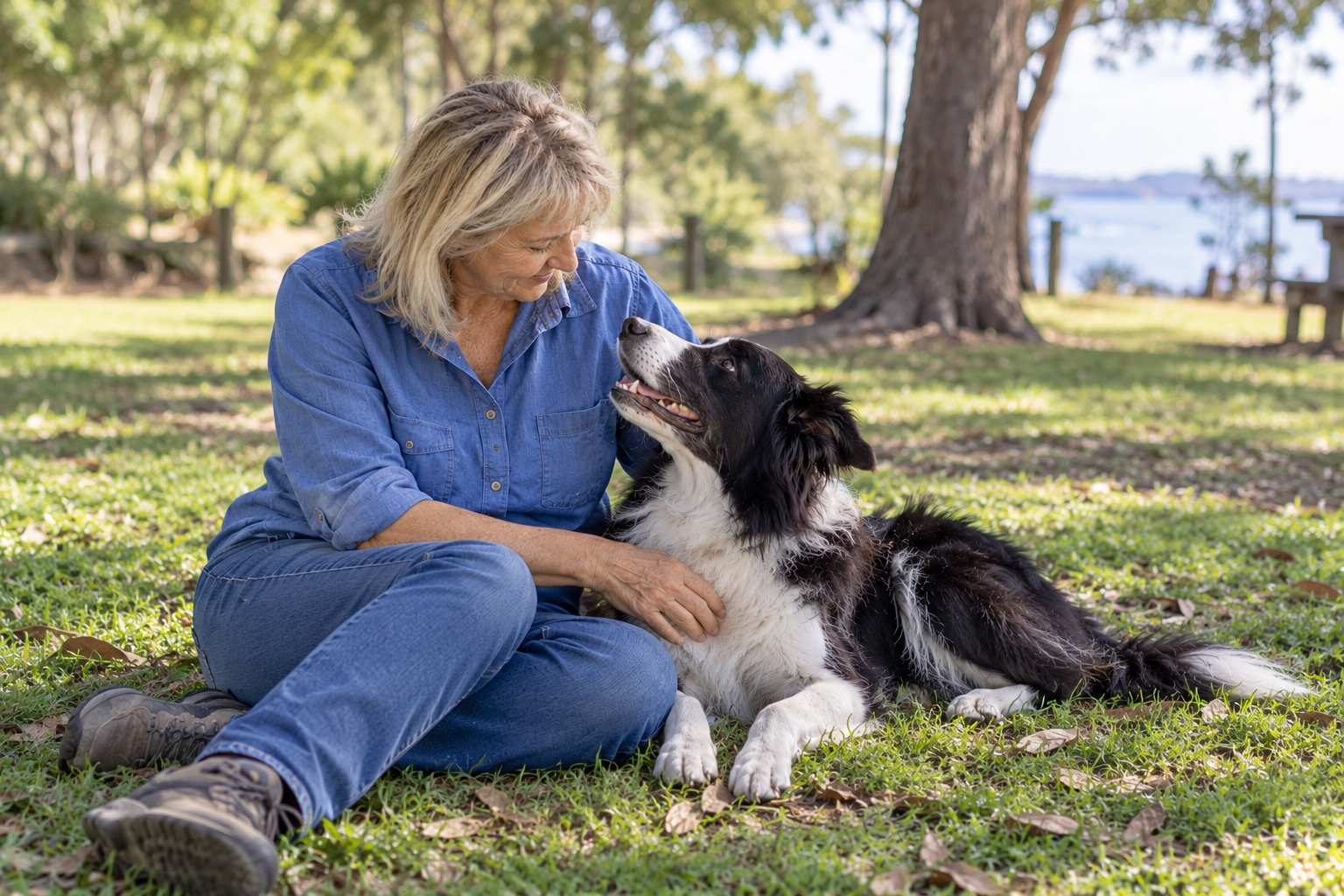
Your dog is learning from you every day – when you’re out walking, greeting visitors, eating dinner or relaxing on the sofa. The question is: are you being the trainer your dog needs?
At a CLEAR Dog Training home visit, owner and trainer Caroline Strainig gives you the tools to teach your dog the skills needed for a happy life together. A key part of her approach is helping owners be clear and consistent, set reasonable boundaries and reward the behaviour they want.
Being your dog’s trainer 24/7 doesn’t mean spending every waking hour with a treat pouch strapped to your waist. It means noticing the opportunities to guide and reward your dog as you go about your day.
You’re always teaching something
Dogs are excellent at working out what gets a result. The catch is that the result they’re after may not be the one you had in mind.
Jumping on visitors might earn an excited greeting. Pinching a shoe might start a marvellous game of chase. Sitting hopefully beside the dinner table might eventually produce a tasty morsel.
Your dog isn’t plotting to make your life difficult. They’re learning which behaviours pay off. You can use that to your advantage: if keeping four feet on the floor earns a greeting, or settling on a bed earns a treat, your dog has a reason to try those behaviours again.
Be clear about what you want
Owners often know exactly what they don’t want their dog to do. They don’t want jumping, pulling, barking or chewing the furniture. But dogs also need to learn what you would like them to do instead.
If you want your dog to settle while you eat, show them that their bed is a good place to be. Start by rewarding them for going to it, then for staying there for a few seconds. Gradually build up the time. Expecting a puppy to remain on their bed throughout a dinner party on the first attempt is asking a bit much!
The same applies to household rules. Some people love having their dog on the sofa; others would rather keep the furniture dog-free. Either is fine, but decide what works for your family and be consistent. If one person invites the dog up and another tells them off for being there, it’s hardly surprising if the dog becomes confused.
Don’t be a nag
“No. No! Leave it. NO!”
Sound familiar? If you find yourself having the same conversation with your dog every day, it’s time to change the situation.
If your puppy has developed a passion for chewing your favourite plant, move the plant or block access to it. Then provide something suitable to chew instead. If your dog keeps stealing shoes, put the shoes away while you teach them what they can play with. If the kitchen bin is irresistible, make it inaccessible.
This is called management, and it can make life much easier. Your dog gets fewer opportunities to practise an unwanted behaviour, and you don’t have to spend the day playing the bad guy. Management doesn’t mean abandoning the rules; it means making sensible arrangements while your dog learns them.
Pay attention to the good stuff
A dog racing through the house with a stolen sock is hard to ignore. A dog lying quietly on their bed while you answer an email is much easier to overlook.
But that quiet moment is valuable. Walk over and place a treat between your dog’s paws. There’s no need to make a fuss or get them excited; just let them know that relaxing there pays.
The same applies when your dog checks in with you on a walk, keeps four feet on the floor when someone arrives, or comes when called. Notice it and reward it.
Keep a stash of treats somewhere convenient but out of your dog’s reach, so you can grab one when the opportunity arises. It’s hard to pay your dog for a brilliant choice when the treats are still in the supermarket bag!
Food is useful because it’s quick and easy to deliver, but rewards can take other forms too. Depending on the situation and what your dog enjoys, a game, a greeting or the chance to go and sniff may also be rewarding.
Make it easy before you make it hard
Your dog may sit beautifully in the kitchen, then look at you blankly when you ask for the same thing at the park.
That doesn’t necessarily mean they’re being stubborn. The park is a much harder classroom, full of dogs, people, movement and fascinating smells. Your dog needs practice before they can respond reliably with all those distractions around.
Teach a new skill somewhere quiet, then gradually make things more challenging. If your dog struggles, take a step back. Move further away from the distraction, ask for something simpler or return to a place where they can concentrate.
A few enjoyable minutes of practice can be far more productive than a long session that ends with both of you feeling frustrated.
When things aren’t going to plan
Even experienced dog owners can find it hard to think calmly when they’re in the middle of a frustrating situation. Your dog is pulling, barking or ignoring you, and all your sensible plans seem to disappear.
Pause and look at what’s happening. Does your dog understand what you’re asking? Is the situation too exciting or worrying? Have they had enough practice, and have you been rewarding the behaviour you want?
You might need to make the exercise easier, move away from a distraction or take a break and try again later. Sometimes a small change in your approach can make a surprising difference.
Tricks aren’t just for showing off
Teaching tricks is one of the best ways to become a better trainer. It teaches you how to break a behaviour into manageable steps, get your timing right and reward effectively. At the same time, your dog is learning how to learn.
You’re both practising the skills that make training successful, without the pressure of tackling a difficult behaviour problem. As you become better at explaining what you want and your dog becomes more confident about learning, you can apply those skills to everyday training.
Tricks can also be a great way to get things back on track when a training session isn’t going well. Asking for a familiar spin, hand touch or another favourite trick gives your dog an opportunity to succeed and you an opportunity to reward them. It’s a positive reset for both of you.
And, of course, there’s nothing wrong with having a few party tricks to impress your friends and visitors!
Learn to think like a trainer
You don’t have to be a professional dog trainer to have a well-trained family dog. A few simple rules, sensible boundaries and knowing how to reward effectively can make an enormous difference.
The real skill is learning to look at everyday situations through your dog’s eyes. What are they learning? What’s rewarding their behaviour? And what could you do differently to help them make a better choice?
Once you start thinking like a trainer, everyday life becomes full of opportunities to teach your dog something useful. And that’s how you build the happy, well-mannered family companion you’ve always wanted.