Puppy biting comes up at almost every CLEAR Dog Training puppy home visit. Most owners have already heard the familiar advice: “Redirect them onto a toy.” It sounds straightforward, but there’s a knack to getting it right.
When a nip starts a game
Say your puppy grabs your trouser leg. You pull out a tug toy, give it a wiggle and the puppy lets go. Brilliant. Your trousers are free. But next time your puppy wants a game, what are they likely to try?
If grabbing your trousers regularly gets a game going, your puppy may learn to repeat it. You can inadvertently teach a behaviour chain: grab the trousers, out comes the toy, and the fun begins.
And “redirect onto a toy” can mean two quite different things. A chew gives your puppy something to get stuck into independently. With tug, they also get your attention and a playmate who makes the toy come alive. That distinction matters when deciding how to respond.
What the trainers say
Why is this familiar advice so easily misunderstood? CLEAR checked its approach against advice from some of its favourite overseas trainers. Their explanations contain detail that can disappear when the advice reaches a puppy forum as a one-liner.
Canadian dog trainer Susan Garrett warns against allowing nipping to become a way for puppies to get something they want. She encourages owners to consider what the puppy needs before responding. The games-based training team at Absolute Dogs recommends offering an appropriate chew or safe object, alongside reducing opportunities to practise biting and helping overtired puppies rest.
Clicker training pioneer Karen Pryor suggests having a suitable toy or chew ready before playing with or patting a puppy. Animal behaviourist Patricia McConnell, meanwhile, dropped the advice to yelp after a nip when updating The Puppy Primer, favouring responses such as interrupting the interaction or walking away.
A small study by researchers Mindy Waite and Tiffany Kodak also illustrates why the individual dog matters. Attention reinforced mouthing in all three dogs studied, while access to a toy reinforced it in one. That doesn’t mean toys cause biting; it shows why owners need to watch what their particular puppy learns from the response.
What this means for your puppy
The advice differs in places, but common themes emerge: think ahead, consider what your puppy needs and watch whether your response makes biting more likely next time.
Revisiting the advice and research hasn’t changed CLEAR’s approach. It has reinforced why the timing and manner of offering a toy deserve more explanation than “just redirect”.
Appropriate chewing and play should be enjoyable and rewarding. The aim is to provide plenty of both, while avoiding a routine in which grabbing someone’s hands or trousers becomes the puppy’s favourite way to request entertainment.
So, when should you bring out the toy?
Ideally, before the biting starts. Have a favourite chew within reach before sitting down with your puppy. If they’re looking for interaction, start a short game while they’re still playing appropriately. If they need to wind down, a quiet chewing activity may be a better choice.
If your puppy has already nipped, calmly pause the interaction. Avoid squealing, flapping your hands or turning the moment into an exciting wrestling match. You may need to step behind a gate to give everyone a little space. Once the puppy has disengaged and moved on, you can quietly make an appropriate chew available.
There’s no magic waiting period that guarantees a puppy won’t make a connection. The useful test is what happens over subsequent days. If nipping becomes more frequent, or your puppy bites and then looks expectantly for the toy, rethink the routine—even if it gets them off your trousers in the moment.
Get ahead of ballistic missile mode
Some puppies go into ballistic missile mode at about the same time each day. Think “Danger, Will Robinson!” from Lost in Space. Once the missile has launched, an increasingly exciting game may add fuel when the puppy needs help settling.
Check the basics: do they need the toilet, a drink or some rest? A familiar, safe area behind a gate can give an overtired puppy a quieter place to wind down, with the family out of range. Stay nearby if needed to help them settle.
Better still, get in early. Before the usual eruption, try a short game, hide a toy for your puppy to find or practise a favourite trick. Then help them transition to something quieter, such as a suitable chew or stuffed Kong.
For tug, choose a long toy that keeps teeth away from your fingers and play gently at puppy level. Watch the puppy as much as the toy. If the game becomes increasingly frantic or mouthy, call time and help them settle.
Choosing some great chew toys
Puppies explore with their mouths, and chewing is normal. Teething can add to their enthusiasm, but chewing can also be play, exploration or simply something enjoyable to do.
Finding a favourite that survives your puppy can take some trial and error. Textured rubber toys and food-stuffable toys can offer different kinds of enjoyment. Choose products suited to your puppy’s size, age and chewing strength, and remember that “tough” doesn’t mean indestructible.
Avoid toys that are excessively hard or small enough to swallow. Supervise chewing, particularly when introducing something new, and remove toys if pieces start coming off. Check old favourites regularly too: a toy that survived last month may fare differently as your puppy grows.
The chews that magically appear
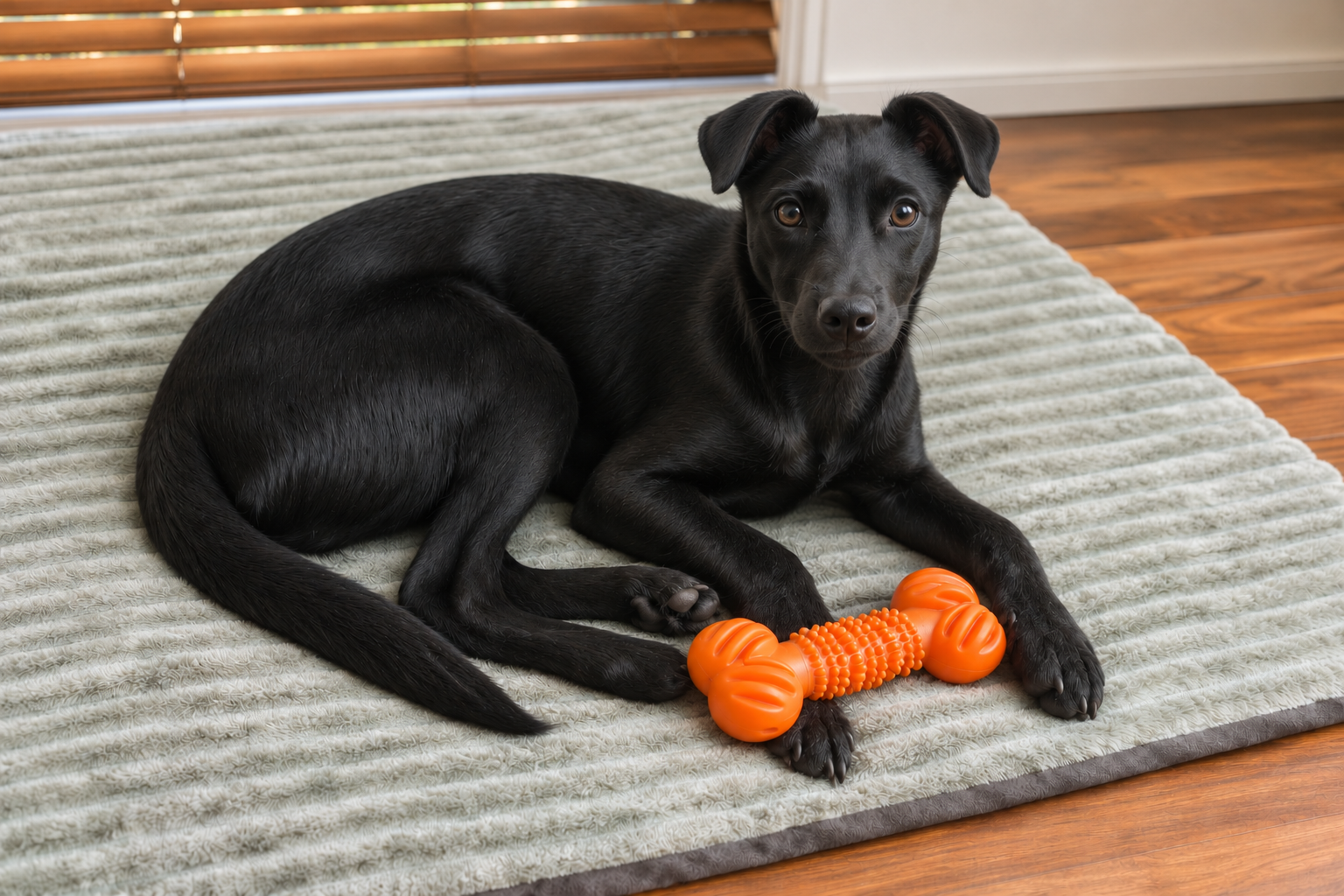
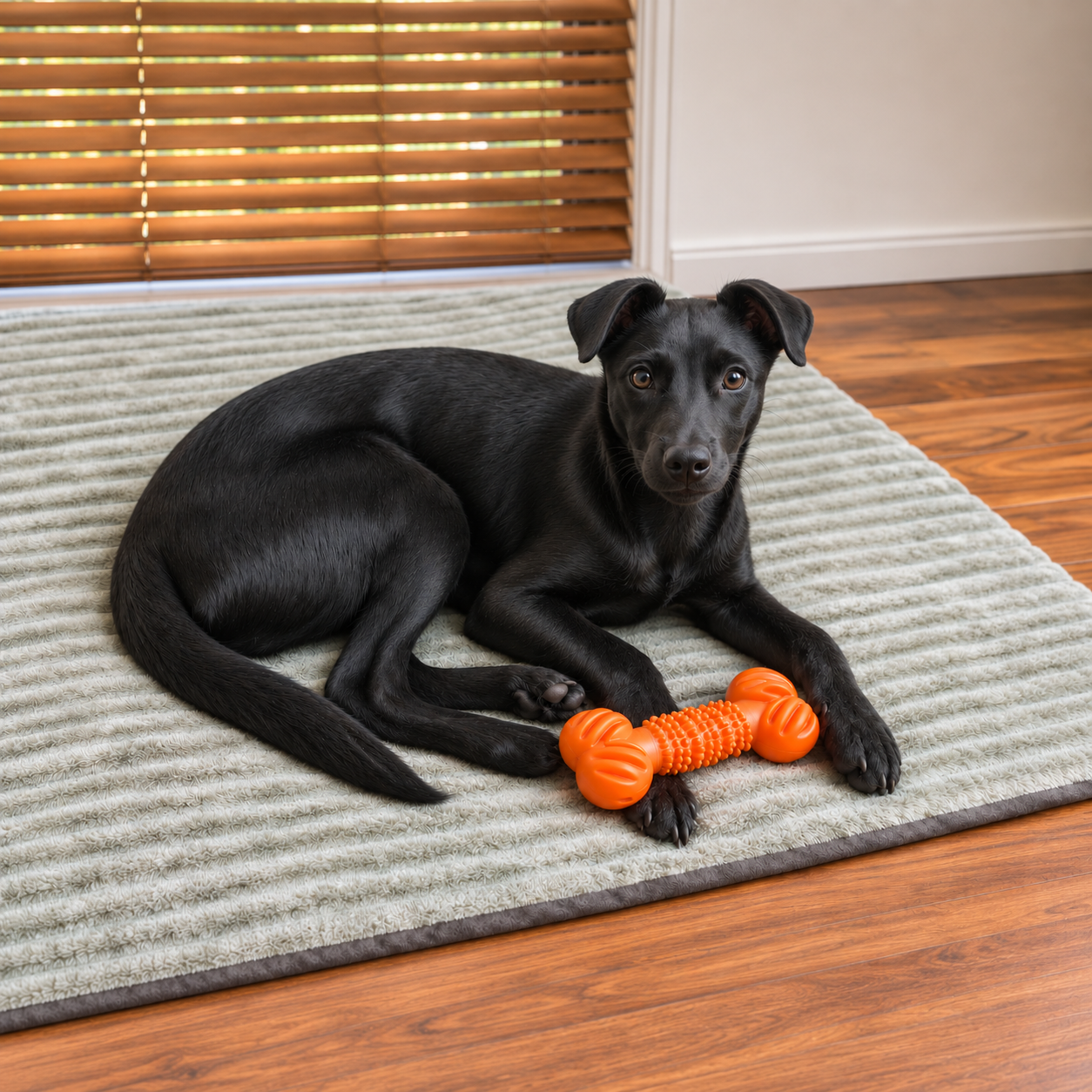
Blink, one of CLEAR Dog Training owner Caroline Strainig’s own dogs, has two favourite chews: a tough little orange bone with raised knobs and a blue doughnut with tiny ridges. Both have paid for themselves hundreds of times over. The orange toy has survived two years of enthusiastic use by several dogs.
From day one, Caroline has kept her response to rough mouthing consistent. Gentle mouthing has been tolerated, but if Blink becomes too rough, the interaction ends. There’s no exciting reaction or instant game of tug.
Blink has also always had appropriate things to chew. If she starts on something off-limits, Caroline calmly interrupts and prevents further access. Later, once Blink has moved on, a favourite chew rather magically appears nearby for her to discover. Providing enjoyable chewing opportunities is part of everyday life, rather than something that only happens after trouble.
At around seven months, Blink no longer treats Caroline as a potential pin cushion. She enjoys her own toys, and her appetite for chewing has eased as she’s grown.
But the orange bone has found a whole new purpose. Blink grabs it and takes off, with the other three dogs in enthusiastic pursuit. Eventually she drops it, someone else grabs it, and the chase begins again.
This is strictly a game for the dogs. When teaching fetch, Caroline makes sure they learn that people don’t chase them to get a toy back. Who knew one little orange chew could provide so much entertainment?
CLEAR’s top five tips for playing with toys
- Be proactive, not reactive. Provide chewing opportunities and start games before the teeth come out. Avoid making a nip the usual opening move.
- Read your puppy. Consider whether they need interaction, something to chew, a toilet break or rest.
- Keep play manageable. Use a long tug toy, play gently and finish before your puppy becomes frantic.
- Pause if they nip. Calmly stop the interaction and use a gate if you need space. Help them move on without turning into Party Central.
- Watch what happens next time. If biting becomes more frequent or intense, adjust the routine and seek individual help.
Need hands-on help?
Puppy biting driving you mad? CLEAR Dog Training offers practical, one-on-one training in your own home, tailored to you and your puppy. Click here for fees and training options.