Poisonous plants, fencing, rocks and other hidden hazards
One of the first things to do before bringing a new puppy or dog home is to check that your backyard is safe. Yet a surprising number of gardens encountered during CLEAR Dog Training home visits still have hazards that owners may not have considered.
Poisonous plants are one of the most common concerns, but insecure fencing, loose rocks and gravel, garden chemicals and everyday clutter can also spell trouble. Fortunately, many of these risks can be managed with a little planning and some simple precautions.
Start with the plants
It’s surprising just how many popular Australian garden plants are toxic to dogs. But having poisonous plants in your garden doesn’t automatically mean your dog is going to become ill.
Many dogs live happily alongside potentially toxic plants for years without ever showing the slightest interest in eating them. Others, particularly curious puppies, may chew leaves, flowers, roots or fallen seeds — and occasionally the consequences can be serious. Unfortunately, puppies haven’t read the manual on poisonous plants!
Some of the more dangerous plants found in Australian gardens include:
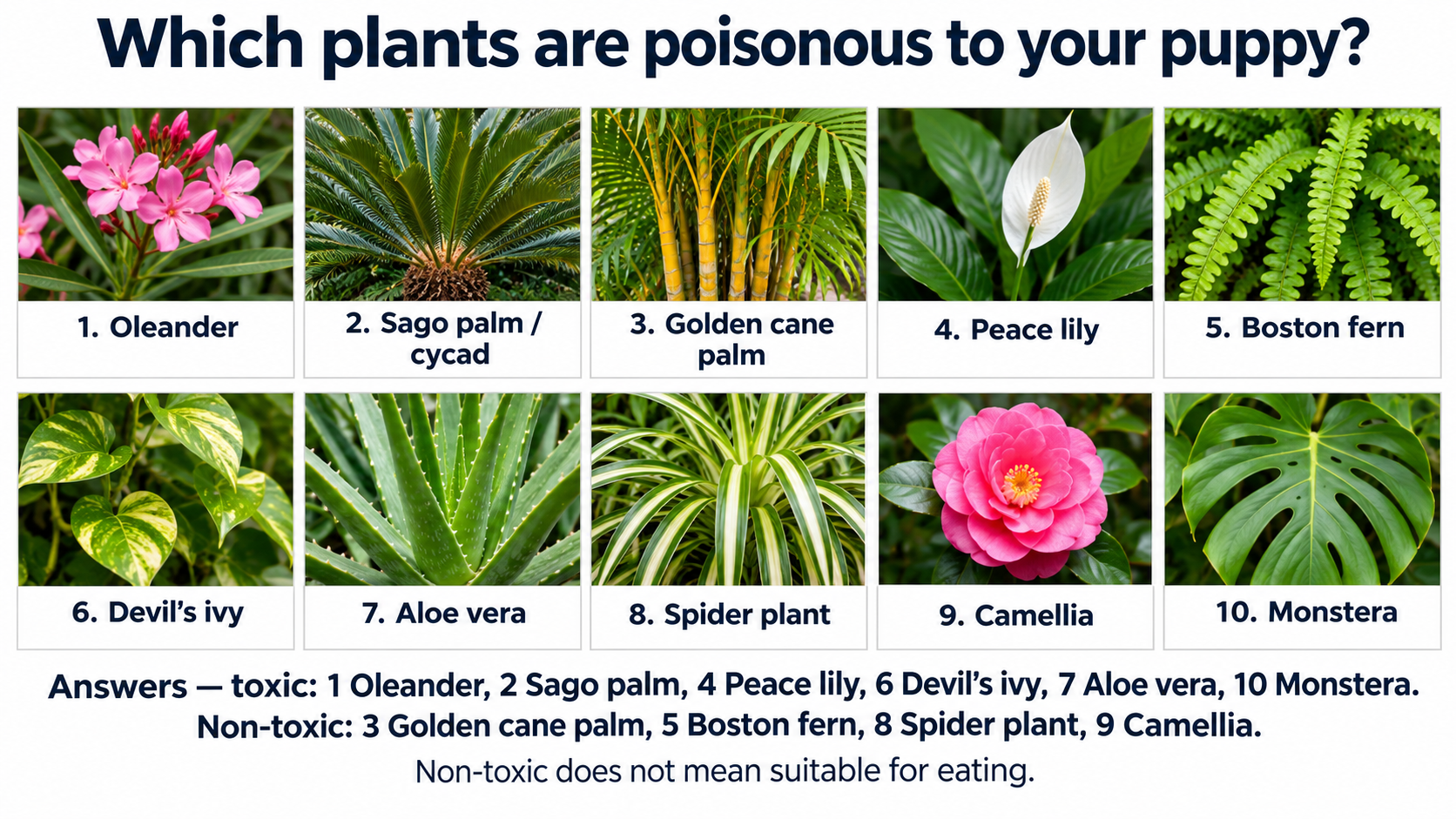
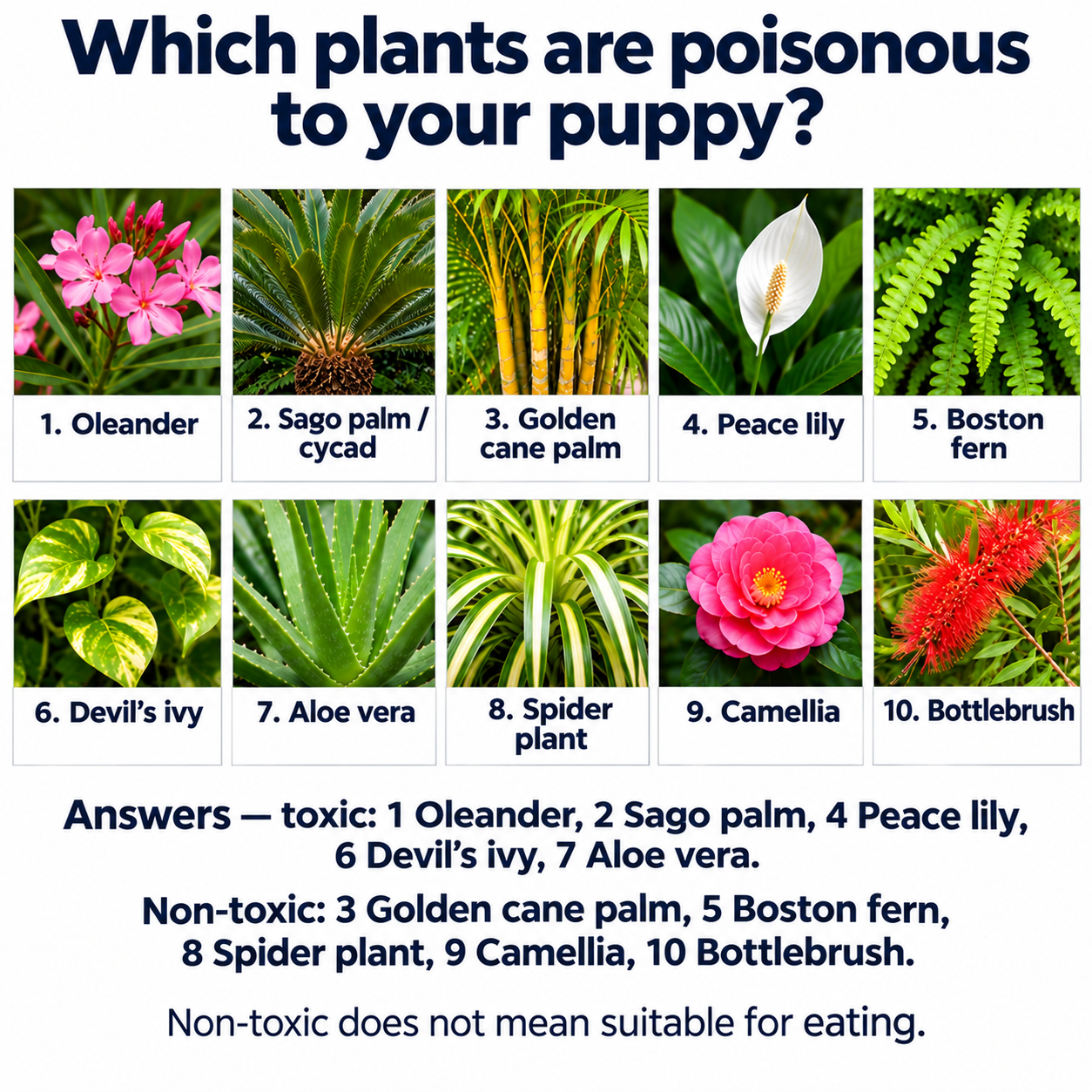
Oleander: All parts of this popular flowering shrub are poisonous and can cause serious heart problems.
Cycads and sago palms: Particularly dangerous, especially the seeds. Poisoning can cause severe liver damage and death.
Yesterday-today-and-tomorrow (Brunfelsia): A familiar flowering shrub that can cause vomiting, tremors and seizures.
Azaleas and rhododendrons: Can cause digestive upsets, weakness and potentially dangerous heart disturbances.
Castor oil plant: Its seeds contain ricin, a highly poisonous substance.
This is by no means an exhaustive list. There are many other common garden and household plants that can be harmful to dogs, so it’s important to identify what’s growing in your own garden and check whether it’s safe. Don’t assume a plant is harmless simply because it isn’t mentioned here.
Other familiar plants, including peace lilies, devil’s ivy, monstera and aloe vera, can also cause problems when eaten, although the severity varies considerably. Even plants classified as non-toxic may cause digestive upsets if eaten in large quantities.
Know what’s growing in your garden
Before your puppy arrives, identify the plants it could reach, including shrubs, ground covers, pot plants and hanging baskets. Don’t forget fallen seeds, berries, pruning debris and foliage growing through fences.
Plant identification apps such as PictureThis or Pl@ntNet can help identify unfamiliar plants, but they can make mistakes. Once you have a name, check whether the plant is toxic to dogs using a reliable source such as the Australian Animal Poisons Helpline. Never assume a plant is safe solely because an app identifies it as such. If you’re unsure, restrict access until it’s been properly identified.
Once you’ve identified potentially dangerous plants, you have three practical options.
1. Remove the plant. Often the simplest solution for highly toxic plants. Remove accessible seeds, roots and cuttings as well.
2. Fence off the plant or garden bed. Make sure your puppy cannot reach through or underneath the barrier to chew the foliage.
At a recent CLEAR home visit, the owners had beautifully fenced off their garden beds, but much of the foliage was growing straight through the fencing. The puppy could still reach the plants, defeating the whole purpose of the barrier! If fencing has to run close to garden beds, keep the foliage trimmed back.
3. Create a separate puppy-safe area. Rather than fencing every garden bed, consider enclosing one section of your backyard specifically for your puppy.
Ideally, position it immediately outside your back door so your puppy can move naturally between the house and its secure outdoor area when access is allowed, rather than having to be taken outside and shut in an enclosure.
Suitable garden fencing and posts are available from hardware stores such as Bunnings, and creating a secure area can be relatively inexpensive for someone reasonably handy. However, not every type of temporary fencing is suitable for an unsupervised puppy.
Choose fencing appropriate for your puppy’s size and strength, with no sharp edges, unstable panels or gaps where it could squeeze through or become trapped. Make sure it cannot be climbed, knocked down or chewed apart.
The area needs reliable shade, shelter and enough room to play, toilet and relax. Provide fresh drinking water in a sturdy container, ideally with a second water source in case one is emptied or tipped over. Check how the sun moves across the backyard, particularly during Queensland’s hotter months.
A safe backyard helps your puppy learn independence
There’s another important benefit to creating a puppy-safe area: your puppy can spend time outdoors without you having to watch every move.
Constant supervision is exhausting, and a puppy that never has opportunities to spend time comfortably apart from its owner may find separation more difficult.
A secure, comfortable outdoor area allows your puppy to practise exploring, playing and settling independently while you’re busy elsewhere. Start with short, comfortable periods and gradually build up as your puppy becomes more confident, taking its age, temperament and the weather into account.
That doesn’t mean leaving a very young puppy alone for hours or expecting it to cope when distressed. It means helping your puppy discover, gradually, that being apart from you for a little while is perfectly normal.
Plants can cause skin problems too
Not every troublesome plant needs to be swallowed. One of CLEAR Dog Training owner Caroline Strainig’s own dogs developed a mysterious rash that required an expensive veterinary visit for cortisone and other treatment.
After considerable detective work, Caroline suspected a ground-cover plant in her garden was responsible. Once it was removed, the problem settled. Some plants can cause skin irritation through contact, even when nothing has been swallowed.
Rocks and gravel aren’t puppy toys
Rocks are surprisingly popular with puppies. Some enjoy picking them up, carrying them around and chewing them. Others go a step further and swallow them.
Apart from damaging teeth, swallowed stones can become lodged in the stomach or intestines, causing a dangerous blockage. Removing one that cannot pass naturally may require emergency surgery — and a very expensive veterinary bill.
If you have gravel paths, decorative stones or loose rocks, check whether your puppy can access them. Remove stones where practical or fence off gravelled areas if your puppy shows an interest in them. Provide suitable chewing alternatives and teach a reliable “Drop”, but prevention is always the better option.
One puppy’s junk is another puppy’s treasure
It’s amazing how much everyday clutter turns up in areas where puppies are allowed to roam during CLEAR Dog Training home visits. Shoes, mops, brooms, electrical cords, garden tools, buckets, bits of plastic and shelving stacked with interesting objects are just some of the things left within reach.
Most have been sitting in the same spot for years without causing a problem. But to a curious puppy looking for entertainment, they’re an irresistible collection of potential toys!
Chewing electrical cords can cause serious injury, while swallowed pieces of plastic, fabric or other objects can cause choking or intestinal blockages. Tools and heavy objects can also injure a puppy if they’re knocked over or pulled down.
Look around for anything your puppy could reach, pull off a shelf, chew or swallow. Put tempting items away, secure electrical cords and make sure shelves and stored objects can’t topple over. It’s far easier to prevent trouble than spend the day telling your puppy “No!”
Check your fences and gates
A fence that keeps an adult dog safely contained may be no match for a small puppy. Check for gaps under gates, loose palings, holes along boundary fences and spaces a determined little explorer could squeeze through.
Make sure gates latch securely, and look for garden furniture, retaining walls or raised beds that could give your puppy a leg-up over a fence.
Remember that puppies grow quickly, so what is secure today may not be secure in a few months. Make sure everyone in the household understands the importance of closing gates properly.
Other backyard hazards worth checking
Garden chemicals: Snail and slug baits, pesticides, fertilisers and other chemicals must be stored securely. Products labelled natural or organic aren’t necessarily safe for pets.
Mulch and compost: Puppies may chew or swallow mulch, bark and compost. Large pieces can cause intestinal blockages, while mouldy compost can cause serious poisoning. Cocoa shell mulch is also toxic to dogs, although it’s uncommon in Australia.
Wild mushrooms: Mushrooms can appear almost overnight after rain, and some are highly poisonous to dogs. Remove any growing in areas your puppy can access, and don’t assume that a mushroom is safe because it looks familiar.
Pools and ponds: Make sure your puppy cannot fall into water or become trapped. Provide suitable barriers and supervise access.
Holes and hiding places: Check beneath decks, garden sheds and retaining walls for spaces where a puppy could become trapped or encounter other animals.
Shade and water: A puppy left outdoors needs reliable shade, fresh drinking water and a cool resting place. In extreme heat, a safe indoor area may be the better option.
What if your puppy eats something poisonous?
Don’t wait for symptoms to develop. Some serious poisonings can cause internal damage before a dog appears unwell.
If you suspect your puppy has swallowed a poisonous plant or garden chemical, prevent further access and contact your veterinarian immediately. The Australian Animal Poisons Helpline on 1300 869 738 can also provide specialist advice.
Photograph the plant or product involved and be ready to explain what your puppy may have eaten, how much and when. Don’t induce vomiting or give home remedies unless specifically directed by a veterinary professional.
A safe backyard means freedom for everyone
To a puppy, an ordinary backyard can look like an adventure playground, full of fascinating things to investigate, carry around and chew.
A properly puppy-proofed backyard gives your dog the freedom to explore, play and learn to settle independently, while keeping the risks to a minimum. For owners, it means less hovering, less worry and fewer opportunities for expensive mishaps.
A little preparation before your puppy arrives can make life a whole lot easier for everyone.
Sources and further reading
Emergency contact: Australian Animal Poisons Helpline — 1300 869 738. Available 24 hours a day; consultation fees may apply.