Begging can be rather cute. The hopeful eyes, the wagging tail, the irresistible expression that says surely you could spare just one little piece? But it can also become incredibly annoying when your dog won’t take no for an answer.
It’s a familiar dilemma. We love treating our dogs, but nobody wants a dog staring at every mouthful, pawing at their legs or hovering whenever food appears. So is it possible to share the occasional tidbit without creating a lifelong beggar?
Absolutely. The trick is teaching your dog that a treat is a privilege, not an entitlement.
Some humans are worth asking
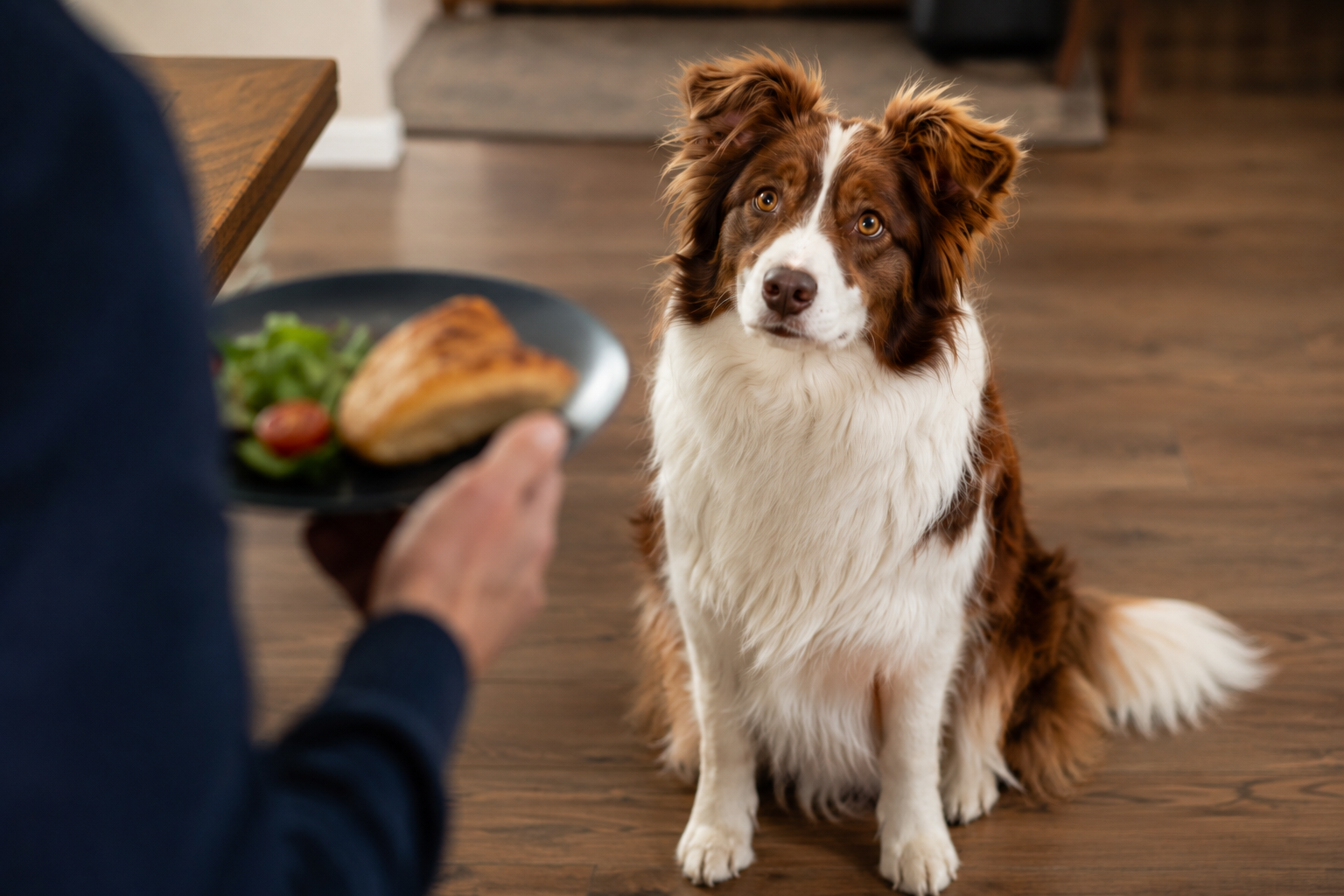
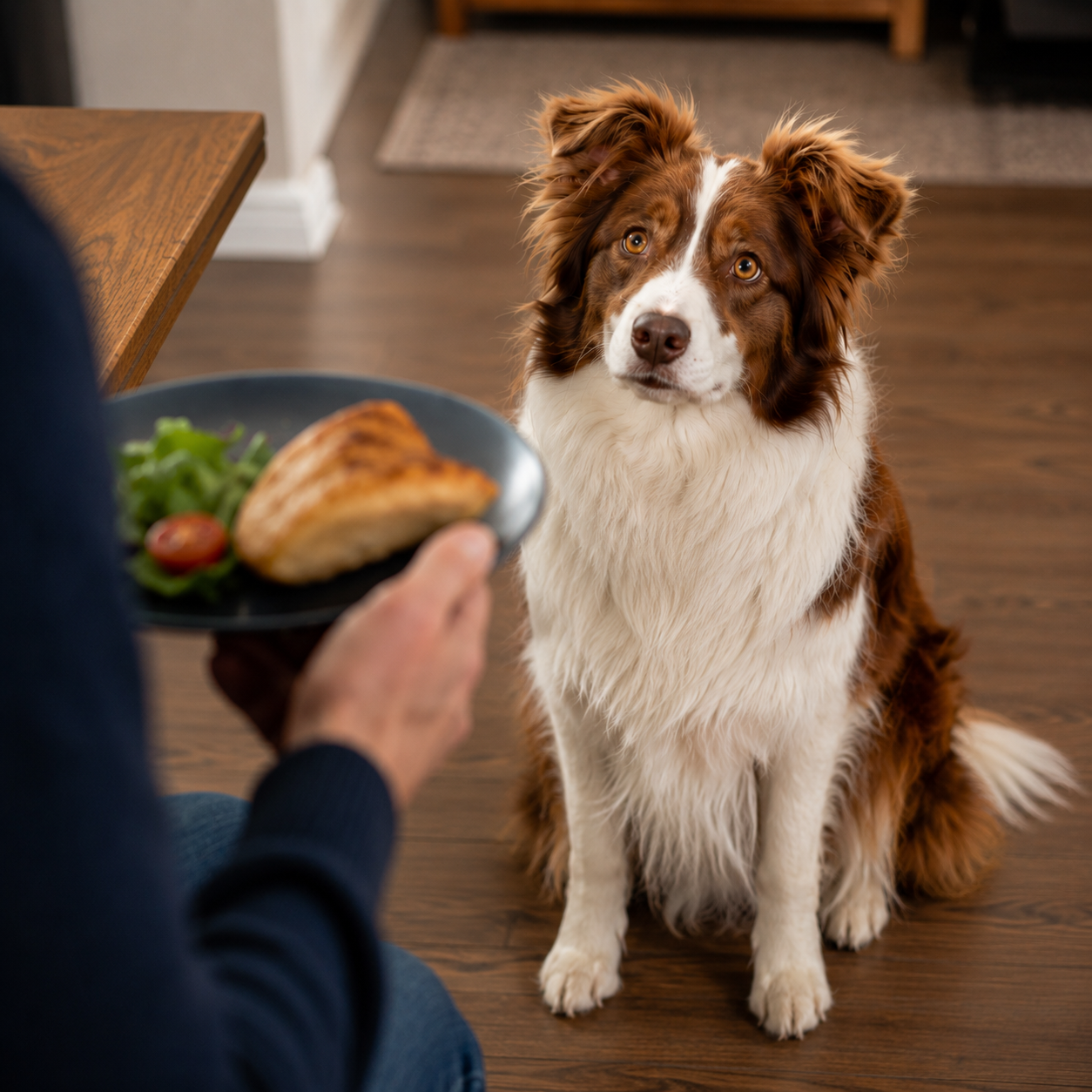
CLEAR Dog Training owner Caroline Strainig’s Border Collie Hope has worked out something rather interesting about humans. Some are worth asking for food. Others aren’t.
Many years ago, a handyman working at Caroline’s home used to share his meat pies with Hope. She’s never forgotten. More recently, a visitor shared some crisps with her. When that same visitor returned for lunch, Hope naturally decided it was worth trying her luck again.
Caroline doesn’t share food from her plate. But Hope knows this particular visitor has form.
Dogs are extraordinarily good at remembering what works. And when something pays off occasionally, they may keep trying for a very long time. It’s called intermittent reinforcement — much the same principle that keeps people feeding money into poker machines in the hope that the next spin will pay out.
The important distinction is between a dog politely asking and one that persistently pesters. A hopeful look isn’t necessarily a problem. Staring, pawing, whining or demanding food until someone gives in is another matter.
Don’t practise at the dinner table
If your dog is already a determined beggar, the middle of a family meal is probably the worst time to start teaching better manners. Nor is it sensible to tackle the problem when you’re busy cooking or your dog is ravenously hungry.
Management comes first. Put the dog somewhere comfortable and safe, perhaps in another room or a playpen, while you’re preparing food or eating. That prevents the unwanted behaviour being practised and gives everyone a peaceful meal.
Then choose a separate, relaxed time to teach whatever behaviour you’d prefer. Perhaps you want your dog to settle on a mat away from the table, stay out of the kitchen while food is being prepared, or simply leave people alone when asked. Reward the dog for settling quietly rather than waiting until they’ve been pestering you before offering a treat. Start with easy exercises and gradually introduce food and other distractions as the dog improves.
And get the whole family on board. Dogs can learn that different people have different rules, as Hope demonstrates, but young or inexperienced dogs may find that confusing. If one person keeps slipping the dog tidbits at the table, there’s every reason for the dog to keep coming back.
A privilege, not an entitlement
With puppies, adolescents and dogs already inclined to beg or steal food, simple, consistent rules make life easier. Don’t hand out scraps while preparing dinner or reward hovering beside the kitchen bench.
Later, once the dog understands the household rules, there’s room for flexibility. You might finish your meal and decide to share a suitable little piece. That’s very different from rewarding a dog that’s been staring at your plate for the past 20 minutes.
It’s much like allowing a dog onto the bed or lounge. First teach them to be perfectly happy on the floor. Then you can choose to invite them up without creating the expectation that they’re entitled to be there.
Another useful lesson is that ‘that’s enough’ really does mean enough. It applies just as much to a dog constantly dropping a ball at your feet for another throw, or nudging your hand for another back scratch. There’s nothing wrong with indulging them sometimes, but they should also be able to accept that the game or attention has finished. Teach that calmly and consistently, rather than repeatedly giving in to demands for just one more.
Of course, anything shared needs to be safe for dogs, and extra food means extra calories. But that’s a separate consideration from the training principle.
Hope takes no for an answer
When Hope’s visitor sat down to lunch again, she spotted an opportunity. She knew this particular human had shared before and put on her cutest smile, complete with an endearingly wagging tail.
But when Caroline asked her guest not to share his lunch and told Hope to go and lie down, she did.
And that’s really the goal. Sharing the occasional tidbit doesn’t have to create a beggar. What matters is that, like Hope, your dog can also take no for an answer.