Walk into any pet shop and you’ll be confronted by an entire wall of collars, harnesses, leads and gadgets, all promising to make walking your dog easier. It’s no wonder owners are confused.
One of the first things CLEAR Dog Training asks new clients to do before a home visit is lay out every piece of walking equipment they own. It’s amazing what appears on the lounge room floor. There might be three different leads, a couple of collars, two harnesses and something bought online after a particularly bad walk.
Most of it has been purchased for the same reason: the hope that the next piece of equipment will make walking easier.
Sometimes it does help. But no collar, harness or headcollar teaches a dog to walk politely. The equipment is there to make the job easier while the training catches up.
Start with a good harness
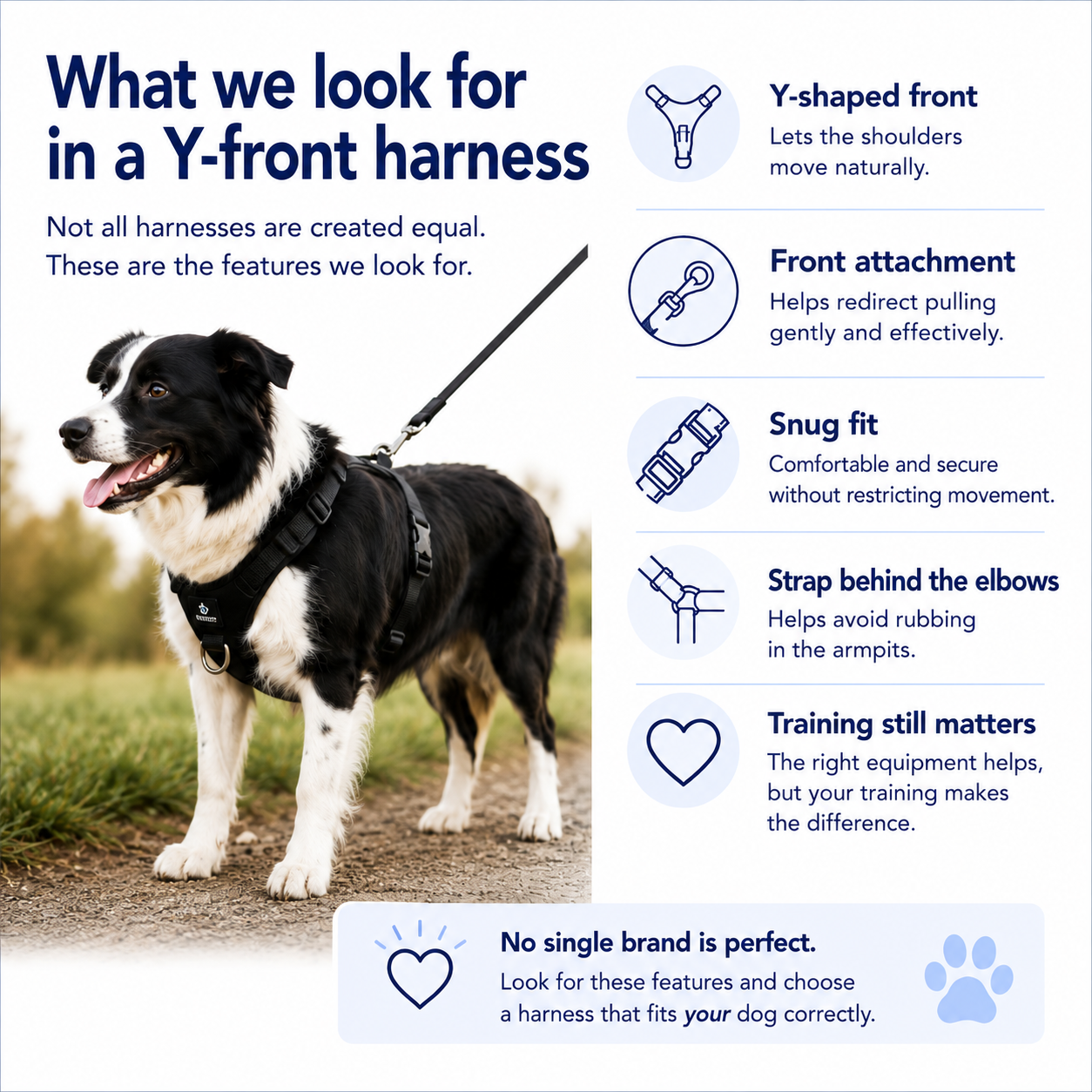
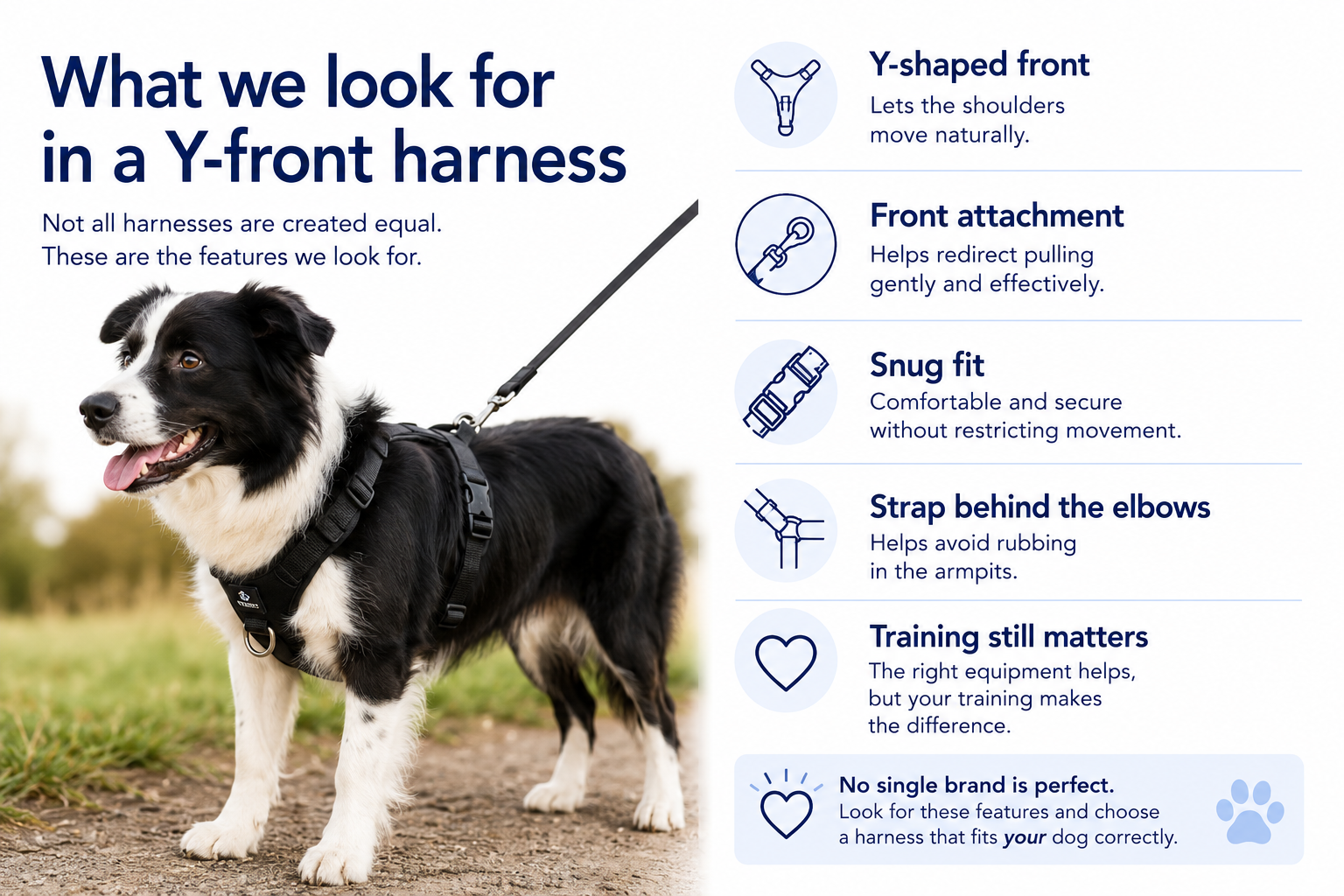
For most pet dogs, CLEAR recommends a well-fitted Y-front harness, preferably with both a front and back attachment point.
A Y-front design sits away from the shoulder joint and allows the dog to move freely, while a good fit helps stop the harness sliding around. A harness that is too loose can twist, rub and make any front attachment far less useful.
The front clip can be very handy with a dog that tends to surge ahead. Instead of letting the dog put its whole bodyweight into pulling, it gives the handler another way to guide it back into balance.
You might stop and wait for the lead to loosen, or turn and quietly walk the other way. When the dog comes back with you, reward it and carry on.
Take treats on walks. Reward the dog when it walks near you, checks in, slows down or returns to a loose lead. The equipment can help, but the dog still has to learn what you want.
Try before you buy
If you already own a harness and want to know whether a front attachment might help, it is sometimes possible to rig a temporary version and try the idea before buying another one.
It needs to be secure, and the harness itself needs to fit reasonably well. If it is loose, sloppy or moving all over the dog, you are unlikely to get a fair idea of how useful a proper front-clip harness can be.
Where a martingale can help
Some dogs are surprisingly good at reversing out of ordinary collars. For those dogs, a properly fitted martingale collar can be useful.
It is sometimes called a half-check collar, but unlike an old-fashioned check chain it only tightens to the point you have set. That extra bit of security can be reassuring with dogs that are inclined to back out of their collars when frightened or excited.
If your dog is already completely secure and walks beautifully on a flat collar, there is no reason to change things just for the sake of it.
When a Halti is useful
A Halti or other dog headcollar can be helpful with a very strong puller, a reactive dog, or where the person handling the dog simply needs a little more control.
CLEAR generally recommends trying the simpler option first. If a good front-clip harness gives you enough control to train comfortably, that may be all you need.
If you do move to a Halti, introduce it slowly. Start at home, put it on for a few seconds, feed treats, then take it off again. Gradually build up the time until the dog is happy wearing it around the house.
Some dogs accept a Halti immediately. Others behave as though you have attached an octopus to their face. They paw at it, rub their head along the carpet or throw themselves into a full crocodile roll.
Keep the dog on lead during those first sessions so you can calmly prevent all that rubbing and scraping. Guide the head gently away from the floor and reward as soon as the dog settles.
Once the dog is comfortable wearing it, take it on short walks. At first, the dog can simply wear the Halti while the lead remains attached to the harness or collar.
Later, a double-ended lead can be attached to both. The harness can remain the main point of contact, with the Halti used only when a little extra guidance is needed.
That is particularly worth thinking about with anxious or reactive dogs. If the dog is already worried about another dog, person, bicycle or whatever the trigger happens to be, unnecessary pressure on the headcollar may add to the experience.
Leads matter too
People often spend a lot of time choosing a harness and very little time thinking about the lead.
A good lead should feel comfortable in your hand, have a decent clip and be strong enough to cope with the unexpected.
CLEAR owner Caroline Strainig learnt that lesson the hard way when her Border Collie Hope was attacked after another dog snapped the pencil-thin lead it was attached to. It was a sharp reminder that flimsy leads and tiny clips can become a genuine safety issue.
A washable silicone treat pouch is worth having too. If you are trying to reward good choices on a walk, you need to be able to get to the food quickly rather than digging around in a pocket.
And if your dog can still take you by surprise, wear sensible shoes. Thongs and enthusiastic dogs are not always a great combination.
Keep it as simple as you can
There is no single walking setup that suits every dog.
For many dogs, a good Y-front harness, a strong lead and a pocketful of treats will do the job nicely. Some dogs need the added security of a martingale. Others may need a Halti for a while.
What matters is that the equipment fits properly, keeps everyone safe and gives you enough control to get on with the training.
The aim is not to keep adding more gear. It is to reach the point where walking together becomes easier because both ends of the lead know what they are doing.