On the face of it, ball throwing sounds ideal. Throw a ball, exercise your dog, tire them out — problem solved. Except it isn’t quite that simple.
Balls can be great fun, and plenty of dogs absolutely love them. But what the ball is made from matters, how your dog uses it matters, and the way the game is played matters too. CLEAR Dog Training isn’t anti-ball. There are simply smarter ways to play.
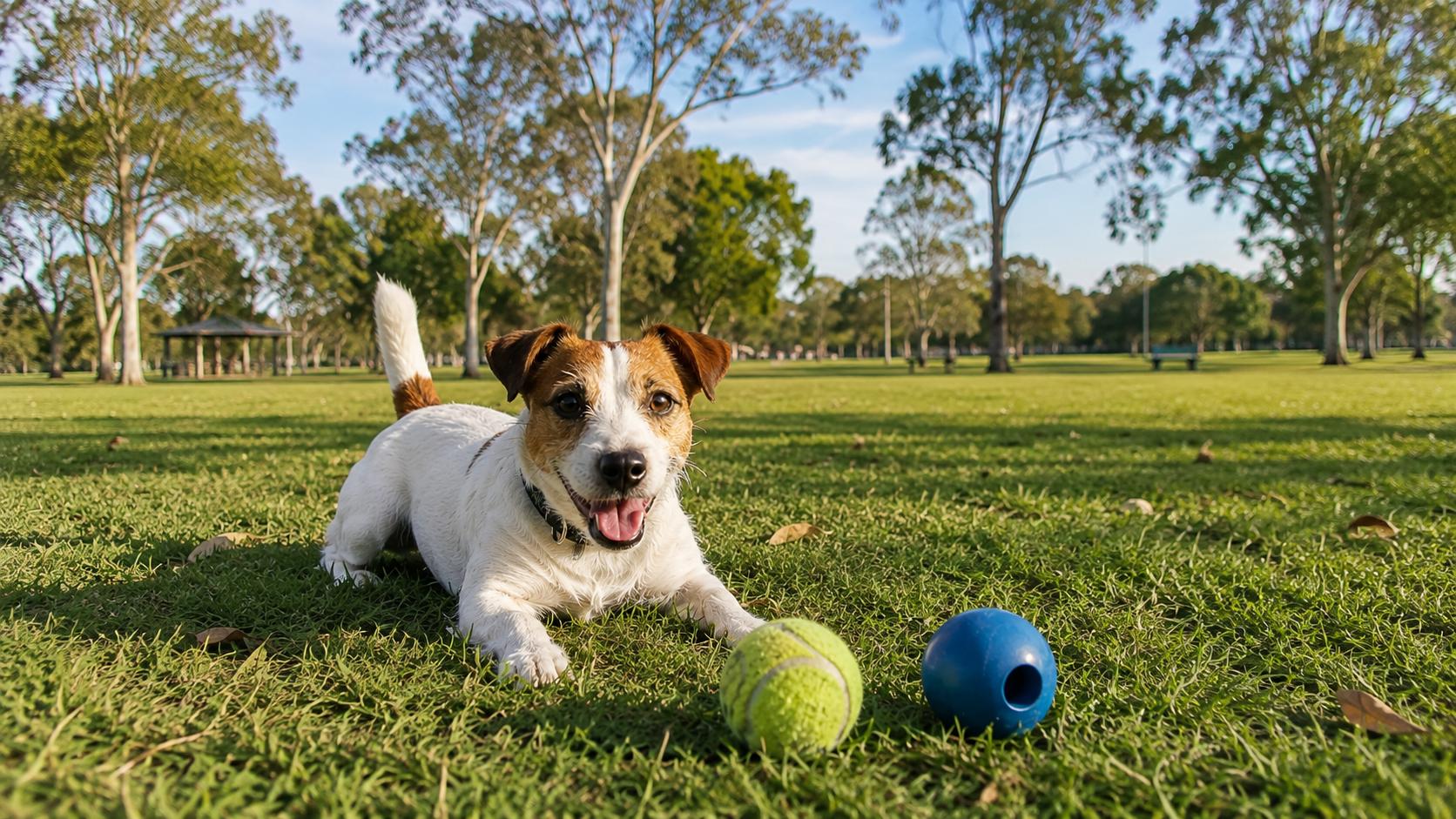
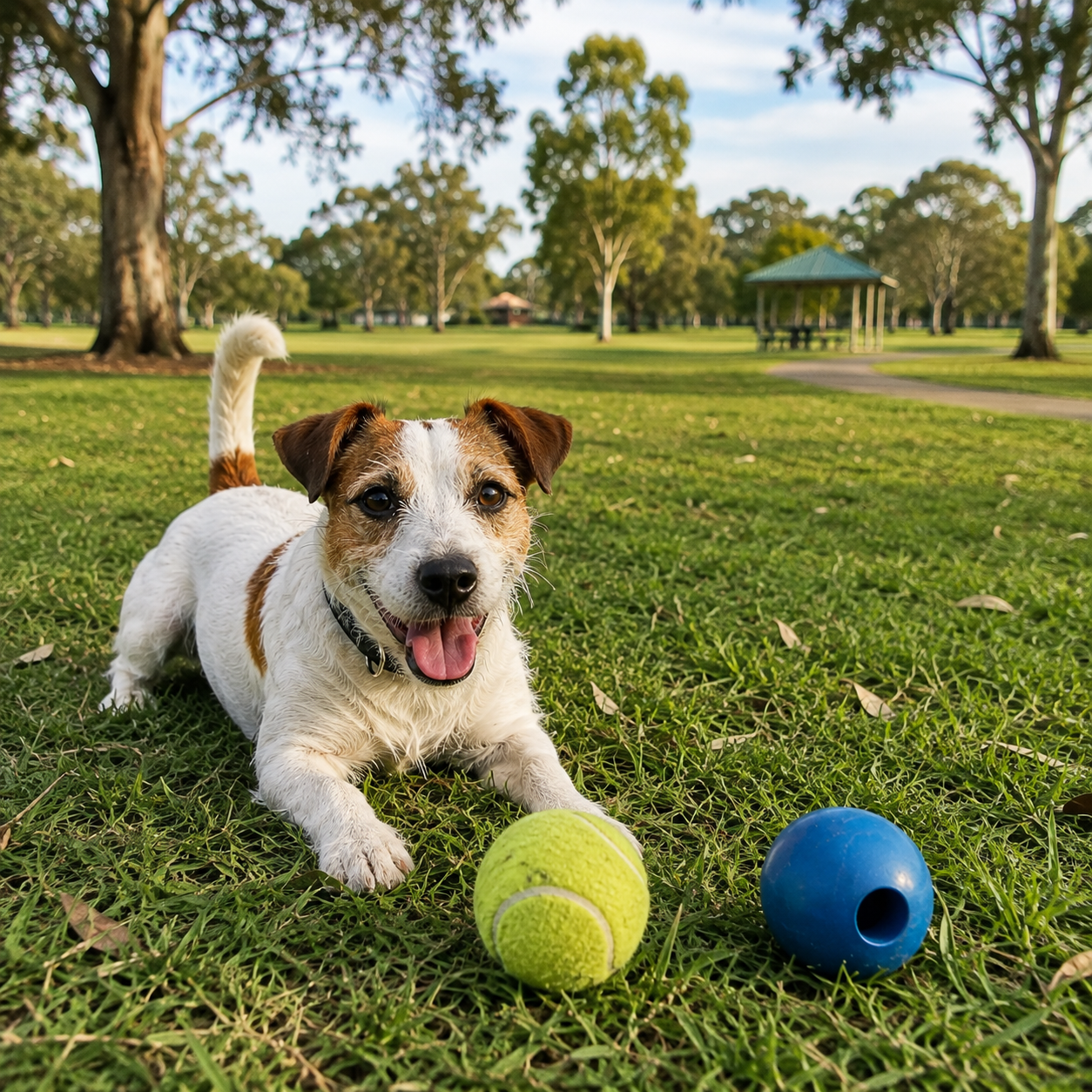
Celebrity vet Dr Chris Brown recently warned dog owners about tennis balls, saying their fuzzy surface can act like sandpaper on dogs’ teeth. He has also launched his own rubber alternative, the Unmissaball. So is that genuinely good veterinary advice, or just a clever way to sell dog balls?
The answer is that he does have a point. But looking into his claim raises a much bigger issue than whether tennis balls are good or bad. It also raises questions about ball play itself — the benefits, the risks and whether there might be better ways to enjoy one of many dogs’ favourite toys.
So is Dr Chris right?
Yes — although there is no need to panic if your dog has occasionally retrieved a tennis ball. You do not need to conduct an emergency raid on the backyard and confiscate every yellow fuzzy object before lunch.
The concern is abrasion over time. The fuzzy surface can gradually wear against the teeth of dogs that constantly carry, mouth and chew tennis balls. Add dirt, sand and grit collected at the park, and you potentially have an even more abrasive surface.
Veterinary dentists have recognised this type of tooth wear for years. In dedicated tennis-ball addicts, canine teeth that should end in a point can become flattened and other teeth visibly worn. In serious cases, that wear can eventually threaten the sensitive structures inside the tooth.
How your dog uses the ball matters. A dog that occasionally retrieves a clean tennis ball and hands it straight back is in a very different situation from one that carries a ball everywhere, chomps on it constantly or spends hours lovingly marinating it in dirt and saliva. With plenty of smooth rubber balls now made specifically for dogs, choosing one of those instead is a simple alternative.
The ball is only half the story
Changing what your dog chases is only part of the picture. It is also worth looking at what happens during repeated fetch.
Watch an enthusiastic dog playing ball and don’t just watch it running. Look at what happens when it reaches the ball. The dog may be travelling flat out before suddenly braking, dropping its head and shoulders, stooping or pouncing to scoop the ball from the ground. If the ball bounces unexpectedly, there may also be a sharp twist or sudden change of direction.
It is a little like the problem seen in sports such as netball, where repeated hard stops and changes of direction place a lot of load through the body. Dogs are built differently, of course, but the general principle is similar: repeated high-speed acceleration followed by sudden braking and lowering the body can place repeated strain through the neck, shoulders, front end and joints.
One retrieve may be completely uneventful, but a ball-mad dog can happily repeat the same movement dozens of times. Those dogs are not always very good at deciding when enough is enough either. For some high-arousal dogs, ball play can become almost obsessive. The ball appears and suddenly nothing else matters. They stare at it, search for it, demand another throw and find it increasingly difficult to switch off.
Who’s training whom?
Dogs can also become remarkably good dog trainers. The dog brings you the ball and drops it at your feet. You ignore it. It picks it up and drops it again. Then comes the stare. Eventually, you give in and throw it.
Congratulations. Your dog has just trained you.
It has learnt that persistence works. Keep presenting the ball for long enough and eventually the human operates the throwing mechanism. No batteries required.
There is nothing wrong with a dog loving a ball, but the person should decide when the game starts and when it finishes. And don’t confuse exhaustion with enrichment. Dogs also need opportunities to sniff, explore and simply wander around being dogs. Twenty minutes of frantic ball chasing is not the same experience as twenty minutes spent exploring the world with their nose.
Better ways to play
None of this means ball games are banned. If your dog loves retrieving, make the game work for you. Ask your dog to wait while the toy is thrown, then release it to retrieve. Practise bringing it straight back. Ask for a simple behaviour before another throw, and teach a clear cue that means the game is over.
Now the ball has become part of a training game rather than simply something that sends the dog into orbit.
CLEAR owner Caroline Strainig also changes where she throws the ball. If she plays fetch on land, she prefers to throw uphill where possible. Dogs naturally slow down going uphill, work harder without racing flat out and generally reach the ball in a more upright position. That reduces the dramatic sprint, brake and stoop often seen on level ground or downhill.
The hill also makes the dog work harder at a slower speed, so a few sensible retrieves can provide plenty of exercise without endless repetitions.
Interactive toy play such as tug can also be a useful alternative, particularly for dogs being trained for dog sports. With endless fetch, the human can become little more than the machine required to make the ball fly. With tug, the person is part of the game and the dog is engaging directly with them.
Tug can be used to build impulse control, teach a release, alternate between exciting play and listening, and become a powerful reward in itself. You certainly do not need to compete in dog sports to benefit from that.
Let the dogs invent the game
Caroline’s dogs have also come up with their own variation. Lockie will grab a ball or another dog-friendly toy and take off, with the others chasing him. Eventually the toy changes hands, somebody else becomes the dog out in front, and off they go again.
The dogs control their own movement — speeding up, slowing down, turning and stopping — rather than repeatedly racing towards a stationary ball and braking hard to grab it.
There is one important catch. A chase game between dogs that know one another is very different from your dog deciding that an unfamiliar dog carrying a ball at the park has just volunteered for the same game. It hasn’t.
Watch the dog in front. Is it looping back and inviting more? Are the dogs changing roles? Can either dog stop? Or is one dog trying to escape, hide behind its owner or protect its toy? Chase is only a game when both dogs think it is.
And yes, balls still get thrown
One place Caroline particularly likes playing ball with her dogs is in the water. Swimming removes the flat-out gallop, the sudden stop and the deep stoop to grab a ball from the ground. The dog swims towards a floating toy, collects it and brings it back.
It still provides a very good workout, without the same repeated high-impact sprint-and-brake pattern seen on land. Swimming is tiring too, so sessions still need to be sensible. Caroline favours a hot-dog-shaped toy instead of a ball because the dogs find it easier to carry when swimming.
Better ball, better game
So where does all this leave the humble tennis ball?
If your dog occasionally retrieves one and hands it straight back, there is no need to rush around the backyard gathering tennis balls in a panic. But if your dog spends hours carrying, mouthing and chewing them, switching to a smooth, appropriately sized ball made for dogs makes sense.
Then take another look at the game itself. Could you throw uphill instead, make retrieving part of a training exercise, play tug together, go for a sniffing walk or have a swim?
There are plenty of ways to have fun with a dog that do not require half an hour spent impersonating a malfunctioning tennis-ball machine.
Balls can be terrific dog toys. Choosing a better ball and using it sensibly simply makes the game better.