
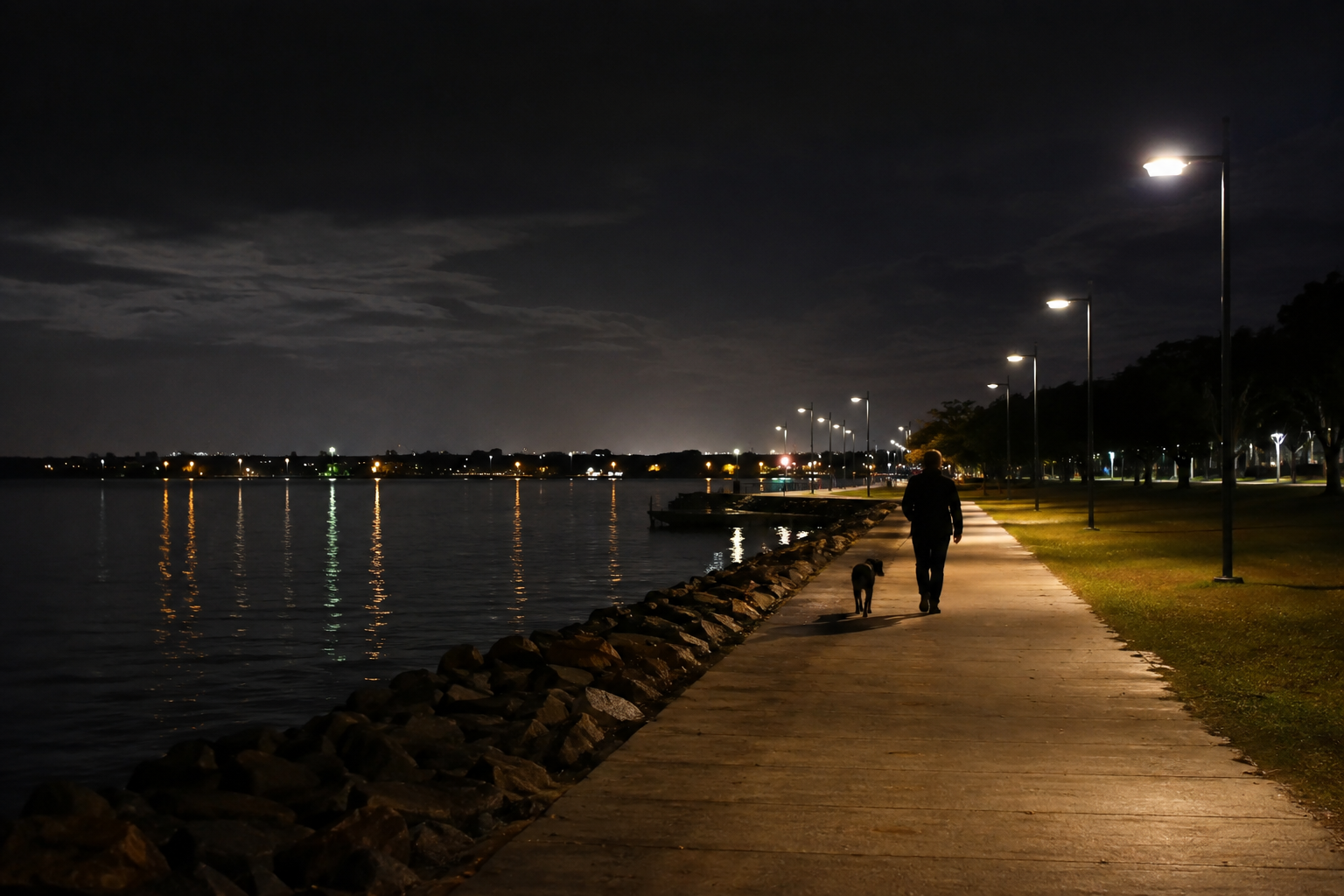
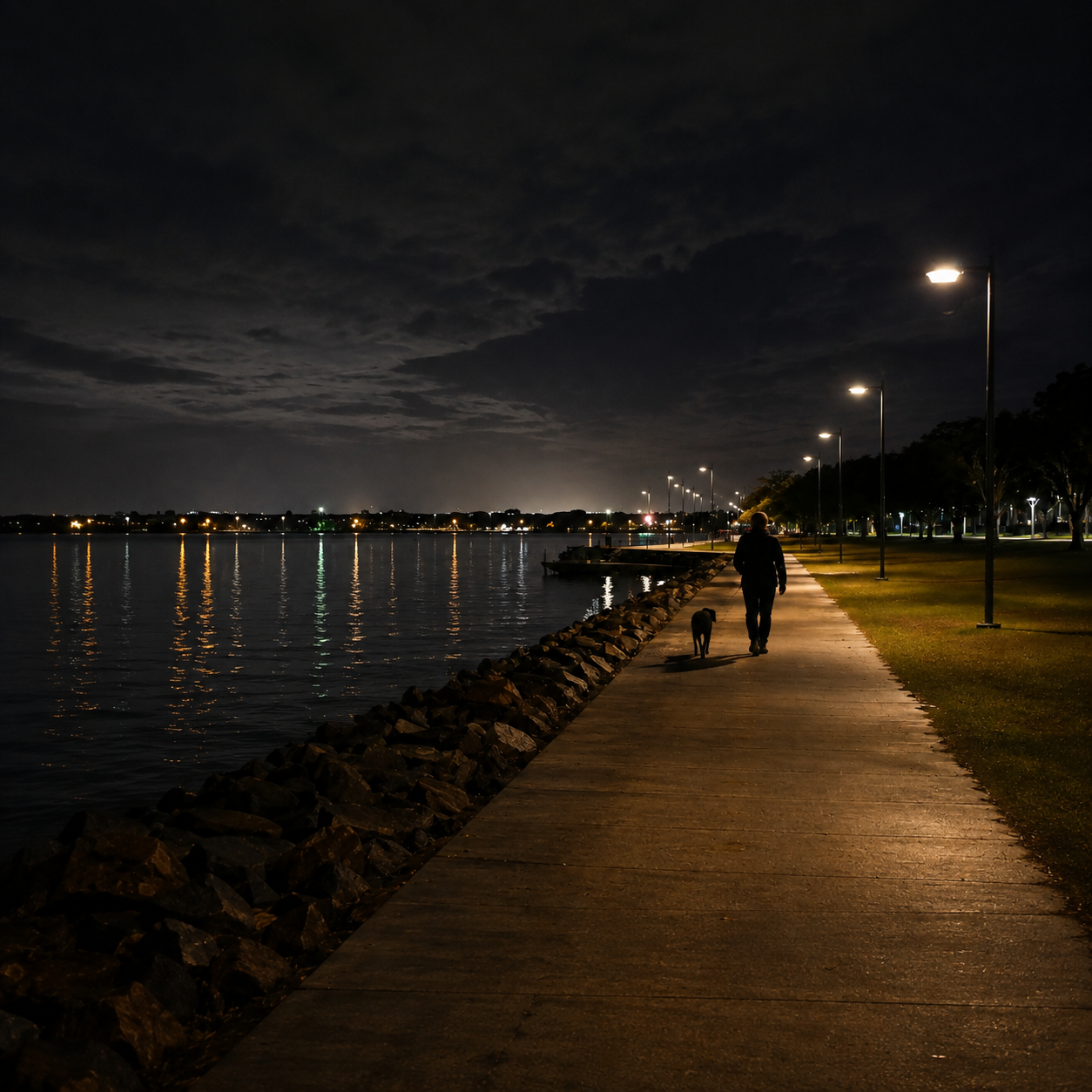
For many dog owners, early mornings and evenings are the best times to walk. It’s cooler, quieter and often far more pleasant than heading out in the heat of the day.
But a recent incident in Wynnum is a timely reminder that walking alone when few people are around does call for a little extra awareness. A woman walking her dog near Wynnum Leagues Club at about 6 am was reportedly threatened by a man brandishing a stick. Fortunately, nearby tradies came to her assistance and drove her home.
Incidents such as this shouldn’t frighten us away from enjoying our neighbourhood. But they do highlight the value of taking a few sensible precautions before heading out alone.
Choose your route carefully
There’s a big difference between walking along a well-used section of the Esplanade and heading down an isolated boardwalk, reserve or poorly lit track when hardly anyone else is around. Where possible, choose familiar, well-lit routes with passing traffic, houses, businesses or other people nearby.
Think about your escape options too. If something made you uncomfortable, could you cross the road, change direction or head towards other people? If you regularly walk very early or late, consider letting someone know where you’re going and roughly when you expect to be home.
Stay aware of what’s around you
Headphones and darkness are not a great combination. You want to hear footsteps, bicycles, approaching cars, another dog coming around a corner or anything else that might require you to react.
Take your phone and keep it somewhere you can reach quickly. A small torch or headlamp is useful, while reflective clothing or a light on your dog can help motorists and cyclists see you. Where practical, walking facing oncoming traffic can also make approaching vehicles easier to see.
And wear shoes you can move confidently in. If you suddenly need to change direction or deal with an unexpected dog encounter, you don’t want your footwear working against you.
You don’t have to stop and talk
Most encounters with other people are completely harmless, but you never owe a stranger a conversation. If somebody approaches and makes you uncomfortable, keep moving and pay attention to their behaviour rather than trying to work out why they may be acting unusually.
If a person is aggressive, follows you, invades your space or refuses to leave you alone, create distance and head towards other people or somewhere you feel safer. Trusting your instincts doesn’t mean assuming the worst. It simply means acting early instead of waiting to see whether a situation becomes more serious.
Have your dog’s back too
Loose dogs can turn a peaceful walk into a stressful one very quickly. Caroline used to regularly encounter one fellow walking his dog off lead who would call out: “Don’t worry, he’s friendly.”
Her response? “Well, one of mine isn’t. She’s very anxious and doesn’t like another dog approaching her.”
And that’s the point. Your dog may be elderly, injured, frightened, reactive or simply not want an unfamiliar dog rushing into their space. Cross the road, change direction or put yourself between your dog and the approaching dog. If the owner is nearby, clearly ask them to call or restrain their dog.
Throwing a handful of treats towards an approaching loose dog can sometimes buy you a few valuable seconds to move away.
Teach your dog to leave with you
One of the most useful things you can teach your dog is an immediate change-of-direction cue. At CLEAR, we use cues such as “This way” or “Let’s go”.
Practise when nothing exciting is happening. Give the cue, change direction and reward your dog for immediately coming with you. Then, if you spot a loose dog, a person or any situation you would rather avoid, you can turn and go instead of trying to drag away a dog who has planted all four feet.
It’s a simple exercise with enormous practical value.
Carry a few useful things
You don’t need an arsenal. A phone, small torch, whistle or personal alarm and a few treats can all be useful.
Caroline also carries citronella animal-deterrent spray, such as SprayShield, as another option if confronted by a threatening loose dog. Don’t substitute pepper or capsicum spray. There are legal restrictions around possessing and carrying these products in Queensland.
A spare lead can sometimes be useful if you encounter a friendly loose dog, but don’t try to catch or restrain an unfamiliar dog if doing so could put you at risk.
Check your dog’s equipment
Before walking in darkness, make sure your dog’s collar or harness fits securely and that the lead, clips and other equipment are in good condition. A normal-length lead will generally give you better immediate control than a long line when visibility is poor.
And don’t rely on your dog to protect you. Even a large dog may react very differently if frightened or confronted. Your best protection is still awareness, good decisions and getting yourself — and your dog — away early.
Be sensible, not frightened
Here in Wynnum-Manly, we’re fortunate to have a wonderful waterfront and many lovely places to walk our dogs. The message isn’t to be worried. It’s simply to stack the odds in your favour.
Choose your route carefully, stay aware, carry a few useful items and make sure your dog’s equipment is secure. Most importantly, be prepared to create distance early if either you or your dog feels uncomfortable.
A little forethought can help make sure your early-morning or evening walk is memorable for all the right reasons.
MORE INFORMATION
For more personal-safety advice, visit the Queensland Police Service Adult Safety information page.