Scent work is one of Australia’s fastest-growing dog sports — and talk to people who’ve discovered it and you’ll often hear the same thing: “I wish I’d found it years ago.”
It’s easy to see why. Dogs love using their noses, owners love watching them work, and because each dog searches individually, scent work can suit dogs that may struggle in the close company of unfamiliar dogs.
Better still, you don’t have to compete. Plenty of people simply learn the basics and enjoy giving their dog something fascinating to do.
How does scent work actually work?
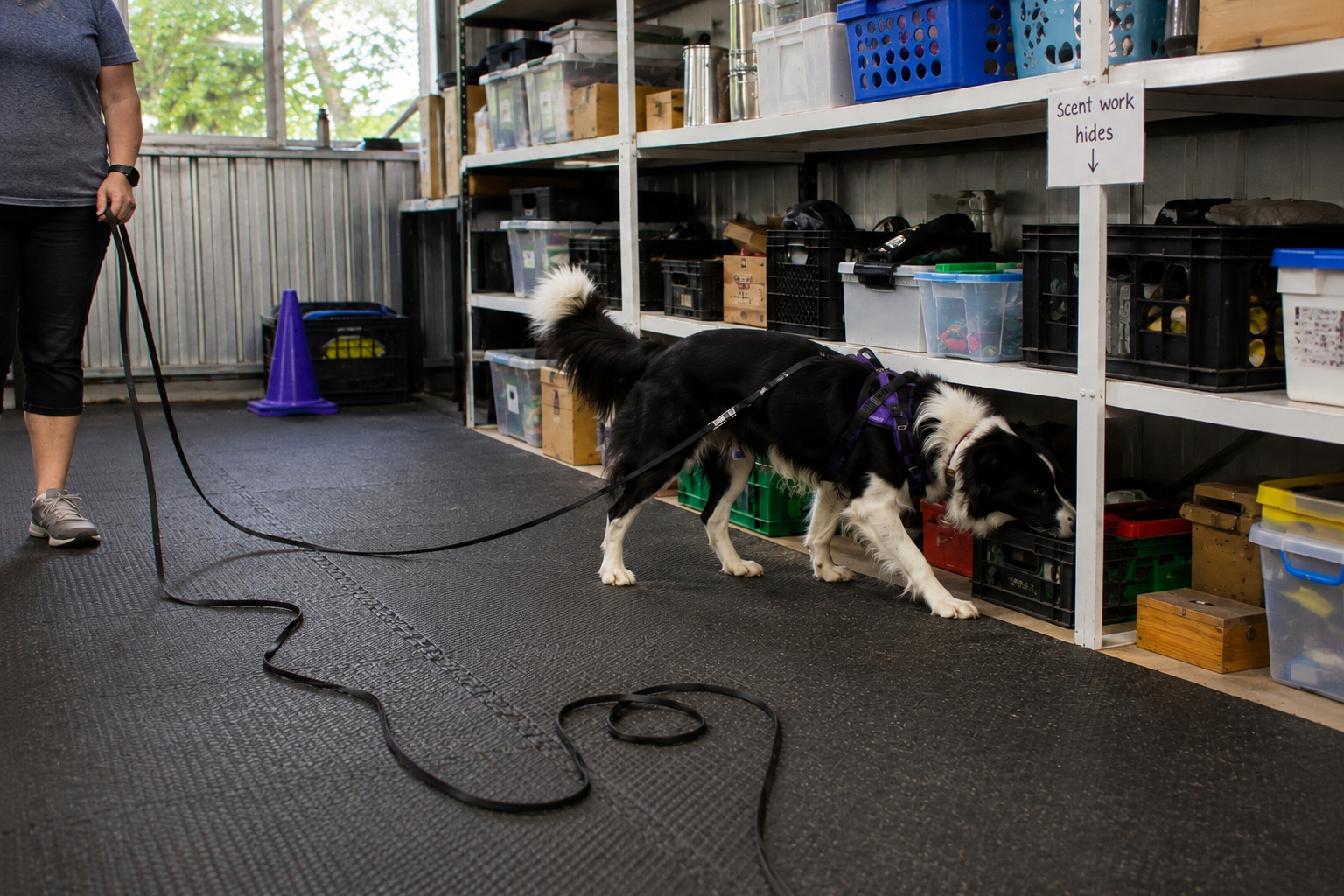
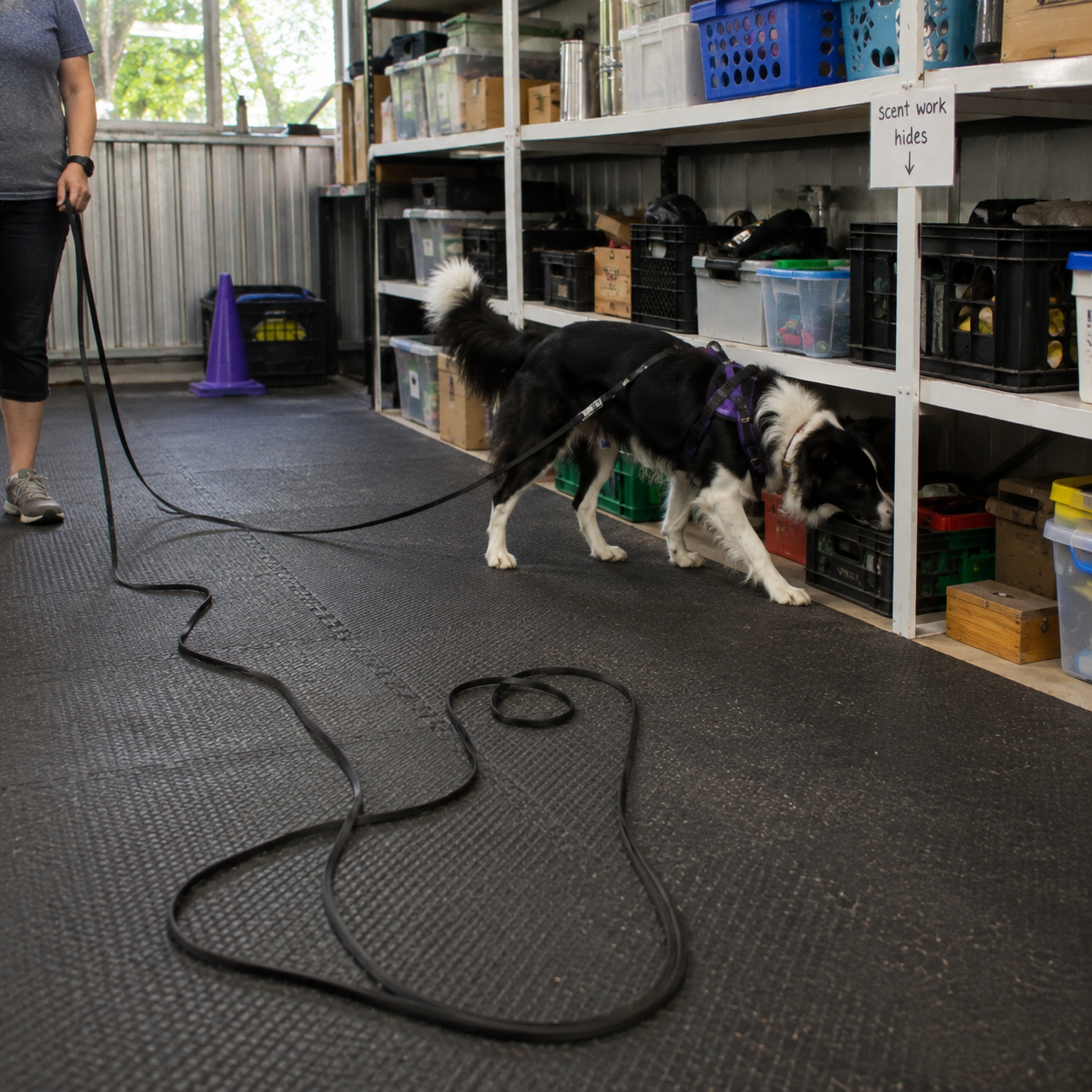
Dogs learn to search for a specific target odour hidden somewhere within a search area. Their job is to locate it and clearly tell their handler: I’ve found it.
The handler’s job sounds easier than it is. You have to trust your dog’s remarkable nose and learn to recognise the often-subtle changes in body language that tell you they are getting close.
As teams progress, searches become larger and more challenging. Dogs may search among containers, inside buildings, around vehicles and outdoors, with increasingly complex hiding places and distractions.
Watching a dog work out a difficult search and then confidently indicate the hide is enormously satisfying. The celebration afterwards can be one of the best parts of the game.
Dogs were born to use their noses
Dogs experience the world very differently from us. While we rely heavily on sight, dogs gather an extraordinary amount of information through scent.
Giving them opportunities to sniff, explore and solve scent problems can also provide valuable mental enrichment. Research suggests that nose-based activities may help promote positive emotional states and confidence in dogs.
That makes scent games useful well beyond competition.
A sport for almost every dog
One of scent work’s biggest attractions is that dogs search individually rather than working alongside unfamiliar dogs.
That can make it particularly suitable for anxious or reactive dogs that might find a conventional training class or trial environment difficult. Older dogs and dogs with some physical limitations can also enjoy it because success depends much more on nose and brain than speed or athletic ability.
And every dog develops its own style. Some charge around enthusiastically; others work slowly and methodically. Neither approach is wrong.
Try it at home
You can introduce the basic idea without any special equipment.
Have someone gently hold your dog while you place a favourite toy or a few treats where they can easily find them. Return to your dog, give a cue such as “Find it!” and celebrate when they succeed.
Keep the first searches simple. Once your dog understands the game, gradually hide the toy or food around a corner, behind furniture or elsewhere in the house.
You can also scatter treats around the garden and let your dog search them out. One CLEAR client with an anxious Dachshund uses this as an enjoyable alternative activity when walks are proving stressful. Her dog loves it, and the game has become something they both look forward to.
These games aren’t formal scent work, but they tap into the same natural instinct and can provide excellent mental enrichment.
Want to take it further?
If you and your dog enjoy the game, you can progress to formal scent work training and, if you wish, competition.
Many Dogs Queensland affiliated clubs offer scent work. Visit the Dogs Queensland Affiliated Dog Sports Clubs page to find a club near you. You can also find information about the sport and upcoming trials on the Dogs Queensland website.
And whether your ambitions involve competition or simply finding a new activity your dog loves, scent work is a wonderful way to let dogs do something they were born to do.