
Most of us have a type. The handsome Labrador. The beautifully marked Border Collie. The scruffy terrier with eyebrows. The elegant Whippet.
We know what catches our eye. And then sometimes we end up with a dog who looks absolutely nothing like the dog we thought we wanted.
For CLEAR owner and head trainer Caroline Strainig, that dog was Blink.
Not exactly love at first sight
I’ve owned Border Collies for many years, and I’m used to dogs with a certain amount of presence.
Lockie, in particular, comes from a long line of show and performance Border Collies. He’s a striking dog and people regularly tell me how beautiful he is.
Then I went to look at Blink. My first thought was not, Oh, she’s gorgeous. It was more: Do I really want this dog?
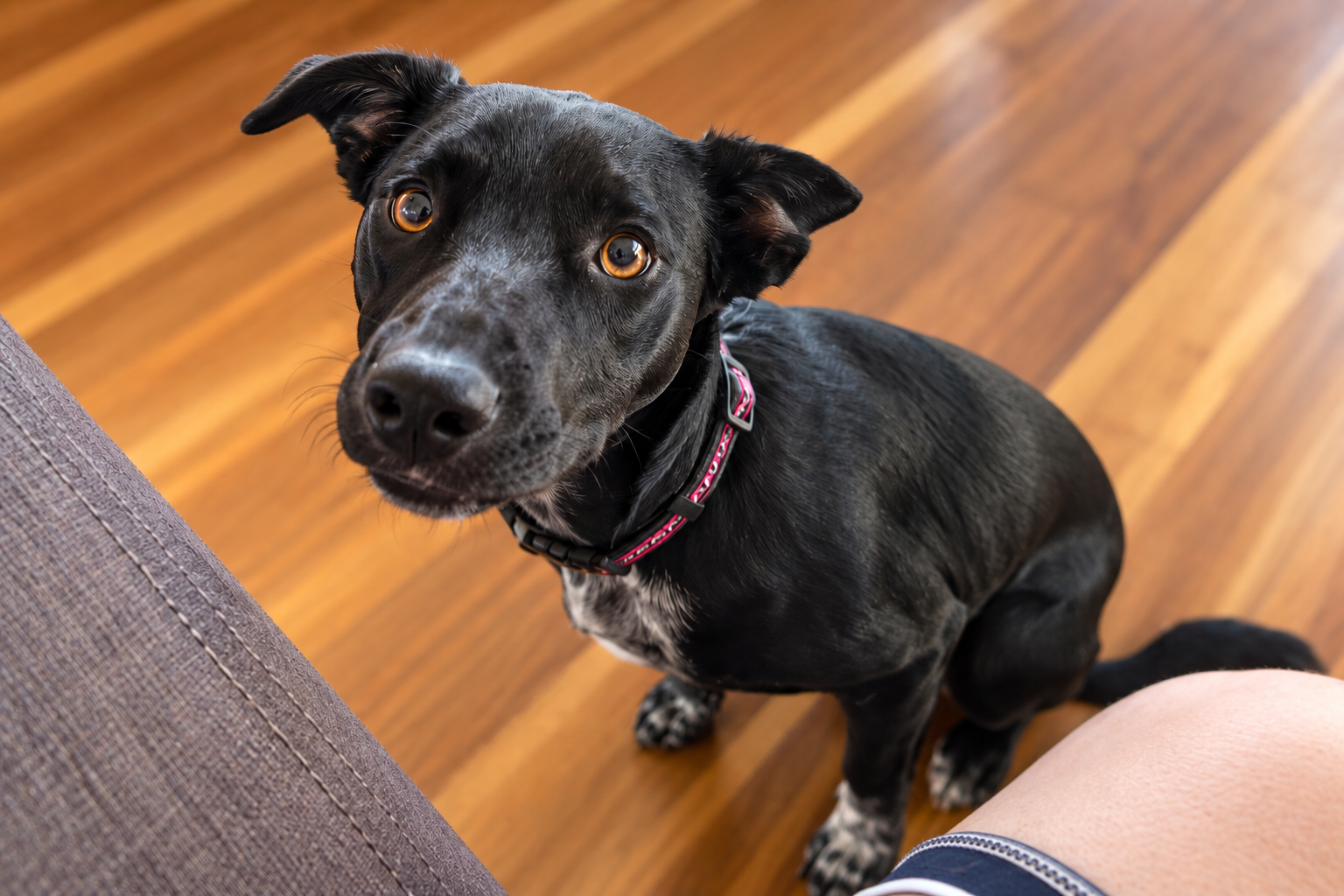
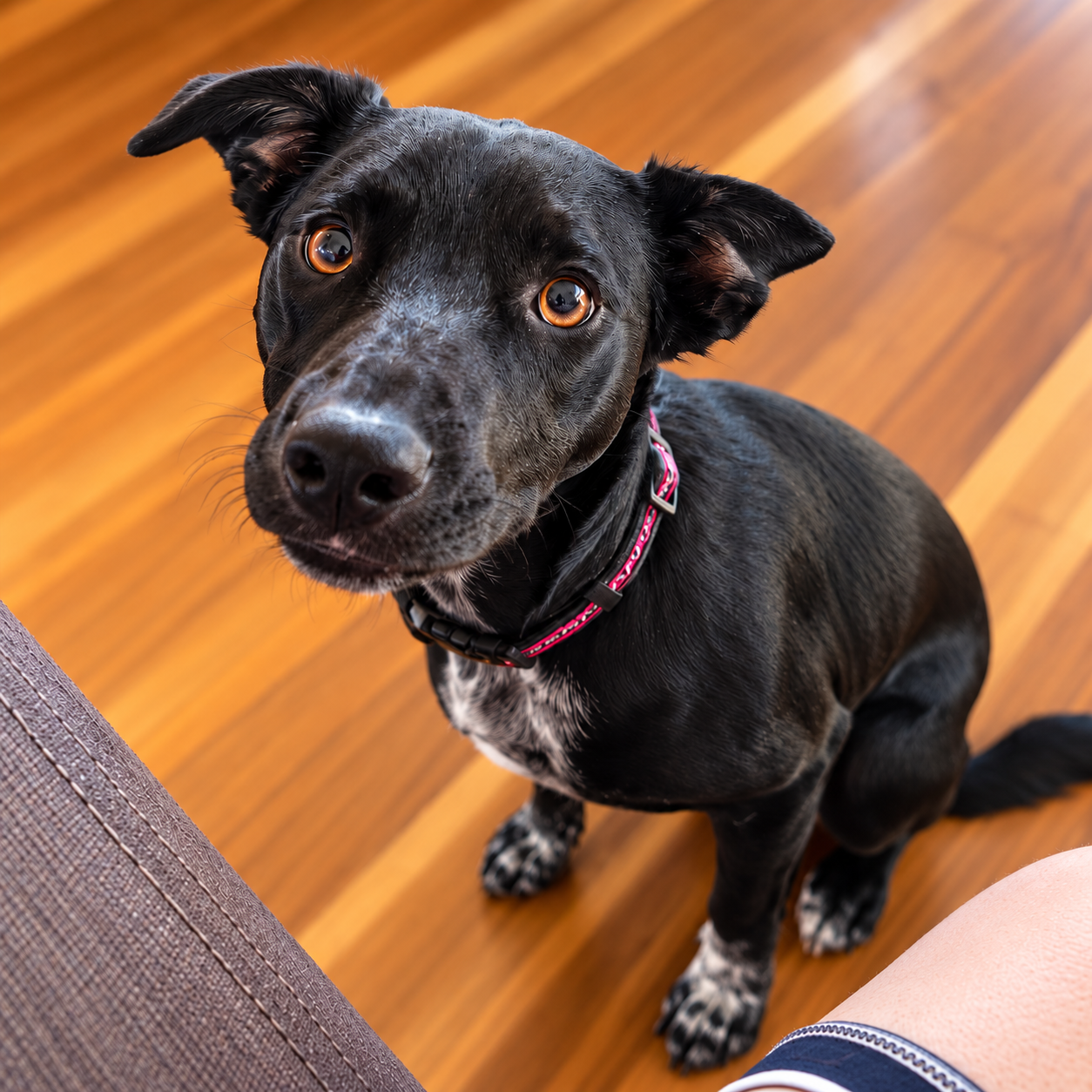
She was a wiry, rather nondescript little black Koolie with a small grey merle patch on her chest. She didn’t have much presence. If I’d been choosing a dog on looks alone, I doubt she would have made the shortlist.
Fortunately, I wasn’t. I wanted a fun dog for flyball — something light, fast and athletic. Flyball is physically demanding and I didn’t particularly want a heavier Border Collie pounding up and down the lane.
I was recruiting an athlete, not judging a beauty contest. On that basis, Blink looked considerably more interesting.
But here’s the funny thing
Blink hasn’t become any more glamorous. She’s still the same wiry little black dog with the same small splash of merle on her chest.
But I don’t see her the way I did when I first looked at her. Somewhere along the way, this rather ordinary-looking little dog started looking rather gorgeous to me.
Which made me wonder: does our dog actually start looking different to us once it becomes our dog?
It turns out there may be something in that.
We’re not as objective as we think
Scientists have long been interested in what humans find cute. One area of research involves something called baby schema: features such as relatively large eyes and a more infant-like face. Researchers have manipulated photographs of people, dogs and cats to increase or decrease those features and found that the more baby-like versions were generally perceived as cuter.
So even something as apparently simple as that’s a cute dog is partly influenced by the way our brains respond to particular visual cues.
But another study is even more interesting for dog owners. Researchers used eye tracking to compare how experienced dog owners and people without dogs looked at dogs’ faces while deciding how approachable they appeared.
They didn’t look at them in quite the same way. Dog owners made their judgements with fewer fixations and in less time. Experience with dogs was also associated with differences in where people looked, including greater attention to the eyes.
In other words, experience with dogs can change the way we actually look at them.
And then a dog becomes your dog
The science doesn’t tell us that loving a dog magically makes it more beautiful. But it does tell us that seeing isn’t entirely objective. Our brains bring experience and associations to what’s in front of our eyes.
And perhaps that’s all I need to explain Blink. Because now I look at her and I smile. I might give her a stroke and look into her eyes.
And for that moment, I’ve forgotten whether she’s beautiful, ordinary, wiry, black or anything else I once noticed about her.
I’m not really looking at what she looks like anymore. I’m just looking at Blink. That’s my dog.