
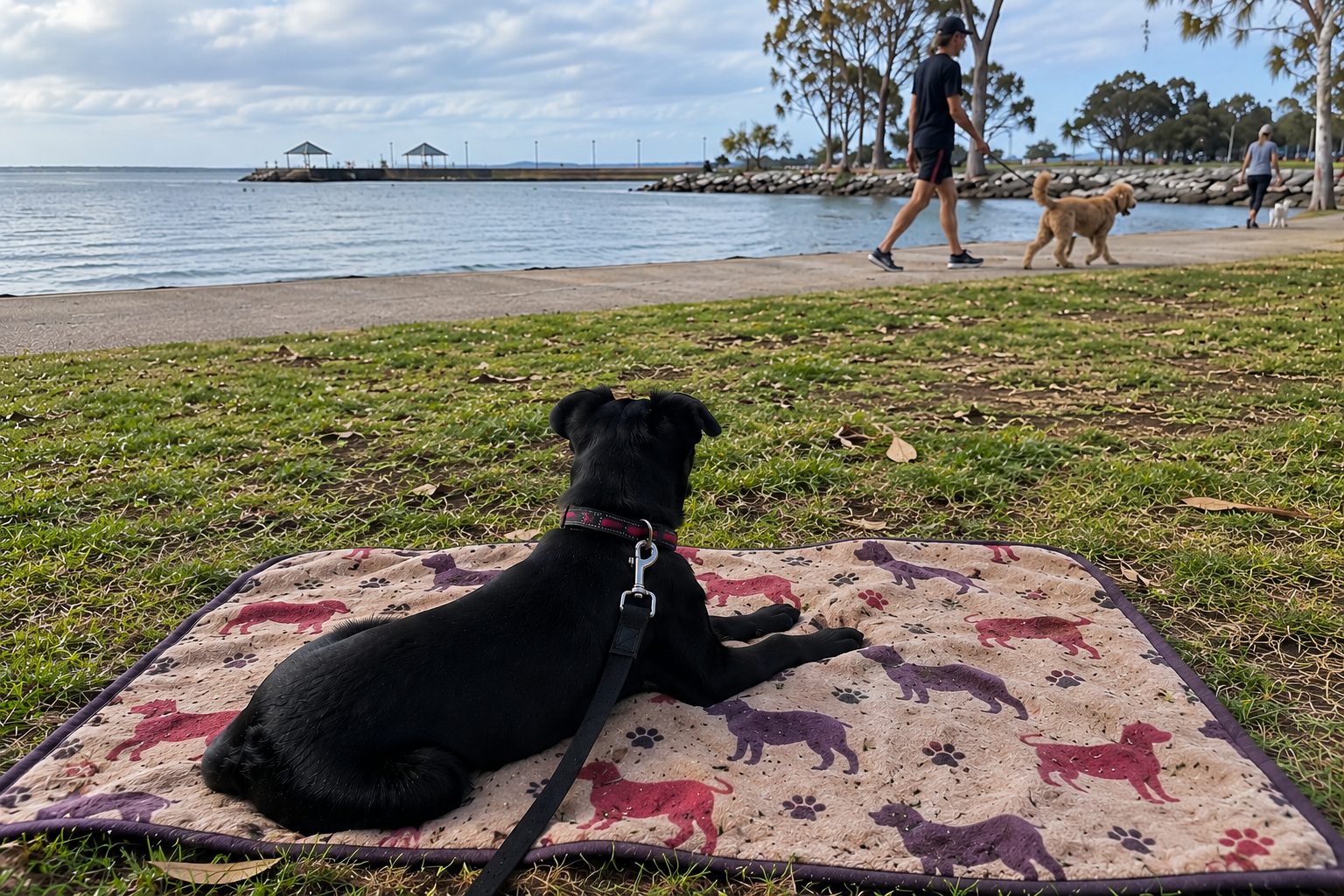
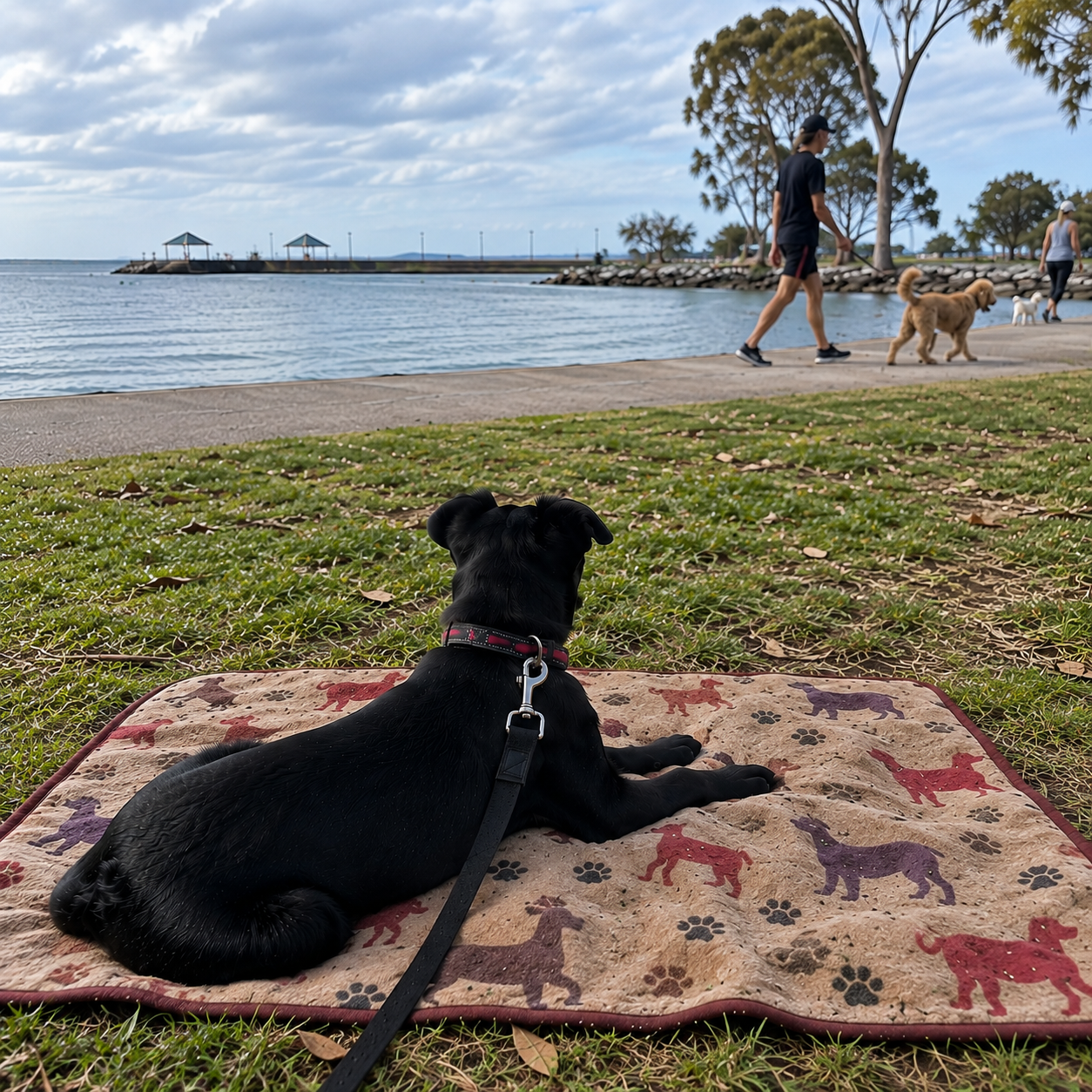
Some puppies charge into life convinced everyone is a potential new best friend. Others hang back and take their time. If your puppy falls into the second camp, don’t despair. Timid puppies can gain enormous confidence, but the trick is often to do less, not more.
The goal isn’t to turn your puppy into a social butterfly. It’s to help them feel safe, confident and comfortable in the world.
Socialisation is about quality, not quantity
Many people think socialisation means letting puppies play with as many other puppies as possible. It doesn’t. Good socialisation is about introducing your puppy positively to the world — people, sounds, traffic, bicycles, different surfaces, friendly dogs and new environments.
For a timid puppy, being thrown into free play with a group of unfamiliar puppies may simply be too much. Instead of building confidence, they may spend the session trying to escape or find somewhere safe. Ten overwhelming encounters aren’t better than one good one. Learning to watch the world calmly from a comfortable distance can be just as valuable as joining in.
Take the pressure off
Start with carefully chosen dogs that are calm, friendly and unlikely to rush into your puppy’s space. Parallel walks are one of our favourite ways to introduce a timid puppy to another dog because walking together removes the pressure to interact. They can simply share the same space until curiosity begins to replace caution.
If your puppy chooses to investigate, allow a brief sniff, then happily call them back and reward them. Keep early encounters short and finish while things are going well. You want your puppy leaving the experience thinking, “That was fun. I’d like to do that again.” Less can definitely be more.
Create some portable happiness
Confidence building doesn’t all have to be about meeting dogs. Games can help your puppy associate being out in the world with having fun with you.
One we use at CLEAR is a simple game called Freebie. At home, enthusiastically call “Freebie!” and toss a treat for your puppy to chase. Repeat it often enough and Freebie becomes a game your puppy thinks is the bee’s knees.
Then take it on the road. With Blink, our new puppy at CLEAR Dog Training, we’ll stop somewhere during a walk and play a few rounds of Freebie on lead. If she’s relaxed and having fun, we might toss a Freebie and then call her back to us. It’s a familiar little game from home that travels with her — a portable bubble of happiness when the wider world feels a bit uncertain.
Watch yourself too
Your puppy is remarkably good at reading you, so pay attention to your own body language. When another dog appears, it’s easy to tighten the lead, hold your breath or stiffen without even realising it.
Try to stay loose and upbeat. Give your puppy enough distance to feel safe, keep the lead as relaxed as circumstances allow and use your voice, movement and games to keep things enjoyable. You want to be the calm, reliable person at the other end of the lead.
Confidence can be snakes and ladders
Blink was quite timid around unfamiliar dogs when she first came home. With carefully chosen dogs, parallel walks, brief greetings and plenty of rewards, she made terrific progress and began happily approaching dogs she was allowed to greet.
Then we took Blink and her housemate, Border Collie Lockie, to Eleanor Park dog park at what we thought would be a quiet time. Another dog approached Lockie with its tail high and hackles raised. After one brief sniff, it erupted.
Fortunately, it was more sound and fury than physical damage. But Blink witnessed the whole thing at close range and, for a sensitive puppy, it was frightening. Since then she has reverted to being anxious around unfamiliar dogs.
That’s the snakes-and-ladders nature of confidence. You can move steadily forward and then suddenly slide backwards. It doesn’t mean you’ve failed or that your puppy won’t recover. Simply go back to where they feel safe and start building again.
Dog parks: approach with extreme caution
Dog parks are unpredictable because you can’t choose which dogs arrive or how they’ll behave. We’ve found the small-dog section at Eleanor Park can be quieter at certain times, but even there some dogs aren’t particularly tolerant of puppies.
With Brisbane City Council fines for dogs being off lead where they shouldn’t be now exceeding $800, we’ve also noticed more owners using designated dog parks, sometimes with dogs that may not be particularly well suited to that environment.
What one owner dismisses as “only a scuffle” can be a major event for a sensitive puppy. Nobody needs to be bitten for harm to be done. Being rushed, barked at or growled at — or witnessing another dog being attacked — can be enough to knock confidence.
Watch the dogs already in the park before you enter. If you don’t like what you see, walk away. There will always be another day.
Keep going
For Blink, we’re back to carefully chosen dogs, plenty of distance, short positive encounters and our little Freebie game out on walks. For now, we’re giving dog parks a miss.
And that’s okay. Progress with a timid puppy doesn’t have to happen quickly or in a straight line. Celebrate the small wins, have fun together and resist the temptation to push because you think your puppy “should” be coping by now.
Most importantly, let your puppy learn that you’ll listen when they’re uncomfortable and help them out of situations they can’t handle. That trust becomes part of their confidence.
Your puppy may never become the dog who wants to greet everyone — and they don’t need to be. A happy, confident dog who can move comfortably through the world without having to be the life of the party is a pretty good result.